 Breaking News & Live Updates
- Breaking News & Live Updates
- Breaking News & Live Updates
- Breaking News & Live Updates
- Breaking News & Live Updates
- Breaking News & Live Updates
- Breaking News & Live Updates
- Breaking News & Live Updates
- Breaking News & Live Updates
- Breaking News & Live Updates
Neural Synchrony Between Mothers and Daughters Linked to Better Mental Health
New research delves into how children passively acquire emotional regulation skills by observing their parents' interactions. A recent investigation, featured in the journal Neuroscience, uncovered a compelling connection: when young girls witness their parents engaging in discussions about their relationship, their neural activity remarkably mirrors that of their mothers. This synchronized brain response correlates with reduced emotional challenges in these children, underscoring the subtle yet profound influence of domestic environments on the development of early mental well-being.
Brainwave Alignment in Families: How Daughters Absorb Emotional Health from Mothers
In a groundbreaking study led by Dr. Yihui Wang from Shanghai Normal University, alongside collaborators from the University of Macau, researchers aimed to unravel the passive learning mechanisms within families, specifically how children process emotional cues from parental interactions. The team hypothesized that observing positive emotional exchanges between parents could trigger neural synchronization in children.
The study involved thirty-seven families, each with a daughter aged six to eight years old. This specific demographic was chosen based on prior research indicating mothers' significant role as primary emotional models for their female offspring. All participating families maintained a consistent structure and reported no recent history of mental health disorders, ensuring a controlled experimental baseline.
The experimental setup was designed to mimic a natural living room scene. Fathers were instructed to initiate conversations with their wives about planning a romantic date, focusing on intimate topics rather than routine household matters. Mothers responded in kind, maintaining a flowing dialogue. Daughters, seated beside their mothers, were given a small toy and instructed to observe silently, without verbal participation. Throughout this interaction, researchers employed functional near-infrared spectroscopy (fNIRS), a non-invasive brain scanning technique, to monitor the oxygen levels in the brains of both mothers and daughters. This technology allowed for real-time tracking of mental exertion in the frontal and lateral brain regions, areas crucial for advanced cognitive and social processing.
A significant finding emerged: the daughters' brain activity, particularly in the right inferior frontal gyrus—a region associated with interpreting emotional tones and social intentions—began to closely align with their mothers' neural patterns. This alignment was significantly higher than during baseline resting periods, indicating active emotional processing by the observing daughters. The study also incorporated mental health questionnaires for parents, assessing marital satisfaction and children's behavioral issues like hyperactivity or peer problems. A strong correlation was found between higher neural synchronization in mother-daughter pairs and fewer emotional difficulties in daughters, particularly when mothers reported high marital satisfaction. This suggests that a harmonious marital environment fosters accessible emotional cues, enabling daughters to better attune to and learn from parental interactions.
While offering a fascinating biological perspective on family dynamics, the researchers acknowledged limitations. The fNIRS equipment could only measure mother-daughter brain activity, leaving fathers' neural responses unexamined. Future studies with more advanced equipment could simultaneously scan all family members. The small sample size also necessitates further research with larger, more diverse populations, including mother-son and father-son pairs, to explore gender and varying family structures. Additionally, the observational nature of the study, conducted in a laboratory, prevents definitive conclusions about brain synchronization solely preventing emotional problems, as other unmeasured home variables could play a role. The ongoing objective is to conduct longitudinal studies to track children's development, providing insights that could inform new strategies for promoting early mental health by understanding how children interpret and internalize parental emotional exchanges.
This pioneering study illuminates the profound, often unspoken ways in which family dynamics shape a child's emotional landscape. The neural synchrony observed between mothers and daughters underscores a critical, passive learning mechanism that contributes significantly to a child's mental well-being. This research not only enriches our understanding of developmental psychology but also offers a powerful reminder of the pervasive influence of a supportive and emotionally expressive home environment. It challenges us to consider the subtle non-verbal cues and interactions within families as foundational elements in cultivating resilient and emotionally healthy children.
Other Articles

Undigested Fructose Linked to Anxiety and Brain Inflammation
Recent studies in both humans and animal models suggest a strong connection between unabsorbed dietary fructose, altered gut bacteria, and increased levels of anxiety and inflammation in the brain. This research indicates that consuming more fructose than the body can properly digest may disrupt the gut microbiome, triggering an immune response that negatively impacts mental well-being. This highlights a potential overlooked aspect of modern diets on psychological health.
The Evolutionary Journey of Vertebrate Vision: From a Single 'Third Eye' to Complex Paired Organs
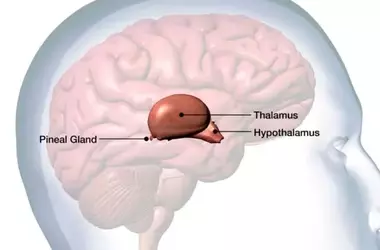
A groundbreaking study published in Current Biology proposes a revolutionary theory for the evolution of vertebrate eyes. It suggests that our complex paired eyes originated from a singular, central "third eye" in an ancient, worm-like ancestor. This research challenges conventional understanding by positing that light-sensing cells predated the eyes themselves, with remnants of this primordial visual system still influencing human brain functions like sleep regulation. The findings shed light on the unique cellular composition of vertebrate eyes, which distinctively blend two types of photoreceptors not seen elsewhere in the animal kingdom, hinting at a fascinating detour in our evolutionary visual pathway.

Shift Work Linked to Brain Volume Reduction and Cognitive Decline
New research analyzing UK Biobank data reveals a correlation between shift work and gradual shrinkage in the left amygdala and right thalamus brain regions. The study, published in NeuroImage, also indicates that ceasing shift work can halt this volume loss within approximately 2.4 years. Furthermore, shift workers showed lower scores in memory, fluid intelligence, and mental processing speed tests. These findings highlight potential neurological impacts of non-standard work schedules.

Brain Development Patterns Predict ADHD Symptom Trajectories
A study published in Nature Mental Health reveals that varying patterns of brain development during adolescence are linked to different outcomes for childhood ADHD symptoms. Researchers found that changes in cortical thinning and hippocampal growth could predict whether symptoms would persist, fade, or emerge in teenagers. This research highlights the potential for using brain imaging to forecast symptom changes and underscores the necessity for continuous monitoring in ADHD management.

Youth BMI Linked to Altered Brain Connectivity
A recent study published in Clinical Neurophysiology reveals that children and adolescents with a higher body mass index (BMI) exhibit distinct differences in brain activity and connectivity. These neurological patterns suggest a reduction in the brain's natural inhibitory systems, potentially making it harder to break ingrained habits. The research involved 32 participants aged eight to 19, divided into groups based on BMI. Using magnetoencephalography, scientists observed elevated gamma brain waves and weakened low-frequency connections in those with higher BMIs, indicating potential inefficiencies in brain communication.

Brainwave Dynamics During Meditation: A Time-Sensitive EEG Study
A recent study published in Mindfulness reveals that noticeable shifts in brain activity occur within minutes of starting breath-watching meditation, peaking around the seven-minute mark. This effect is consistent across individuals, regardless of their prior meditation experience. The research utilized electroencephalography (EEG) to track these real-time neural changes, providing insights into the precise timing and evolution of brainwave patterns during meditation. The findings suggest that even brief meditation sessions can significantly influence brain dynamics, challenging the notion that long practice durations are essential for experiencing benefits and potentially making meditation more accessible through digital interventions.