 Breaking News & Live Updates
- Breaking News & Live Updates
- Breaking News & Live Updates
- Breaking News & Live Updates
- Breaking News & Live Updates
- Breaking News & Live Updates
- Breaking News & Live Updates
- Breaking News & Live Updates
- Breaking News & Live Updates
- Breaking News & Live Updates
AI's Impact on Education: Rethinking Learning and Assessment
A recent MIT report on artificial intelligence in education urges a fundamental reassessment of how students engage with and demonstrate understanding in an increasingly AI-driven world. The core challenge identified is that AI can now generate highly polished intellectual work, making it difficult to discern the actual cognitive effort and learning that occurred within the student. This shift necessitates a new focus on genuine intellectual participation rather than merely evaluating the final product.
Reframing Educational Engagement in the AI Era
The Massachusetts Institute of Technology recently released a significant report addressing the future intersection of AI and pedagogical practices. While acknowledging the often aspirational tone of such discussions, this timely publication directly confronts the evolving nature of student learning. Traditional academic settings have long considered sophisticated essays or ingenious solutions as direct evidence of profound thought and deep comprehension. However, the advent of advanced AI tools has disrupted this long-held assumption.
Today, a student can leverage AI to produce an exceptionally high-quality piece of work—be it an essay or a problem solution—with minimal personal intellectual contribution. The output might be brilliant, offering compelling arguments and novel insights, yet it may not accurately reflect the student's internal cognitive development. This paradox means that while the "artifact" of learning may appear more impressive than ever, our capacity to infer the underlying cognitive processes involved has diminished.
Experts in the field have explored this phenomenon, coining terms like "cognitive surrender" and "ghost thought" to describe instances where individuals delegate significant intellectual tasks to AI, potentially hindering their own mental growth. The crucial question emerging is how to ensure continuous human intellectual involvement as AI systems become increasingly capable partners in our thinking processes.
Despite these challenges, AI is not viewed solely as an adversary. Collaborative approaches, such as "iterative intelligence," where human and machine cognition interact dynamically, can actually enhance human thinking by challenging assumptions and revealing new perspectives. Nevertheless, the ease with which AI can guide users from a question to a solution risks bypassing the essential "journey" of learning—the struggle and friction that are integral to cognitive development.
The MIT report specifically calls for a re-evaluation of assessment methods in an AI-saturated educational landscape. If the link between the quality of a student's output and their cognitive input is weakened, then traditional assessment metrics become less reliable. Educators must now delve deeper, investigating the extent of a student's active cognitive participation when utilizing AI. This involves examining whether the student originated ideas, critically evaluated AI responses, identified errors, or adapted their approach—all crucial elements of genuine learning that go beyond merely generating a final answer.
Cultivating the Human Thinker in a Digital Age
The profound implications of AI for education extend to the very development of an individual's cognitive selfhood—the conscious engagement of the self in its own thought processes. Education has historically provided the fertile ground for this development, where grappling with complex problems allows individuals to discover their own perspectives. While this journey can be inefficient and at times frustrating, these challenging moments are arguably where the most significant educational work occurs.
AI is set to integrate into education swiftly and comprehensively, bringing with it immense benefits. Yet, there will remain invaluable moments when the act of thinking independently, even if slower and more demanding, holds unparalleled educational value. These instances are becoming increasingly vital precisely because they offer students something beyond what a perfectly executed final product can convey.
The MIT report sparks a broader dialogue: as the quality of academic work potentially soars with AI assistance, our understanding of whether students are truly becoming more proficient thinkers risks declining. The polished artifact, however brilliant, can no longer serve as a definitive measure of deep learning. Therefore, a critical and perhaps uncomfortable question for educators is how to ensure that as the work improves, our ability to gauge and foster the student's cognitive growth does not diminish.
Other Articles

New Perspectives in Psychological Science: Exploring Mind and Behavior
This compilation from *Perspectives on Psychological Science* presents cutting-edge research across diverse fields of psychology. Topics include the constructionist model of emotional memory, self-voice processing, phonics instruction, technological opacity's impact on the social brain, formal modeling in memory research, chaos theory in child development, children's third-party punishment, reflections on Daniel Kahneman's legacy, sociopolitical competency in psychological practice, and a critique of pessimism in social psychology. These articles collectively offer fresh insights and propose new frameworks for understanding complex psychological phenomena.

Rethinking Digital Well-being: Beyond Simple Screen Time Limits
This article explores the complexities of digital well-being, arguing that simply limiting screen time is an insufficient approach. It highlights that screen time encompasses diverse experiences, and its impact varies greatly depending on the activity and individual needs. The piece advocates for a shared responsibility among individuals, educational institutions, and platform providers in fostering healthier digital habits, moving beyond mere duration to focus on the quality and purpose of online engagement.
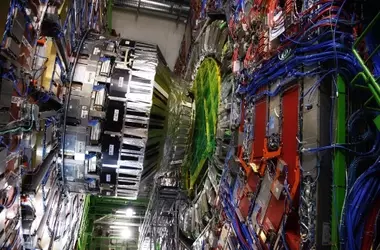
Advancing Large-Scale Scientific Collaboration: Key Insights and Overcoming Challenges
This article explores the critical aspects of managing extensive scientific collaborations, drawing from personal experience and established research. It highlights four core principles: leveraging social networks for broad participation, fostering interdependence to sustain engagement, coordinating collective intelligence through decentralized leadership, and adeptly managing interpersonal conflicts. The piece also delves into the significant hurdles of such endeavors, including financial demands, difficulties in securing diverse global participation, and the necessity of focusing on high-impact research questions to justify the extensive resources involved.

Exploring Empathy in AI Interactions
This article delves into the evolving role of AI in providing emotional support and empathy, drawing insights from a review of empirical studies. It examines how people perceive AI-generated empathy compared to human empathy, highlighting the "credibility effect" where awareness of AI as the source reduces perceived empathy. The piece also discusses the limitations of current research methodologies and offers pedagogical approaches for educators to engage students in critical thinking about AI's impact on human interactions.

AI as a Catalyst for Candid Communication in the Workplace
A recent study from Zhejiang University indicates that employees are more inclined to offer frank feedback to AI leaders compared to human managers, particularly concerning cognitive tasks. This phenomenon is attributed to the perception of AI as fairer, fostering a greater sense of psychological safety. The findings suggest a re-evaluation of human leadership practices, as the ability to cultivate an environment where honesty is not penalized appears crucial for effective communication.

APS Student Caucus: Fostering an Inclusive Global Community
The APS Student Caucus (APSSC) is committed to enhancing the professional development of its student members and fostering an inclusive and supportive global student community in psychological science. This year marks a significant milestone as APS holds its first-ever annual convention outside the United States. The APSSC will introduce a Global Advocate position and an Early Career Task Force to better serve its diverse student body and support their transition into professional roles.