 Breaking News & Live Updates
- Breaking News & Live Updates
- Breaking News & Live Updates
- Breaking News & Live Updates
- Breaking News & Live Updates
- Breaking News & Live Updates
- Breaking News & Live Updates
- Breaking News & Live Updates
- Breaking News & Live Updates
- Breaking News & Live Updates
The Neuroscience of Interpersonal Connection: Beyond Deep Questions
We've all had those encounters: engaging in a profound discussion with someone yet sensing a fundamental disconnect, or conversely, finding a deep rapport emerge from a seemingly trivial exchange. This intriguing phenomenon, where the depth of conversation doesn't always dictate the level of interpersonal connection, has long puzzled observers of human interaction. Recent neuroscientific research sheds light on this mystery, suggesting that the true essence of feeling connected lies not merely in the words exchanged, but in the synchronized activity of our brains.
A groundbreaking study conducted at UCLA, and recently featured in Social Cognitive and Affective Neuroscience, set out to uncover the neurological underpinnings of these varied conversational outcomes. The research involved seventy pairs of strangers, each fitted with fNIRS caps. These innovative devices allowed scientists to monitor blood flow in the brain, providing real-time data on neural activity as participants conversed face-to-face. The experimental design included two distinct conversational conditions: one group engaged in light small talk, touching on subjects like weather and preferred leisure activities, while the other explored more profound topics, such as aspirations, past emotional experiences, and unfulfilled dreams.
Following their discussions, every participant provided feedback on how connected they felt to their conversational partner. As anticipated, the more in-depth discussions generally fostered a stronger sense of connection, aligning with previous psychological findings. However, the true revelation came from the brain activity data. When individuals reported a genuine sense of connection, their default mode networks (DMNs)—brain regions vital for social cognition, meaning-making, and understanding others' perspectives—showed remarkable synchronization. This indicated that when a connection 'clicks,' these networks fire in a strikingly similar pattern across both individuals simultaneously.
The most compelling neural indicator of felt connection was the synchrony observed in the right temporoparietal junction. This specific brain area is consistently associated with perspective-taking, the cognitive ability to perceive the world from another person's viewpoint. Essentially, the more aligned the brains were in this region, the stronger the reported connection, signifying a shared mental understanding. Interestingly, the study also revealed that a significant portion of participants, nearly 28%, felt genuinely connected even after only engaging in trivial small talk. Conversely, about one-third of those engaged in deep conversations did not experience a profound connection. This highlights that while deep questions can create conducive conditions for connection, they are not the sole determinant. The brain's inherent ability to synchronize appears to be the core mechanism, a subconscious alignment that often manifests as an intuitive sense that two minds are truly 'tracking' together, building something shared rather than just exchanging information.
This research underscores that while purposeful, deep questioning can certainly facilitate interpersonal bonding, the ultimate key to feeling genuinely connected is the spontaneous alignment of neural activity. It suggests that a palpable sense of mutual understanding, where two individuals intuitively grasp each other's inner worlds, is a more fundamental driver of connection than the specific subject matter of a conversation. This brain synchrony, particularly in regions linked to perspective-taking, creates the unique sensation of truly 'clicking' with another person.
Other Articles

Oral Semaglutide Shows Promise in Reducing Heavy Drinking and Alcohol Cravings
A recent clinical trial revealed that oral semaglutide, typically prescribed for diabetes and weight management, significantly decreased heavy drinking days, daily alcohol cravings, and alcohol-related issues in individuals with moderate-to-severe Alcohol Use Disorder (AUD). This marks a potential breakthrough, offering a non-injectable therapeutic option for AUD, even for those not aiming for complete abstinence.

The Value of Interdisciplinary Approaches in Scientific Research
A discussion on LinkedIn questioned the employability of interdisciplinary scholars, resonating with the author's experience as an interdisciplinary developmental scientist. Despite academic institutions promoting interdisciplinarity, they often prioritize highly focused research agendas for hiring and rewards. This paradox prompts a reevaluation of how interdisciplinary science is structured and valued throughout academic careers, suggesting a need for systemic changes to better support broader research endeavors.

Addressing Moral Injury in Frontline Professions: The Importance of Open Dialogue
Moral injury, a profound psychological distress stemming from actions violating deeply held beliefs, affects frontline workers like police officers and healthcare professionals. This article explores how employee silence exacerbates the negative impacts of moral injury on job satisfaction and retention, emphasizing the critical need for proactive support systems and open communication to foster mental well-being.

The Dual Nature of Workaholism: Productivity vs. Teamwork
This article explores the complex impact of workaholism on organizational behavior and teamwork. Drawing on research, it challenges the common perception that excessive hard work always equates to high performance, especially in collaborative settings. The piece delves into how workaholics' focus on individual tasks can inadvertently diminish their engagement in prosocial organizational citizenship behaviors, highlighting the need for a nuanced understanding of their contributions.

Overcoming Moral Injury and Reclaiming Identity
Moral injury, a profound psychological distress stemming from actions violating one's deeply held moral beliefs, can be particularly challenging to overcome due to the added layer of self-blame. While some may experience a loss of identity, research indicates that for others, such traumatic events can paradoxically reinforce their sense of self, fostering resilience. Understanding the nuances of moral injury and offering targeted support is crucial for recovery and identity reintegration.
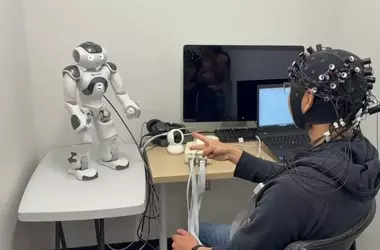
Professor Yuan Chang Leong's Pioneering Research into the Brain's Construction of Subjective Reality
Professor Yuan Chang Leong, a recipient of the 2026 APS Spence Award and assistant professor at the University of Chicago, leads the Computational Affective and Social Neuroscience Laboratory. His research delves into how individual goals, needs, and desires shape our perception of the world, bridging cognitive neuroscience and social psychology to understand the neural mechanisms behind subjective experience and emotional memory formation. This article highlights his innovative work on 'motivated seeing' and 'neural polarization,' and his commitment to interdisciplinary collaboration.