 Breaking News & Live Updates
- Breaking News & Live Updates
- Breaking News & Live Updates
- Breaking News & Live Updates
- Breaking News & Live Updates
- Breaking News & Live Updates
- Breaking News & Live Updates
- Breaking News & Live Updates
- Breaking News & Live Updates
- Breaking News & Live Updates
The Neglected Art of Healing: A Critical Look at Modern Medicine and Psychiatry
This analysis delves into the profound insights of Dr. Bernard Lown, a distinguished cardiologist and author of "The Lost Art of Healing." Lown's work critically examines how contemporary medicine, despite its technological advancements, has increasingly neglected the human element essential for true healing. The article specifically highlights his concerns regarding the state of psychiatry, where the focus on human relationships and comprehensive understanding of patients' lives has been significantly diminished. It emphasizes the critical role of empathetic doctor-patient interactions and strong social connections in facilitating recovery, a perspective that Lown believed was being tragically overlooked in an increasingly industrialized healthcare system. The discussion also touches upon the economic pressures and prevailing scientific paradigms that contribute to this dehumanizing shift, urging for a re-evaluation of current practices in favor of a more compassionate and holistic approach to care.
The piece also sheds light on Lown's personal journey and his humanistic activism, which extended beyond medicine to global peace initiatives. His realization that even life-saving technological progress could lead to a depersonalized healthcare experience prompted his powerful critique. The article uses Lown's examples from cardiology to illustrate how genuine human connection can profoundly impact patient outcomes, often succeeding where technology alone falls short. It further explores the economic drivers that have led many psychiatrists to prioritize brief medication management over in-depth therapeutic relationships, contrasting this with the profound and lasting healing that can arise from deep, trusting connections. Ultimately, the article advocates for a significant paradigm shift within healthcare, particularly in mental health, to re-prioritize empathy, compassion, and the inherent value of human relationships as cornerstones of effective healing.
The Erosion of Human Connection in Healthcare
The contemporary healthcare landscape, as observed by cardiologist Bernard Lown, is increasingly characterized by a troubling decline in meaningful human connection between practitioners and patients. Lown, a pioneer in medical technology, paradoxically became a vocal critic of the very system his innovations helped shape. He argued that the relentless pursuit of technological advancement and the industrialization of medicine have led to a depersonalization of care, where patients are reduced to mere sets of symptoms or malfunctioning biological components rather than complex individuals with unique emotional and social needs. This shift is particularly acute in psychiatry, where the focus has largely moved away from in-depth talk therapy and understanding the broader relational context of a patient's struggles, instead favoring quick pharmaceutical interventions. The economic pressures within the healthcare system, including insurance models that disincentivize longer patient interactions, exacerbate this issue, leading to a system where genuine therapeutic relationships are a rare commodity.
Lown lamented that the art of healing, traditionally rooted in listening and empathy, has been supplanted by a mechanistic approach. He pointed out that qualities like kindness, altruism, and insight, which are vital for compassionate care, are often disregarded in a system that prioritizes business efficiency and quantifiable outcomes. His critique resonates strongly with many who experience the current healthcare system as bureaucratic and emotionally taxing, with some even reporting trauma from depersonalized encounters. The profound impact of this erosion of human connection extends beyond emotional well-being, as Lown's own experiences in cardiology demonstrated that unresolved emotional and relational conflicts could directly manifest in physical ailments. This highlights the urgent need for healthcare, especially psychiatry, to rediscover and reintegrate the fundamental importance of human relationships and compassionate engagement into its core practice.
Reclaiming Empathy and Relationship in Healing
Bernard Lown's "The Lost Art of Healing" vividly illustrates that even in highly specialized fields like cardiology, the human dimension of care is paramount. He recounted powerful anecdotes where deep, empathetic engagement with patients, extending to their personal lives and relationships, yielded transformative healing outcomes that medical technology alone could not achieve. These stories serve as compelling evidence that building trust, actively listening, and fostering supportive relational environments are not merely supplementary but central to successful patient recovery. Lown demonstrated that understanding the emotional and social fabric of a patient's life could unlock pathways to healing, as seen in cases where resolving long-standing family conflicts dramatically improved physical health conditions. His approach, though sometimes unorthodox in its directness, was always grounded in a profound respect and care for the individual, emphasizing that healing transcends mere symptom management.
This philosophy stands in stark contrast to the prevailing model in much of modern psychiatry, where economic constraints and an emphasis on pharmaceutical solutions often lead to abbreviated patient encounters. Many mental health professionals, driven by systemic pressures, find themselves in roles that resemble technicians more than healers, focusing on symptom alleviation rather than cultivating the deep, trusting relationships essential for true psychological well-being. Lown's work suggests that for genuine healing to occur, there must be a willingness to engage with the patient's entire being—their unique history, their relationships, and their deepest emotions. He recognized that this requires a certain "love" in the professional sense, a heartfelt concern and respect for the patient's individuality, and a fearless commitment to understanding their suffering. Reclaiming this empathetic, relational aspect of care is crucial for both physical and mental health disciplines, paving the way for a more human-centered and effective approach to healing that honors the patient as a whole person.
Other Articles

Home-Based Acute Mental Health Care Reduces Hospital Readmissions, Study Finds
A new study reveals that intensive home treatment (IHT) for acute psychiatric care significantly lowers readmission rates, reduces inpatient days, and extends the time between hospitalizations compared to traditional inpatient admission. Patients receiving IHT also show a higher preference for this model in future crises. The research highlights IHT's clinical and practical benefits, including improved patient satisfaction and cost-effectiveness, advocating for a shift towards home-based care despite existing barriers in some healthcare systems.
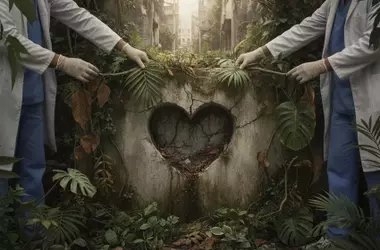
The Decaying Art of Healing: How Modern Medicine Overlooks Human Connection
This article explores the decline of humanistic care in modern medicine and psychiatry, drawing insights from cardiologist Bernard Lown's work. It highlights how the focus on technology and efficiency has depersonalized patient interactions, diminishing the crucial role of doctor-patient relationships and family support in healing. The piece argues that while technological advancements have occurred in some medical fields, the essence of healing—rooted in empathy, kindness, and deep connection—is often lost, leading to patient dissatisfaction and a mechanistic approach to care, especially prevalent in contemporary psychiatry.

Mindfulness: A Daily Practice for Lasting Mental Well-being
A recent study published in "Mindfulness" explores how consistent daily mental awareness practices enhance psychological health. The research indicates that specific aspects of mindfulness can reduce intrusive thoughts and foster positive emotions like self-compassion. By tracking participants' daily experiences, the study reveals a continuous process where focused mental states contribute to sustained emotional improvement over several days.
The Diminished Art of Healing: Psychiatry's Neglect of Human Connection
This article explores the decline of genuine healing in modern medicine, particularly in psychiatry, contrasting it with cardiologist Bernard Lown's philosophy. Lown, a Nobel laureate, emphasized the critical role of human relationships—between doctor and patient, and within a patient's social network—for effective recovery. The piece argues that a focus on technology and economic efficiency has depersonalized healthcare, transforming practitioners into 'mechanics' rather than healers who cultivate trust and empathy. It highlights how this shift has led to patient dissatisfaction and a 'rebellion' against industrialized medicine, advocating for a return to compassionate, relationship-centered care.
The Decaying Art of Healing: A Critical Look at Modern Medicine and Psychiatry
This article explores the insights of cardiologist Bernard Lown's "The Lost Art of Healing," highlighting how technology has depersonalized medicine. It critiques modern psychiatry's shift from relational care to medication management, arguing that economic pressures and a focus on scientific reductionism have diminished the importance of human connection in healing. Through compelling anecdotes, it illustrates how genuine empathy and patient-doctor relationships are vital for recovery, contrasting this with the current state of healthcare where profit often supersedes compassionate care.
A Journey Through Antidepressant Withdrawal During Pregnancy: Chelsea McVeigh's Story
Chelsea McVeigh shares her challenging journey of antidepressant withdrawal during pregnancy, experiencing severe anxiety and akathisia. Despite medical gaslighting, she found support and ultimately stabilized with medication, highlighting the difficult choices individuals face when navigating psychiatric drug effects and motherhood.