 Breaking News & Live Updates
- Breaking News & Live Updates
- Breaking News & Live Updates
- Breaking News & Live Updates
- Breaking News & Live Updates
- Breaking News & Live Updates
- Breaking News & Live Updates
- Breaking News & Live Updates
- Breaking News & Live Updates
- Breaking News & Live Updates
The Diminished Art of Healing: Psychiatry's Neglect of Human Connection
This essay delves into the concerning erosion of the humanistic element within contemporary medical practice, particularly within the field of psychiatry. Drawing insights from the late eminent cardiologist, Bernard Lown, and his seminal work, 'The Lost Art of Healing,' the narrative critically examines how an overreliance on technological advancements and a drive for economic efficiency have inadvertently sidelined the profound importance of genuine human connection in patient care. Lown, despite his pioneering contributions to medical technology, ardently advocated for the primacy of the doctor-patient relationship and the broader social support systems in fostering true healing. The discussion highlights a stark contrast between this relational approach and the current mechanistic tendencies in psychiatric care, often reduced to brief 'medication management' appointments, leading to widespread patient disillusionment.
Lown's 'The Lost Art of Healing,' published in 1996, offers a compelling critique of modern medicine's trajectory. A distinguished cardiologist, Lown was instrumental in developing the direct-current defibrillator and introducing lidocaine for arrhythmias, yet he consistently warned against the dehumanizing aspects of technological progress. He articulated that while technology brought life-saving innovations, it also inadvertently fostered a depersonalized healthcare system where the patient often became secondary. This perspective is particularly poignant when applied to psychiatry, a discipline inherently dealing with emotional distress, where the absence of deep human connection can be profoundly detrimental.
The essay references arguments from figures like Awais Aftab, who attempt to portray a more diverse image of psychiatry, suggesting that it doesn't entirely disregard relational aspects. However, empirical evidence, such as the 2011 New York Times report 'Talk Doesn’t Pay, So Psychiatry Turns Instead to Drug Therapy,' reveals a different reality. This report highlighted a dramatic decrease in psychiatrists providing talk therapy, with the majority focusing on brief medication adjustments. This shift underscores how economic pressures have incentivized a model of care that prioritizes efficiency over empathetic engagement, transforming many psychiatrists into what one practitioner candidly described as 'good Volkswagen mechanics.'
Lown's personal journey further illustrates his deep concern for the human element in medicine. Though initially drawn to psychiatry, he became disillusioned by its direction, which he felt was becoming increasingly impersonal. He foresaw a future where the millennia-old tradition of trust and affinity between doctor and patient would be replaced by a transactional model, reducing healing to mere treatment and care to management. The patient, in this industrialized medical landscape, risks being reduced to a collection of malfunctioning biological parts, with their unique emotional and psychological realities often overlooked. Lown famously declared, 'Our health care system is breaking down because the medical profession has been shifting its focus away from healing, which begins with listening to the patient.'
To underscore his point, Lown shares powerful anecdotes from his cardiology practice in 'The Lost Art of Healing.' These stories highlight how relational interventions, even challenging ones, could profoundly impact a patient's physical and emotional recovery. In one instance, Lown confronted a patient whose recurrent atrial fibrillation seemed linked to emotional estrangement from his daughter. Lown's intense, albeit initially regretful, intervention ultimately led to the patient reconciling with his family, and remarkably, his heart condition stabilized. Another case involved a patient with premature coronary artery disease whose illness was exacerbated by his rejection of his homosexual son. Through gentle but firm guidance, Lown helped the patient reconnect with his son, leading not only to emotional healing but also a significant improvement in his angina. These examples powerfully demonstrate that even in highly technological fields like cardiology, the 'art of caring' and addressing psychosocial factors can be as vital, if not more so, than purely medical treatments.
Beyond the undeniable economic motivations for psychiatry's shift towards pharmacotherapy, the article posits other underlying reasons for the decline of meaningful therapeutic relationships. Many mental health professionals, it suggests, are trained as technicians rather than as artisans of healing, lacking the opportunity to cultivate the nuanced skills required for fostering safe, trusting, and genuinely therapeutic environments. A critical element missing, as Lown articulated, is the recognition and application of a professional form of 'love'—a deep affection, valuing, and respect for the patient's uniqueness, coupled with heartfelt concern for their suffering. This 'love,' distinct from personal attachment, facilitates healing by creating an environment where patients feel cared for, reducing their defenses and enabling greater openness. The existential struggle involved in integrating such a compassionate approach within professional boundaries is considerable, leading some sensitive individuals to even abandon the field.
This widespread neglect of the relational and humanistic dimensions in both general medicine and psychiatry has fueled a growing dissatisfaction among patients and a 'rebellion' against an increasingly depersonalized healthcare system. Lown presciently warned that patients would not indefinitely tolerate being reduced to 'standardized objects' or mere 'assemblages of broken-down biologic parts.' They yearn for a partnership with healthcare providers who are attuned to their 'aching souls' as much as to their physical ailments, seeking a 'covenant of trust' forged through the art of caring, rather than a cold business transaction. Organizations like the Lown Institute continue this legacy, advocating for a healthcare system that prioritizes genuine healing, health equity, and the invaluable clinician-patient relationship over mere profits and technological fixes.
Other Articles

The Decaying Art of Healing: A Critical Look at Modern Medicine and Psychiatry
This article explores the insights of cardiologist Bernard Lown's "The Lost Art of Healing," highlighting how technology has depersonalized medicine. It critiques modern psychiatry's shift from relational care to medication management, arguing that economic pressures and a focus on scientific reductionism have diminished the importance of human connection in healing. Through compelling anecdotes, it illustrates how genuine empathy and patient-doctor relationships are vital for recovery, contrasting this with the current state of healthcare where profit often supersedes compassionate care.

A Journey Through Antidepressant Withdrawal During Pregnancy: Chelsea McVeigh's Story
Chelsea McVeigh shares her challenging journey of antidepressant withdrawal during pregnancy, experiencing severe anxiety and akathisia. Despite medical gaslighting, she found support and ultimately stabilized with medication, highlighting the difficult choices individuals face when navigating psychiatric drug effects and motherhood.
The Diminishing Role of Human Connection in Modern Medicine
This article explores the insights from Bernard Lown's "The Lost Art of Healing," highlighting how contemporary medicine, especially psychiatry, has drifted away from prioritizing human relationships in patient care. It examines how technological advancements and economic pressures have led to a depersonalized approach, contrasting this with Lown's advocacy for empathy and deep doctor-patient connections. The piece uses poignant anecdotes from cardiology to illustrate the profound impact of relational healing.

Navigating Antidepressant Withdrawal: A Personal Journey Through Healthcare System Challenges
This article presents an interview with Carla Delgado, who shares her personal and professional insights into antidepressant withdrawal. With a master's in healthcare administration, Carla discusses her struggle with venlafaxine withdrawal, the challenges of navigating a complex healthcare system lacking adequate support for such processes, and the importance of patient-led research and advocacy for informed consent. Her story highlights critical gaps in medical practice regarding psychiatric medication discontinuation and emphasizes the need for more empathetic, integrated care approaches.
The Silent Battle: Two Years of Recovery After TMS-Induced Brain Injury
This personal account details a woman's harrowing two-year journey following a brain injury sustained during Transcranial Magnetic Stimulation (TMS) treatment. Initially presented as a safe therapy for depression and anxiety, the procedure resulted in severe pain, cognitive dysfunction, and emotional distress. The author recounts being dismissed by medical professionals and fighting for validation, ultimately finding evidence of brain damage through an MRI. Her story highlights the critical need for better patient advocacy, informed consent, and recognition of TMS's potential adverse effects, advocating for increased awareness and support for those impacted.
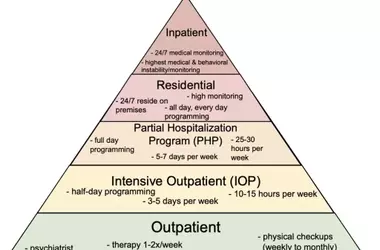
The Unseen Struggle: Navigating Eating Disorder Care Beyond Conventional Medical Frameworks
This article delves into the author's challenging journey within the healthcare system while battling an eating disorder, highlighting the significant gaps in specialized medical care for EDs, particularly outside of intensive treatment settings. It critically examines the prevailing "levels of care" model, exposing its limitations, financial barriers, and the pervasive issue of weight bias in medical practice. The author advocates for self-education and intuitive body trust as crucial components of recovery, underscoring the system's focus on profitability over patient well-being.