 Breaking News & Live Updates
- Breaking News & Live Updates
- Breaking News & Live Updates
- Breaking News & Live Updates
- Breaking News & Live Updates
- Breaking News & Live Updates
- Breaking News & Live Updates
- Breaking News & Live Updates
- Breaking News & Live Updates
- Breaking News & Live Updates
The Decaying Art of Healing: A Critical Look at Modern Medicine and Psychiatry
Reclaiming Compassion: The Path to Authentic Healing
Bernard Lown's Vision: The Essence of Healing Beyond Technology
In his notable book, The Lost Art of Healing, Bernard Lown, an acclaimed cardiologist celebrated for his groundbreaking technological contributions, underscored the paramount importance of human connections in cardiac health and recovery. He argued that these vital relationships are frequently overlooked in a medical field increasingly enamored with technology. Lown identified two crucial relational aspects for heart health: the bond between physician and patient, and the connections patients maintain with their loved ones. Regrettably, contemporary psychiatry often neglects these fundamental relational dimensions when addressing emotional challenges.
Challenging the Status Quo: Psychiatry's Neglect of Relational Care
Critics, such as Awais Aftab, contend that it is unjust to characterize psychiatry as solely focused on pharmaceutical solutions and technological interventions, citing George Engel's biopsychosocial model from 1980 as evidence of a more holistic approach. However, this "pluralistic" portrayal of psychiatry is undermined by reports, like a 2011 New York Times article, indicating a dramatic decline in psychiatrists providing talk therapy. The reality today is that most psychiatric encounters are brief, focused primarily on medication management, with genuine therapeutic relationships being exceedingly rare.
The Human Cost of Industrialized Medicine: Lown's Lament
Bernard Lown, despite his contributions to medical technology, expressed deep reservations about its dehumanizing effects. He observed that technological advancements had led to a more impersonal medical landscape, where technology took precedence over patient care. In his 1998 introduction to The Lost Art of Healing, Lown noted the pervasive patient dissatisfaction stemming from a bureaucratic healthcare system that treats individuals as standardized commodities. He argued that the "industrialization of medicine" and its worship of "business efficiency" failed to account for the unique human mind, with qualities like empathy, kindness, and insight falling outside the scope of molecular biology.
The Erosion of Trust: Healing Replaced by Treating
Lown’s central argument was that the healthcare system is failing because medicine has abandoned its focus on healing, which necessitates attentive listening to patients. This shift is largely driven by a "romance with mindless technology" and the pursuit of maximum income, making it "uneconomic to spend much time with patients." He lamented that a centuries-old tradition of trust between doctor and patient was being replaced by a new dynamic where healing was substituted with mere treatment, and caring with management. Doctors, he noted, often ministered to fragmented biological parts rather than the distressed human being.
Empathy in Action: Lown's Transformative Patient Encounters
Lown's book is filled with stories illustrating the power of human connection. In one anecdote, he describes a patient with recurrent atrial fibrillation whose condition improved dramatically after Lown helped him reconcile with his estranged daughter, previously disowned for marrying a non-Jewish man. This experience, though initially involving an angry outburst from Lown, highlighted the profound impact of addressing emotional distress on physical health. In a later instance, Lown achieved similar success with another patient suffering from coronary artery disease, who was estranged from his homosexual son. This time, Lown employed gentle persuasion, fostering a reconciliation that not only healed the family rift but also alleviated the patient's angina. These cases demonstrate that while technology plays a role, genuine caring, trust, and empathy are indispensable for true healing.
Beyond Economics: The Deeper Flaws in Mental Healthcare
While economic factors, as highlighted in the New York Times article, explain why many psychiatrists have shifted away from talk therapy, other reasons contribute to the shortcomings of mental healthcare. Many mental health professionals are trained as technicians, rather than practitioners of the art of healing. A focus on symptom management rather than creating safe, trusting, and healing relationships often leads to ineffective care. Lown believed that properties essential for healing, such as empathy, kindness, and insight, are often disregarded because they cannot be easily quantified by a purely scientific, mechanical model. This neglect of the human element, coupled with the existential struggle to integrate love and professional care, leads many former psychiatric patients to feel profound dissatisfaction and even contempt for the system.
A Call for Rebellion: Reclaiming the Human Element in Healthcare
The current state of dehumanizing psychiatry has ignited a "rebellion" among former psychiatric patients, their families, and dissident mental health professionals. Lown foresaw this uprising against industrialized medicine, predicting that patients would ultimately reject being reduced to mere standardized objects or identified solely by their illnesses. He argued that patients yearn for a partnership with physicians who are attentive to both their physical ailments and their "aching souls," seeking a "covenant of trust" built on caring. Organizations like the Lown Institute continue to champion this vision, advocating for a healthcare system that prioritizes healing over profit, promotes health equity, and honors the sacred clinician-patient relationship.
", "status": "succeOther Articles

A Journey Through Antidepressant Withdrawal During Pregnancy: Chelsea McVeigh's Story
Chelsea McVeigh shares her challenging journey of antidepressant withdrawal during pregnancy, experiencing severe anxiety and akathisia. Despite medical gaslighting, she found support and ultimately stabilized with medication, highlighting the difficult choices individuals face when navigating psychiatric drug effects and motherhood.

The Diminishing Role of Human Connection in Modern Medicine
This article explores the insights from Bernard Lown's "The Lost Art of Healing," highlighting how contemporary medicine, especially psychiatry, has drifted away from prioritizing human relationships in patient care. It examines how technological advancements and economic pressures have led to a depersonalized approach, contrasting this with Lown's advocacy for empathy and deep doctor-patient connections. The piece uses poignant anecdotes from cardiology to illustrate the profound impact of relational healing.

Navigating Antidepressant Withdrawal: A Personal Journey Through Healthcare System Challenges
This article presents an interview with Carla Delgado, who shares her personal and professional insights into antidepressant withdrawal. With a master's in healthcare administration, Carla discusses her struggle with venlafaxine withdrawal, the challenges of navigating a complex healthcare system lacking adequate support for such processes, and the importance of patient-led research and advocacy for informed consent. Her story highlights critical gaps in medical practice regarding psychiatric medication discontinuation and emphasizes the need for more empathetic, integrated care approaches.
The Silent Battle: Two Years of Recovery After TMS-Induced Brain Injury
This personal account details a woman's harrowing two-year journey following a brain injury sustained during Transcranial Magnetic Stimulation (TMS) treatment. Initially presented as a safe therapy for depression and anxiety, the procedure resulted in severe pain, cognitive dysfunction, and emotional distress. The author recounts being dismissed by medical professionals and fighting for validation, ultimately finding evidence of brain damage through an MRI. Her story highlights the critical need for better patient advocacy, informed consent, and recognition of TMS's potential adverse effects, advocating for increased awareness and support for those impacted.
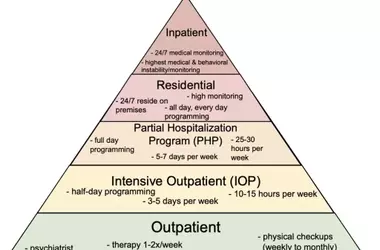
The Unseen Struggle: Navigating Eating Disorder Care Beyond Conventional Medical Frameworks
This article delves into the author's challenging journey within the healthcare system while battling an eating disorder, highlighting the significant gaps in specialized medical care for EDs, particularly outside of intensive treatment settings. It critically examines the prevailing "levels of care" model, exposing its limitations, financial barriers, and the pervasive issue of weight bias in medical practice. The author advocates for self-education and intuitive body trust as crucial components of recovery, underscoring the system's focus on profitability over patient well-being.

Challenging Psychiatry's Emotional Framework: A Call for Affective Justice
A new article in Synthese by Zoey Lavallee and Anne-Marie Gagn←-Julien critiques modern psychiatry's biomedical model for pathologizing emotions outside societal norms. They introduce "affective injustice," arguing this approach fosters sanism and marginalizes individuals labeled mentally ill. The authors highlight how psychiatry's framework distorts emotional self-understanding by framing valid responses as dysfunctions, neglecting social and environmental factors. Their work advocates for a reevaluation of psychiatric practices to promote more empowering perspectives on emotional experiences.