 Breaking News & Live Updates
- Breaking News & Live Updates
- Breaking News & Live Updates
- Breaking News & Live Updates
- Breaking News & Live Updates
- Breaking News & Live Updates
- Breaking News & Live Updates
- Breaking News & Live Updates
- Breaking News & Live Updates
- Breaking News & Live Updates
Mapping 54,583 Brain Connectomes for Disease Detection
Researchers at the USC Mark and Mary Stevens Neuroimaging and Informatics Institute have achieved a significant breakthrough by constructing one of the largest reference models of the human brain to date. This ambitious project, leveraging diffusion MRI data from over 54,000 individuals worldwide, offers unprecedented insights into the development, maturation, and decline of the brain's communication pathways throughout the human lifespan. Published in Nature Communications, this comprehensive model provides essential “growth charts” for white matter, the intricate network of neural wiring facilitating inter-brain region communication. This innovative tool equips scientists with a novel method to detect subtle structural patterns associated with aging, Alzheimer’s disease, schizophrenia risk, and other neurological and psychiatric disorders. Its public availability is set to revolutionize research and clinical practice by offering a unified framework for understanding and addressing a multitude of brain conditions.
Detailed Insights into Brain White Matter Development and Decline
On June 2, 2026, a landmark study led by Dr. Julio E. Villalón-Reina, a postdoctoral researcher at the Stevens INI, and Dr. Paul M. Thompson, associate director of the Stevens INI and senior author, was published in Nature Communications. This research unveiled a monumental “growth chart” for the human brain's white matter. Utilizing diffusion MRI, a specialized imaging technique, the team meticulously tracked the movement of water molecules through brain tissue. This method is crucial because water's microscopic motion is influenced by nerve fibers and their protective myelin sheaths, allowing for the detection of subtle structural changes imperceptible through standard brain scans.
The study encompassed an enormous dataset of 54,583 diffusion MRI scans from individuals aged 4 to 91 years, gathered from 19 international research centers. This extensive compilation enabled the creation of statistical “growth and decline charts” for the brain’s neural pathways across 21 major brain regions. By analyzing four key measures of white matter microstructure, the researchers developed lifespan curves and percentile ranges that depict typical brain development and aging. The findings underscored that white matter follows distinct developmental trajectories, with different measures peaking at various stages from early adulthood to midlife.
A significant validation emerged from this global analysis: the long-standing "last in, first out" theory of brain aging. The study confirmed that white matter pathways that are the last to fully mature during childhood and adolescence are indeed the first to show structural decline in old age. This revelation provides a critical link between brain development and the aging process. To demonstrate the model's clinical applicability, it was applied to datasets of individuals with mild cognitive impairment, dementia, and 22q11.2 deletion syndrome (a genetic condition increasing schizophrenia risk). In every instance, the model successfully identified structural deviations from age-expected norms, emphasizing the necessity of a personalized approach to brain health, as these deviations varied among individuals with the same diagnosis.
The researchers anticipate that these reference charts will be invaluable in clinical trials, allowing for the assessment of whether therapeutic interventions can restore a patient's white matter metrics to healthy ranges or slow down neurodegeneration. Funded by the National Institutes of Health (NIH) and international partners, this publicly accessible tool is being expanded to provide a unified analytical framework for over 30 neurological, psychiatric, and neurodevelopmental conditions, fostering a more rigorous comparison and understanding of these disorders.
This pioneering research underscores the profound impact of large-scale data integration and international collaboration in advancing neuroscience. The ability to chart the brain's white matter across the entire lifespan, much like pediatric growth charts, offers an unprecedented lens through which to view brain health. This personalized approach holds immense promise for early disease detection, tailored interventions, and a deeper understanding of the complex interplay between brain development and aging. Ultimately, this tool represents a pivotal step towards precision medicine in neurology and psychiatry, offering hope for more effective diagnostics and treatments for a wide array of brain disorders.
Other Articles

Understanding Voices: A Compassionate Approach to Auditory Hallucinations and Suicidal Ideation
Researchers from the University of Birmingham and Mind in Camden have introduced new clinical resources, including a guide and documentary, advocating for a more compassionate approach to individuals experiencing auditory hallucinations, especially those linked to suicidal thoughts. The project emphasizes that hearing voices can be an adaptive coping mechanism for severe psychological distress. It critiques current practices that often erode trust and intensify distress through coercive interventions, calling for a paradigm shift towards collaborative listening, respect for patient agency, and epistemic justice.

Psychedelic Therapy Shows High Efficacy in PTSD Remission for Veterans
A groundbreaking U.S. clinical trial demonstrates the significant potential of psilocybin-assisted therapy for military veterans suffering from treatment-resistant PTSD. The 11-week protocol, combining psychotherapy with two psilocybin dosing sessions, resulted in a remarkable 75% remission rate one month post-treatment. Crucially, the therapy proved safe, with no serious adverse events, suggesting a promising new avenue for addressing this debilitating condition.

Consistent Routines: A Shield Against Pain and Depression
A recent study highlights the profound impact of consistent daily routines on reducing physical pain and alleviating depressive symptoms, particularly in older adults experiencing insomnia. By synchronizing the body's circadian rhythm, regular schedules for waking, eating, and social interactions offer a simple yet powerful strategy for enhancing overall well-being, irrespective of sleep quality.
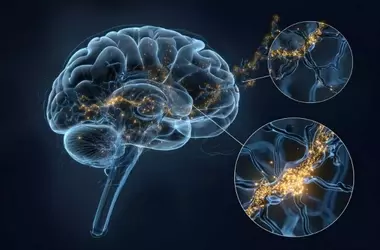
Schizophrenia Risk Gene Linked to Hyper-Excitable Neurons
Researchers at King's College London have uncovered how a schizophrenia-associated gene, ZNF804A, impacts developing human cortical neurons. This study, published in Science Advances, reveals ZNF804A's peak activity during the second trimester of neurodevelopment, specifically in glutamaterergic neurons. Using CRISPR-Cas9, scientists found that suppressing ZNF804A leads to abnormally accelerated localized protein translation and hyper-excitable synaptic signaling. This breakthrough bridges the gap between genetic risk factors and the neurobiological pathways of schizophrenia, offering crucial insights for future treatments.

Open Dialogue Approach Reduces Psychiatric Hospital Use
A new study reveals that Open Dialogue, a non-medical mental health treatment, significantly reduces psychiatric hospital admissions and improves patient satisfaction. This approach, which emphasizes relationships and shared decision-making, offers a promising alternative to traditional crisis care by involving patients' social networks throughout the treatment process. While not improving time to relapse, it led to better recovery and quality of life.

The Perils of Psychiatric Labels: Misdiagnosis, 'Sticky' Diagnoses, and Overlooking Physical Illness
New research highlights significant concerns within psychiatric diagnosis, exploring how childhood autism and ADHD labels can persist into adulthood even when criteria are no longer met. The validity of current ADHD diagnostic criteria is questioned due to vagueness and arbitrary thresholds. Furthermore, two case studies illustrate the danger of diagnostic overshadowing, where psychiatric diagnoses can lead to physical symptoms being misinterpreted and underlying medical conditions being left untreated, emphasizing the need for comprehensive evaluation.