 Breaking News & Live Updates
- Breaking News & Live Updates
- Breaking News & Live Updates
- Breaking News & Live Updates
- Breaking News & Live Updates
- Breaking News & Live Updates
- Breaking News & Live Updates
- Breaking News & Live Updates
- Breaking News & Live Updates
- Breaking News & Live Updates
Empowering Autistic Students: A Guide for Inclusive Classrooms
Educators often face the crucial task of creating supportive learning environments for all students, including those on the autism spectrum. While traditional educational models may inadvertently overlook or misinterpret the unique needs of autistic learners, a paradigm shift towards a strengths-based approach can unlock their full potential. This involves recognizing and valuing the distinct cognitive strengths that autistic students bring to the classroom, moving beyond a focus on perceived deficits to cultivate an environment where they can truly thrive.
Understanding and responding effectively to the varied expressions of autistic experience, such as meltdowns and stimming, is also paramount. These behaviors are often involuntary responses to sensory or emotional overload, not acts of defiance, and require empathetic and informed responses rather than punitive measures. Furthermore, designing classrooms that are sensory-inclusive and fostering strong partnerships with families and specialized professionals are integral steps towards building an educational ecosystem that supports the well-being and academic success of every autistic student.
Cultivating Strengths: Enhancing Autistic Learning in Educational Settings
Autistic individuals possess distinct cognitive advantages, including an intense capacity for focus, exceptional pattern recognition, and profound depth in areas of special interest. However, conventional teaching methods frequently misinterpret these attributes as challenges, rather than recognizing them as valuable assets that require minor adjustments for optimal engagement. Approximately one in thirty-one children in the United States is identified as autistic, yet educational guidance often prioritizes corrective measures over approaches that leverage their inherent strengths. This discrepancy highlights a critical need to bridge the gap between diagnostic understanding and the implementation of strengths-based support in the classroom. By fostering an atmosphere of inquiry and valuing individual differences, educators can better integrate autistic students, enabling them to flourish academically and personally.
A strengths-focused framework is essential for supporting autistic students, promoting their executive functioning and social-emotional development. Special interests, which are central to the autistic experience for a significant majority, offer a powerful avenue for engagement. These interests are tied to monotropism, an attentional style characterized by deep immersion in a select few topics, fostering a state of flow that is both invigorating and rewarding. Educators can harness this by integrating students' special interests into curricula through tailored assignments, such as persuasive writing on a chosen topic or math problems connected to their passions. Moreover, the direct and literal communication style common among autistic individuals can be reframed as a classroom asset, reducing ambiguity for all learners. Furthermore, heightened sensory awareness, while sometimes challenging, also supports precision-based tasks and meticulous observation when the environment is thoughtfully regulated, highlighting the importance of environmental design in optimizing learning outcomes.
Nurturing Inclusive Spaces: Responding to Needs and Building Partnerships
Traditional classroom activities, often designed for more fluid attention styles, can inadvertently hinder autistic learners. Frequent topic shifts, unstructured brainstorming, and abrupt transitions can be counterproductive. To better support autistic students, cognitive activities should be adapted by reducing sensory overload through simplified visual layouts and clear instructions. Implementing predictable structures, such as visual schedules and explicit start-and-end signals, helps students allocate their cognitive resources to learning rather than anticipating what comes next. Crucially, new material should be anchored to students' existing special interests, making learning more relevant and engaging. This proactive approach supports sustained engagement and emotional regulation, preventing the frustration that can lead to meltdowns.
Addressing meltdowns and stimming effectively is central to creating a supportive environment. Meltdowns are physiological responses to overwhelming input, distinct from tantrums, and require reduced stimulation and safety rather than disciplinary action. Stimming, often repetitive movements or vocalizations, serves as a self-regulatory mechanism for managing sensory input and anxiety. Suppressing stimming removes a vital coping tool, potentially contributing to autistic burnout—a state of exhaustion from chronic stress and environmental mismatches. Educators must recognize the signs of burnout, which can manifest as regression or increased need for support, and understand that masking autistic traits is cognitively and emotionally taxing. Building strong partnerships with families and specialists is also critical, as they provide invaluable insights into a student's unique needs and strengths. Framing individualized education plans around these strengths, alongside necessary supports, fosters more motivating and accurate reflections of the student's capabilities and promotes genuine flourishing.
Other Articles

Exploring the Essence of Meditation: From Ancient Roots to Modern-Day Benefits and Practical Implementation
This article delves into the practice of meditation, examining its historical origins, diverse benefits for psychological, cognitive, physiological, behavioral, and interpersonal well-being, and offering practical advice on establishing and maintaining a meditation routine. It addresses common challenges faced by new practitioners and emphasizes that meditation is a journey of self-discovery rather than a rigid discipline, highlighting its accessibility and scientifically backed positive impacts on daily life.

Four Transformative Advantages of Self-Kindness
Self-compassion, a cultivated ability, significantly enhances well-being. Research indicates its profound influence on mental health, reducing anxiety, depression, and stress. It fosters resilience under pressure, enabling quicker recovery from adversity, and promotes intrinsic motivation over self-criticism. Furthermore, self-compassion strengthens interpersonal bonds by encouraging empathy and constructive conflict resolution. Embracing this practice leads to a more fulfilling and connected existence.

A Comprehensive Guide to Cultivating Self-Compassion
This article explores the concept of self-compassion, defining it through its three core components: self-kindness, common humanity, and mindfulness. It differentiates self-compassion from self-esteem and self-love, highlighting its unconditional nature and resilience against external outcomes. The piece also offers practical advice on developing self-compassion as a skill, emphasizing its benefits for mental well-being.

Enhancing Remote Team Connection Through Virtual Communication Activities
This article explores the growing necessity of virtual communication games for fostering stronger bonds and more effective collaboration within remote and hybrid teams. It delves into the benefits of robust team communication, common challenges faced by virtual teams, and provides a structured approach to selecting, implementing, and debriefing various types of virtual games. The piece emphasizes the importance of intentional design, clear instructions, and post-activity reflection to maximize learning and connection among team members.
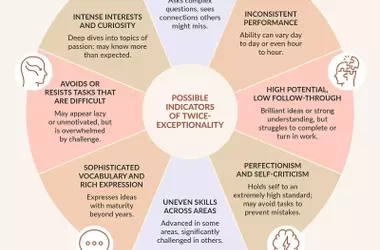
Supporting Twice-Exceptional Students: Strategies for 2e Learners
This article explores the complexities of twice-exceptional (2e) students, who possess both exceptional talents and learning challenges. These dualities often lead to their true potential being overlooked or misunderstood. We delve into identifying the unique characteristics of 2e learners, understanding their asynchronous development, and addressing the emotional impact of their experiences. Furthermore, we outline practical strategies for educators and families to foster an environment where 2e students can thrive by recognizing their strengths and providing tailored support without compromising expectations.

The Lingering Impact of Unaddressed Feelings
This article delves into the concept of unprocessed emotions, explaining how feelings that are not fully acknowledged and worked through can manifest physically and behaviorally. It highlights that while temporary suppression might offer short-term relief, these emotions often persist, contributing to chronic stress, emotional reactivity, and a sense of stagnation. Understanding the nature and effects of these unresolved feelings is crucial for developing healthier coping mechanisms and improving overall well-being.