 Breaking News & Live Updates
- Breaking News & Live Updates
- Breaking News & Live Updates
- Breaking News & Live Updates
- Breaking News & Live Updates
- Breaking News & Live Updates
- Breaking News & Live Updates
- Breaking News & Live Updates
- Breaking News & Live Updates
- Breaking News & Live Updates
Exploring the Essence of Meditation: From Ancient Roots to Modern-Day Benefits and Practical Implementation
Unlock Inner Peace: A Journey into Meditation's Transformative Power
Understanding the Core of Meditation: Beyond Simple Relaxation
At its heart, meditation involves focusing one's attention on a singular point, whether it's the present moment, one's breath, an abstract concept, or a feeling of kindness towards others. This practice hones attention and awareness, fostering emotional equilibrium and inner stability. It represents a deliberate cultivation of tranquility, concentration, and purpose, offering an alternative to constant activity by encouraging a state of 'being' rather than perpetual 'doing.' While it can help quiet the mind, meditation is not about completely eliminating thoughts; rather, it's about training the mind, much like physical exercise builds muscle, to improve focus and, if desired, achieve mental clarity.
Tracing the Historical Path of Meditative Practices
Meditation is a practice with a rich and extensive history, with documented evidence suggesting its presence as far back as 1500 BCE within ancient Indian Veda communities. Its origins are multifaceted, viewed differently depending on the cultural and philosophical lens. Traditionally linked to spiritual disciplines, it has also been described as a method for profound self-knowledge and understanding of reality. Stoic philosophers considered meditation crucial for maintaining virtue and living a fulfilling life, while some theories even propose it as an evolutionary adaptation of our 'freeze' response. Regardless of how we interpret its beginnings, the historical trajectory of meditation reveals its significant role in shaping human experience. Today, it remains a freely available and widely embraced tool by therapists, health professionals, and individuals seeking self-improvement to foster a better quality of life.
The Multifaceted Advantages of Embracing Meditation
Engaging in meditation promotes a more fulfilling existence by delivering a wide array of advantages, encompassing enhanced psychological and emotional resilience, improved cognitive functions and behavioral patterns, stronger relationships and interpersonal skills, and even beneficial physiological alterations. These benefits are categorized into five key areas: psychological/emotional (e.g., reduced depression/anxiety, improved mood), cognitive (e.g., better attention, executive control, memory), physiological (e.g., lower blood pressure, improved sleep, increased gray matter), behavioral (e.g., reduced cravings, impulse control for addiction), and interpersonal/social (e.g., greater positive social emotions, increased social connectedness).
Overcoming Obstacles and Sustaining a Meditative Lifestyle
Despite the numerous advantages, many individuals find it challenging to commit to meditation, often due to the difficulty of simply 'doing nothing' in a productivity-driven world. The practice can also be perceived as boring or mystical, leading to apprehension about proper technique or the need to adopt specific belief systems. However, these barriers are not insurmountable. To cultivate a consistent meditation habit, consider these practical tips: maintain a comfortable yet upright posture to avoid discomfort; utilize anchors such as your breath or physical sensations to stay present; set reminders or use apps to integrate meditation into your schedule; leverage guided exercises and scripts from experts initially; and remember that the goal is presence, not perfection, forgiving yourself if you miss a session.
A Concluding Reflection on the Enduring Value of Meditation
Whether one adheres to a particular faith, explores unorganized spirituality, or maintains a secular outlook, meditation offers a versatile path to enriching daily life. With its extensive, evidence-based benefits and zero upfront costs, it stands as a proven method for cultivating a more satisfying and meaningful existence.
Other Articles

Four Transformative Advantages of Self-Kindness
Self-compassion, a cultivated ability, significantly enhances well-being. Research indicates its profound influence on mental health, reducing anxiety, depression, and stress. It fosters resilience under pressure, enabling quicker recovery from adversity, and promotes intrinsic motivation over self-criticism. Furthermore, self-compassion strengthens interpersonal bonds by encouraging empathy and constructive conflict resolution. Embracing this practice leads to a more fulfilling and connected existence.

A Comprehensive Guide to Cultivating Self-Compassion
This article explores the concept of self-compassion, defining it through its three core components: self-kindness, common humanity, and mindfulness. It differentiates self-compassion from self-esteem and self-love, highlighting its unconditional nature and resilience against external outcomes. The piece also offers practical advice on developing self-compassion as a skill, emphasizing its benefits for mental well-being.

Enhancing Remote Team Connection Through Virtual Communication Activities
This article explores the growing necessity of virtual communication games for fostering stronger bonds and more effective collaboration within remote and hybrid teams. It delves into the benefits of robust team communication, common challenges faced by virtual teams, and provides a structured approach to selecting, implementing, and debriefing various types of virtual games. The piece emphasizes the importance of intentional design, clear instructions, and post-activity reflection to maximize learning and connection among team members.
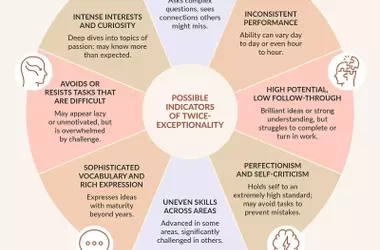
Supporting Twice-Exceptional Students: Strategies for 2e Learners
This article explores the complexities of twice-exceptional (2e) students, who possess both exceptional talents and learning challenges. These dualities often lead to their true potential being overlooked or misunderstood. We delve into identifying the unique characteristics of 2e learners, understanding their asynchronous development, and addressing the emotional impact of their experiences. Furthermore, we outline practical strategies for educators and families to foster an environment where 2e students can thrive by recognizing their strengths and providing tailored support without compromising expectations.

The Lingering Impact of Unaddressed Feelings
This article delves into the concept of unprocessed emotions, explaining how feelings that are not fully acknowledged and worked through can manifest physically and behaviorally. It highlights that while temporary suppression might offer short-term relief, these emotions often persist, contributing to chronic stress, emotional reactivity, and a sense of stagnation. Understanding the nature and effects of these unresolved feelings is crucial for developing healthier coping mechanisms and improving overall well-being.

Mastering Emotional Intelligence: Five Key Benefits
This article, drawing insights from the 'Introduction to Understanding Emotions' course, explores the profound impact of developing emotional skills. It challenges the common perception of emotions as mere distractions, instead highlighting their crucial role in enhancing decision-making, strengthening relationships, and clarifying personal values. The piece outlines five compelling reasons to cultivate emotional intelligence, emphasizing its benefits for individual well-being, interpersonal collaboration, and personal growth. It also touches upon how practitioners can utilize these insights to support clients in their emotional development.