 Breaking News & Live Updates
- Breaking News & Live Updates
- Breaking News & Live Updates
- Breaking News & Live Updates
- Breaking News & Live Updates
- Breaking News & Live Updates
- Breaking News & Live Updates
- Breaking News & Live Updates
- Breaking News & Live Updates
- Breaking News & Live Updates
A Comprehensive Guide to Cultivating Self-Compassion
When reflecting on past missteps, our internal monologue often turns critical. Many individuals find themselves disproportionately harsh towards their own errors, a stark contrast to the empathy they would readily extend to a friend in a similar situation. This discrepancy is termed the self-compassion gap. While often conflated with self-esteem or self-love, self-compassion is a distinct, research-backed skill that can be cultivated. It focuses on transforming how we react to our shortcomings, rather than dwelling on them.
Unveiling the Essence of Self-Compassion: A Threefold Path
At its core, self-compassion, as theorized by Kristin Neff in 2003, is an amalgamation of three interconnected elements: self-kindness, common humanity, and mindfulness. These components collaboratively enable us to approach personal struggles and imperfections with understanding rather than condemnation. We instinctively demonstrate these qualities when supporting others; the challenge lies in redirecting that same nurturing instinct inward.
The Nurturing Embrace of Self-Kindness
Self-kindness involves extending warmth and understanding to ourselves during moments of adversity, steering clear of harsh self-judgment. It means releasing the added burden of self-punishment that often accompanies mistakes, without attempting to disregard the error itself. For instance, if a work deadline is missed, a self-kind response would acknowledge the difficulty of the week and seek solutions to recover, rather than engaging in self-deprecating thoughts. This approach not only alleviates immediate emotional distress but also mitigates the long-term emotional impact of setbacks.
Embracing Our Shared Human Experience: Common Humanity
Common humanity signifies the recognition that imperfection, struggle, and failure are universal aspects of the human condition, not indicators of a unique personal flaw. It counters the isolating belief that others are effortlessly managing life's complexities while we alone falter. A missed deadline, for example, becomes a shared experience, connecting us to others rather than setting us apart. Acknowledging this shared struggle prevents feelings of isolation and fosters a sense of belonging.
The Art of Balanced Awareness: Mindfulness
Mindfulness, in the context of self-compassion, is the ability to observe difficult emotions and thoughts with balanced awareness. It's about finding a middle ground between suppressing painful feelings and becoming overwhelmed by them. When confronted with the embarrassment and stress of a missed deadline, mindfulness allows us to acknowledge these emotions without getting lost in endless rumination or superficially dismissing them.
These three aspects are not sequential steps but rather mutually reinforcing practices. Feeling connected to others in struggle can enhance self-kindness, which in turn facilitates a mindful engagement with discomfort.
Distinguishing Self-Compassion from Self-Esteem and Self-Love
Self-esteem is predominantly evaluative, contingent on our judgments of ourselves often in comparison to others, making it susceptible to fluctuations based on performance. Self-love, while a positive inclination towards self-acceptance, lacks the structured framework that makes self-compassion readily actionable. Self-compassion stands apart by being unconditional; it offers consistent support regardless of outcomes, focusing solely on care rather than evaluation. This inherent stability leads to more consistent feelings of self-worth, less dependent on external validation or social comparisons, while equally promoting happiness and positive emotions.
Cultivating Self-Compassion Through Practice
Self-compassion is a skill that strengthens with consistent application. Its development often begins with subtle shifts: consciously choosing a gentler internal narrative after an error. A brief self-compassion pause can be instrumental in challenging moments; it involves acknowledging the difficulty, reminding oneself of shared human experiences, and offering a comforting phrase before moving forward. For those seeking a more structured approach, programs like Mindful Self-Compassion training, developed by Neff and psychologist Christopher Germer, offer formal pathways, leading to significant enhancements in self-compassion, mindfulness, and overall well-being. Tools like the self-compassion scale also provide valuable insights into personal patterns, guiding individuals towards targeted practices and exercises for deeper cultivation.
The journey toward self-compassion is not about achieving perfection, but about the conscious choice to respond to our imperfections with kindness and understanding. This shift is profoundly linked to reduced anxiety, depression, and stress, underscoring its pivotal role in fostering robust mental health. It's a continuous process of noticing our inner critic and deliberately choosing a path of empathy, fostering a more resilient and compassionate relationship with ourselves.
A Personal Reflection on Nurturing Self-Compassion
In our fast-paced and often unforgiving world, the act of self-compassion emerges not as a luxury, but as a fundamental necessity for psychological well-being. I am deeply struck by how often we extend boundless grace to others, yet withhold it from ourselves. This article beautifully articulates the actionable steps towards bridging that gap. It's a powerful reminder that our internal dialogue can either be our harshest critic or our most steadfast ally. Embracing self-kindness, recognizing our shared human fallibility, and practicing mindful awareness are not merely therapeutic concepts; they are daily invitations to cultivate a more resilient, peaceful, and ultimately, a happier existence. This journey requires consistent effort, but the profound benefits—reduced stress, enhanced emotional stability, and a deeper sense of self-worth—make it an endeavor unequivocally worth pursuing. Let us all strive to be as kind to ourselves as we are to those we cherish.
Other Articles

Enhancing Remote Team Connection Through Virtual Communication Activities
This article explores the growing necessity of virtual communication games for fostering stronger bonds and more effective collaboration within remote and hybrid teams. It delves into the benefits of robust team communication, common challenges faced by virtual teams, and provides a structured approach to selecting, implementing, and debriefing various types of virtual games. The piece emphasizes the importance of intentional design, clear instructions, and post-activity reflection to maximize learning and connection among team members.
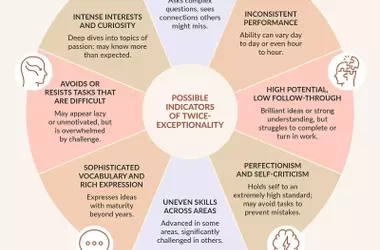
Supporting Twice-Exceptional Students: Strategies for 2e Learners
This article explores the complexities of twice-exceptional (2e) students, who possess both exceptional talents and learning challenges. These dualities often lead to their true potential being overlooked or misunderstood. We delve into identifying the unique characteristics of 2e learners, understanding their asynchronous development, and addressing the emotional impact of their experiences. Furthermore, we outline practical strategies for educators and families to foster an environment where 2e students can thrive by recognizing their strengths and providing tailored support without compromising expectations.

The Lingering Impact of Unaddressed Feelings
This article delves into the concept of unprocessed emotions, explaining how feelings that are not fully acknowledged and worked through can manifest physically and behaviorally. It highlights that while temporary suppression might offer short-term relief, these emotions often persist, contributing to chronic stress, emotional reactivity, and a sense of stagnation. Understanding the nature and effects of these unresolved feelings is crucial for developing healthier coping mechanisms and improving overall well-being.

Mastering Emotional Intelligence: Five Key Benefits
This article, drawing insights from the 'Introduction to Understanding Emotions' course, explores the profound impact of developing emotional skills. It challenges the common perception of emotions as mere distractions, instead highlighting their crucial role in enhancing decision-making, strengthening relationships, and clarifying personal values. The piece outlines five compelling reasons to cultivate emotional intelligence, emphasizing its benefits for individual well-being, interpersonal collaboration, and personal growth. It also touches upon how practitioners can utilize these insights to support clients in their emotional development.

A Comprehensive Guide to Understanding and Managing Your Emotions
This article explores the crucial skill of emotional processing, distinguishing it from mere emotional management. It emphasizes that unprocessed emotions can manifest as physical tension, avoidance behaviors, or a persistent feeling of being stuck. The good news is that emotional processing is a learned skill accessible to everyone, leading to improved self-understanding and daily experiences. The piece details a step-by-step guide including noticing, naming, making space for, investigating, and responding to emotions, and introduces additional methods like expressive writing and talking things out for healthier emotional integration.

Enhancing Parent-Teen Communication Through Engaging Games
This article explores various communication games designed to foster stronger bonds between teenagers and their parents. It highlights the importance of creating a relaxed and voluntary environment for conversation, moving away from interrogative styles. By incorporating fun activities, parents can encourage open dialogue, mutual understanding, and shared experiences, ultimately strengthening their relationship with their adolescent children.