 Breaking News & Live Updates
- Breaking News & Live Updates
- Breaking News & Live Updates
- Breaking News & Live Updates
- Breaking News & Live Updates
- Breaking News & Live Updates
- Breaking News & Live Updates
- Breaking News & Live Updates
- Breaking News & Live Updates
- Breaking News & Live Updates
The Unseen Battle: My Personal Journey Through Insomnia, Polypharmacy, and a Search for Healing
My ordeal began unexpectedly during my final college semester, mirroring the initial steps of Lindsay Clancy's tragic story. What started as minor sleep disturbances quickly escalated after a doctor prescribed Xanax for anxiety, assuring me it was harmless. This seemingly innocuous prescription led to a bewildering cycle of dependency and rebound insomnia, a condition I discovered only after frantic research following my prescription's expiration. Despite my findings, medical professionals dismissed my concerns, attributing my worsening condition to escalating anxiety rather than the drug's withdrawal effects. This dismissal initiated a frustrating journey through multiple doctors and a cocktail of potent medications—including Seroquel, Trazadone, and Lithium—none of which provided relief. My body and mind deteriorated, experiencing constant physical discomfort, cognitive distortion, daily panic attacks, and an intense 'sleep phobia,' where the act of falling asleep became both terrifying and elusive. The profound lack of sleep transformed my perception of reality, pushing me to the brink of despair and revealing the severe impact of prolonged insomnia on one's mental and physical well-being.
The quest for answers led me to what some might call 'doctor shopping,' a desperate attempt to find a medical professional who would take my symptoms seriously. My experience echoed Lindsay Clancy's alleged similar actions, driven not by addiction but by a profound need for understanding and relief. Throughout this period, I encountered numerous doctors whose advice often contradicted medical literature and each other, further eroding my trust in the conventional psychiatric system. Over a span of three months, I was prescribed approximately fifteen different medications, many of which were also prescribed to Lindsay Clancy, yet my condition only worsened. The pervasive belief that these medications required extended periods to take effect, or that initial adverse reactions would simply subside, proved untrue in my case. I experienced immediate and severe side effects, indicating a rapid and significant impact on my brain chemistry. Hospitalization offered no solace, serving merely as a temporary respite rather than a source of genuine help, leaving me more despondent than before.
A turning point arrived with the profound realization that my healing needed to come from within. I began to discard most of my medications and embraced a path of self-discovery and spiritual exploration, including meditation and finding a truly empathetic therapist who identified and treated my OCD. This internal shift, coupled with rigorous effort, helped reset my nervous system, allowing me to gradually regain my ability to sleep. While my journey ultimately led to recovery, Lindsay Clancy's story tragically diverged. Her situation was compounded by postpartum hormones, the demands of raising three young children, and alleged postpartum psychosis, factors that underscore the complexities and vulnerabilities within the mental health landscape. Her case serves as a stark reminder of the critical need for a more empathetic, effective, and responsive psychiatric system, one that addresses the root causes of suffering and acknowledges the potential harm of certain treatments, fostering essential conversations about postpartum mental health and the broader effectiveness of current psychiatric approaches.
Ultimately, the shared threads in our experiences, despite our differing outcomes, highlight systemic issues within mental healthcare. My personal triumph over severe insomnia and polypharmacy reaffirms the power of internal resilience and the pursuit of holistic well-being. It underscores the importance of trusting one's own instincts and actively seeking solutions that resonate with individual needs, rather than solely relying on external prescriptions. This journey serves as a beacon of hope, demonstrating that even in the darkest moments, there is a path toward healing and regaining control over one's life, emphasizing self-advocacy and a proactive approach to mental health. It inspires a broader call for compassion, understanding, and a fundamental re-evaluation of how society supports individuals grappling with severe mental health challenges.
Other Articles

Critical Perspectives on Dialectical Behavior Therapy
This article challenges the prevailing views on Dialectical Behavior Therapy (DBT), particularly for individuals diagnosed with Borderline Personality Disorder (BPD). It highlights a patient's critical experience, arguing that DBT often promotes conformity, blames the individual, and overlooks systemic issues and patient-led healing methods. The piece questions the therapy's effectiveness, especially in the long term, and points out the lack of independent research validating its widespread efficacy.

From Church to Clinic: The Cult of Compliance
This article explores the author's personal journey of disengagement from what she identifies as a cult-like religious environment, drawing parallels between the coercive dynamics of this church and certain aspects of institutional psychiatry. She recounts experiences of gaslighting, pressure to conform, and the suppression of individual autonomy, highlighting how both systems demand compliance by pathologizing dissent and individual struggles. The author, a social worker, ultimately reclaims her authentic self by rejecting these oppressive frameworks, advocating for self-love, and challenging societal norms that define distress as an internal defect rather than a response to systemic issues.
Neuroscience's Three-Decade Struggle to Understand Psychiatric Conditions
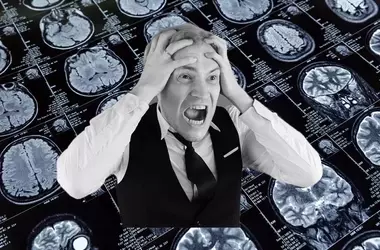
A recent paper by Raymond Dolan, a leading neuroscientist, critically assesses three decades of neuroimaging research in psychiatry. The review concludes that despite substantial investment and technological advancements, the field has failed to provide a neurobiological explanation for any psychiatric condition or develop clinically useful imaging-based biomarkers. The authors highlight issues like unreliable MRI data and the minimal explanatory power of genetic correlations, questioning the foundational assumptions and methods within psychiatric neuroimaging.

Marianne Apostolides Challenges Modern Psychiatry's Approach to Mental Health
Author Marianne Apostolides discusses her new book, "Go/No-Go," which critically examines contemporary psychiatry and neuroscience. Triggered by her own struggle with an eating disorder during COVID-19, she delves into neuromodulation, digital therapeutics, and pharmaceuticals. Apostolides scrutinizes the underlying research practices, institutional pressures, and inherent biases, especially the unexamined metaphors that shape scientific understanding of the mind and mental distress. Her work highlights the disconnect between scientific claims and lived experiences, advocating for a more humanistic approach to mental health.

The Overlooked Struggle of Psychiatric Drug Withdrawal: A Call for Systemic Change
This article delves into the profound challenges faced by individuals undergoing psychiatric medication withdrawal, highlighting the systemic failures within the medical community to adequately recognize, research, and support patients through this process. It emphasizes the critical need for individualized, slow tapering protocols, comprehensive whole-body support, and a collaborative patient-provider relationship to foster genuine healing and address the often-dismissed realities of withdrawal symptoms.

The Looming Crisis: Psychiatric Bed Shortages and the Competency Quagmire in the US
This article delves into the persistent 'psychiatric bed shortage' narrative in the US, arguing it's a moral panic diverting attention from the growing crisis of 'incompetent to stand trial' (IST) cases. It examines how this issue, exacerbated by the criminalization of mental health and the profit-driven private sector, traps vulnerable individuals in a cycle of incarceration. The piece highlights the failures of existing systems, the manipulation of research, and ongoing legal challenges aimed at promoting community-based care over institutionalization.