 Breaking News & Live Updates
- Breaking News & Live Updates
- Breaking News & Live Updates
- Breaking News & Live Updates
- Breaking News & Live Updates
- Breaking News & Live Updates
- Breaking News & Live Updates
- Breaking News & Live Updates
- Breaking News & Live Updates
- Breaking News & Live Updates
Critical Perspectives on Dialectical Behavior Therapy
This report critically examines the prevailing narratives surrounding Dialectical Behavior Therapy (DBT), especially when applied to individuals identified with Borderline Personality Disorder (BPD). The discussion centers on the experiences of those who have undergone DBT, arguing that current therapeutic approaches often prioritize conformity, assign blame to patients, and fail to acknowledge broader systemic challenges. It also brings into question the effectiveness and long-term benefits of DBT, highlighting a deficiency of independent studies to substantiate its widespread acclaim and use.
A Skeptical Look at Dialectical Behavior Therapy's Efficacy
An incisive critique from 'Surviving Psychiatry' highlights significant concerns regarding the traditional application of 'treatment' within psychiatric frameworks, particularly focusing on Dialectical Behavior Therapy (DBT). These criticisms underscore a troubling trend: mental health interventions are often standardized, rooted in assumptions of pathology, and geared towards 'correction' rather than holistic healing. This approach, it is argued, fosters conformity, isolates individual experiences, and pathologizes patients, thereby sidestepping deeper systemic issues.
The author points out the problematic nature of labeling individuals with 'Borderline Personality Disorder' as 'non-compliant' when they resist or challenge therapeutic norms. This framing, it is asserted, pre-emptively categorizes the patient as inherently problematic, deflecting scrutiny from the treatment itself to the individual's reaction. This 'medical model' entrenches a hierarchical structure where 'professionals' dictate 'evidence-based' treatments, often for the patient's 'own good,' as revealed by discussions on forums like studentdoctor.net, where professionals reportedly exhibit objectifying attitudes and a narrow understanding of patient diversity.
The personal account details a profound sense of invalidation stemming from medical malpractice and subsequent therapeutic encounters. The author expresses distress over being repeatedly told to alter their reactions by the very individuals who had previously caused harm, articulating a powerful sentiment of betrayal and a deep-seated distrust in the system. The recommendation of DBT in this context is perceived as further evidence of a 'client-blaming,' condescending, and conformity-driven ethos, fostering a sense of cynicism essential for personal safety and survival.
Furthermore, the critique extends to the therapeutic environment, suggesting that the presence of professionals often obstructs genuine healing. The author posits that true recovery is fostered within self-formed communities, where individuals can share experiences with those who genuinely understand. Online interactions, allowing for authentic sharing and mutual support, have been transformative for many, yet professionals often overlook or dismiss such avenues for profound healing, thereby maintaining the status quo. This discouragement of patient-to-patient dialogue and advocacy is seen as a means to prevent patients from recognizing the political dimensions of their 'illness' experiences, which could lead to non-compliance.
The article also challenges the perceived 'evidence-base' of therapies like DBT, arguing that a lack of critical thinking in psychotherapy leads to erroneous beliefs about their effectiveness. Attempts to critique DBT, such as expressing dissatisfaction on social media, are frequently met with invalidating responses that blame the individual for their perceived failure to engage properly with the therapy. This response mechanism highlights a systemic issue where patient experiences, especially those of individuals with BPD, are often disregarded in assessments of treatment efficacy and potential harm.
The fundamental premise of DBT, which positions the 'DBT clinician' as an authority figure tasked with 'fixing' patient emotions and behaviors, is labeled as inherently disempowering. Described as a long-term program for the 'most 'messed up'' individuals, particularly those with chronic suicidality, DBT is criticized for its focus on altering socially unacceptable coping mechanisms without addressing underlying causes. Research findings are cited, indicating that DBT yields only short-term improvements in specific symptoms, with no significant long-term impact on suicidality, depression, or hopelessness, and that its gains often degrade over time. The majority of studies supporting DBT's efficacy, it is noted, have been conducted by its founder, Linehan, and her associates, raising questions about impartiality. Despite claims of its widespread popularity among professional guilds, a 2017 study significantly challenged the mainstream psychological assertion of DBT's effectiveness. The substantial cost and intensive nature of the program, coupled with minimal results and high dropout rates, are deemed concerning. Those who discontinue DBT or 'relapse' are frequently blamed for their lack of commitment, reinforcing a problematic narrative.
The piece concludes by asserting that DBT's failure to allow patients to explore the broader context of their distress renders it ineffective as a long-term therapy, functioning more as a behavioral mask. It undermines deeper suffering by prioritizing behavioral change as the primary indicator of 'health' and placing sole responsibility on the individual. The author finds it insulting that professionals continue to recommend DBT to those for whom such a directive and authoritarian model is entirely unsuitable, attributing this to a tendency to interpret resistance as 'non-compliance' or typical 'BPD presentation.' The article ends with a defiant rejection of this conformist ideology, advocating for a societal shift towards compassion and understanding of trauma, rather than demanding individuals adapt to societal shortcomings.
This comprehensive critique of DBT suggests that its mainstream acceptance may be more a reflection of institutional inertia and a lack of critical inquiry than genuine, universally applicable therapeutic success. It underscores the urgent need for mental health approaches that are more patient-centered, acknowledge systemic influences, and support diverse pathways to healing.
Other Articles

From Church to Clinic: The Cult of Compliance
This article explores the author's personal journey of disengagement from what she identifies as a cult-like religious environment, drawing parallels between the coercive dynamics of this church and certain aspects of institutional psychiatry. She recounts experiences of gaslighting, pressure to conform, and the suppression of individual autonomy, highlighting how both systems demand compliance by pathologizing dissent and individual struggles. The author, a social worker, ultimately reclaims her authentic self by rejecting these oppressive frameworks, advocating for self-love, and challenging societal norms that define distress as an internal defect rather than a response to systemic issues.
Neuroscience's Three-Decade Struggle to Understand Psychiatric Conditions
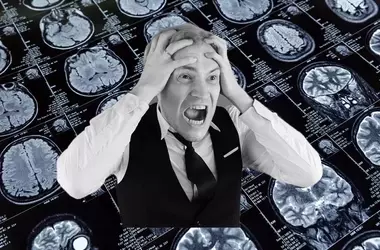
A recent paper by Raymond Dolan, a leading neuroscientist, critically assesses three decades of neuroimaging research in psychiatry. The review concludes that despite substantial investment and technological advancements, the field has failed to provide a neurobiological explanation for any psychiatric condition or develop clinically useful imaging-based biomarkers. The authors highlight issues like unreliable MRI data and the minimal explanatory power of genetic correlations, questioning the foundational assumptions and methods within psychiatric neuroimaging.

Marianne Apostolides Challenges Modern Psychiatry's Approach to Mental Health
Author Marianne Apostolides discusses her new book, "Go/No-Go," which critically examines contemporary psychiatry and neuroscience. Triggered by her own struggle with an eating disorder during COVID-19, she delves into neuromodulation, digital therapeutics, and pharmaceuticals. Apostolides scrutinizes the underlying research practices, institutional pressures, and inherent biases, especially the unexamined metaphors that shape scientific understanding of the mind and mental distress. Her work highlights the disconnect between scientific claims and lived experiences, advocating for a more humanistic approach to mental health.

The Overlooked Struggle of Psychiatric Drug Withdrawal: A Call for Systemic Change
This article delves into the profound challenges faced by individuals undergoing psychiatric medication withdrawal, highlighting the systemic failures within the medical community to adequately recognize, research, and support patients through this process. It emphasizes the critical need for individualized, slow tapering protocols, comprehensive whole-body support, and a collaborative patient-provider relationship to foster genuine healing and address the often-dismissed realities of withdrawal symptoms.

The Looming Crisis: Psychiatric Bed Shortages and the Competency Quagmire in the US
This article delves into the persistent 'psychiatric bed shortage' narrative in the US, arguing it's a moral panic diverting attention from the growing crisis of 'incompetent to stand trial' (IST) cases. It examines how this issue, exacerbated by the criminalization of mental health and the profit-driven private sector, traps vulnerable individuals in a cycle of incarceration. The piece highlights the failures of existing systems, the manipulation of research, and ongoing legal challenges aimed at promoting community-based care over institutionalization.

Beyond the System: A Personal Journey Through Mental Health and Unconventional Support
This article shares a personal account of navigating mental health challenges, highlighting the author's disillusionment with conventional therapy and the profound impact of unconventional support. It delves into the journey of understanding anxiety's natural purpose and the societal conditioning that can exacerbate distress, ultimately finding healing outside traditional psychiatric frameworks.