 Breaking News & Live Updates
- Breaking News & Live Updates
- Breaking News & Live Updates
- Breaking News & Live Updates
- Breaking News & Live Updates
- Breaking News & Live Updates
- Breaking News & Live Updates
- Breaking News & Live Updates
- Breaking News & Live Updates
- Breaking News & Live Updates
Researchers Uncover Diverse Cognitive Decline Patterns in Early Alzheimer's Disease
Navigating the Labyrinth of Alzheimer's: Unraveling Diverse Cognitive Pathways
Unveiling Varied Cognitive Decline Trajectories in Early Alzheimer's
A recent study published in Alzheimer's & Dementia sheds light on the wide spectrum of cognitive decline experienced by older adults exhibiting the initial biological markers of Alzheimer's disease. Contrary to previous assumptions, the research indicates that not all individuals follow a uniform path towards memory loss. A notable portion maintains cognitive sharpness for years, while another distinct group suffers from a swift and significant deterioration of memory and other thinking abilities.
The Elusive Nature of Early Alzheimer's Disease Progression
Alzheimer's disease typically begins its insidious progression within the brain long before any noticeable memory issues arise for the affected individual or their loved ones. This protracted preclinical phase is characterized by the gradual accumulation of abnormal proteins. Beta-amyloid forms distinctive plaques between brain cells, while tau protein, normally crucial for cellular structure, becomes dysfunctional, creating harmful tangles inside neurons. These protein anomalies can be detected through advanced brain imaging or blood tests, enabling early identification of individuals in the preclinical stages.
Rethinking Clinical Trial Design for Alzheimer's Prevention
Current secondary prevention trials for Alzheimer's often group participants based solely on the presence of amyloid plaques, assuming a homogeneous progression toward cognitive impairment. However, this new research challenges that fundamental premise by demonstrating significant interpersonal variations in the pace of decline. Some individuals with amyloid buildup show remarkable cognitive resilience, while others rapidly decline. This disparity suggests that a more nuanced approach to participant selection, focusing on predicting individual trajectories, could greatly enhance the efficiency and informative value of future clinical trials.
Identifying Predictors of Cognitive Trajectories
To differentiate these varied pathways, researchers explored whether specific biological indicators could foresee an individual's cognitive journey and how this natural variance might influence the statistical rigor of clinical trials. The analysis involved data from two extensive studies of adults aged 65 to 85, including a clinical trial testing a specific treatment and a parallel study of individuals without elevated amyloid levels. All participants were cognitively unimpaired at the study's outset.
Key Biological Markers and Genetic Risk Factors
The study meticulously tracked the cognitive skills of 1,629 participants, 1,110 of whom had elevated brain amyloid levels. Over a median follow-up of six years, cognitive tests and biomarker measurements, including p-tau217 levels, tau tangles via PET scans, and hippocampal volume via MRI, were collected. The findings pinpointed p-tau217 levels and hippocampal shrinkage as strong predictors of cognitive decline, alongside the APOE e4 genetic variant. These markers collectively predicted stability or worsening of cognitive function with approximately 70% accuracy.
The Paradox of Biological Decline Amidst Cognitive Stability
Intriguingly, participants with elevated amyloid levels who remained cognitively stable still exhibited biological worsening over time, with increased amyloid and tau accumulation and continued hippocampal atrophy. This suggests that these individuals are likely in a very early stage of the disease, with observable biological changes preceding any functional cognitive impairment.
Optimizing Future Clinical Trials Through Trajectory Prediction
The research team conducted simulations of hypothetical clinical trials, revealing that trials heavily populated by cognitively stable individuals would lack the statistical power to demonstrate a drug's efficacy. This is because stable participants, by their nature, do not exhibit significant decline, making it difficult to measure the protective effects of a treatment. The findings underscore the critical need for improved predictive models to identify individuals more prone to decline, thereby enhancing the design and outcome of future Alzheimer's treatment trials. Future research will delve into factors that contribute to resilience in some patients, hoping to uncover mechanisms that could slow disease progression.
Other Articles

Environmental Factors Influence Gaze Patterns in Autistic Toddlers: A New Study
A recent study published in the Journal of Autism and Developmental Disorders reveals that autistic toddlers, while typically less focused on faces than their neurotypical peers, show increased attention to human faces when distracting objects like toys are removed from their environment. This eye-tracking research suggests that modifying the visual complexity of clinical and educational spaces could help promote social engagement in children with autism by naturally directing their gaze towards people.

Antidepressants and Talk Therapy: A Comparative Analysis for Depression Treatment
New research indicates that while both antidepressants and short-term psychodynamic therapy effectively reduce depression symptoms, medication may offer a slight edge for individuals with more severe initial symptoms. This comprehensive meta-analysis of individual participant data reveals similar improvements in self-reported mood and anxiety across both treatments, but clinician-rated assessments suggest a marginal benefit for antidepressants in severe cases. The findings highlight the importance of personalized treatment approaches based on symptom severity.
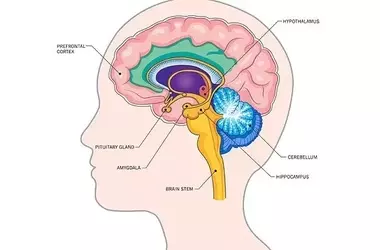
Brain Scan Snapshot More Effective Than Tracking Shrinkage for Predicting Memory Decline
A recent study published in Cortex indicates that a single brain scan capturing brain tissue volume can more accurately predict future cognitive decline compared to observing brain shrinkage over time. This discovery offers a pragmatic method to pinpoint individuals at risk for dementia by evaluating their brain's inherent structural reserve, thereby potentially transforming early diagnostic approaches for memory-related conditions.

Escitalopram's Approval for Pediatric Anxiety: A Critical Examination of Efficacy and Safety Concerns
This report scrutinizes the FDA's approval of escitalopram for generalized anxiety disorder in children and adolescents. It highlights concerns regarding the drug's limited clinical meaningfulness, uncertain statistical significance, and significantly higher rates of adverse events, including suicidality, compared to placebo. The article further discusses the challenges faced in publishing critical findings within the scientific community, emphasizing potential conflicts of interest and the need for greater patient safety considerations.

Income Disparity's Limited Impact on Adolescent Depression: A Comprehensive Study
A significant study featured in Psychological Science reveals that localized shifts in income inequality do not substantially influence depressive symptoms among teenagers. Despite prevailing social theories suggesting that economic divides negatively affect mental health, the research indicates that variations in income distribution within a community have minimal practical effect on adolescent depression. This challenges the notion of a direct causal link, particularly within the context of a robust welfare state like Norway.

Challenging the Genetic Predisposition of Schizophrenia: A Critical Review of Twin Studies
A new article published in the Review of General Psychology deconstructs the long-held belief that schizophrenia is approximately 80% heritable. It challenges the methodologies and underlying assumptions of twin studies, especially the 'equal environments assumption.' The article highlights how historical biases, arbitrary study selections, and flawed diagnostic criteria have led to a misinterpretation of genetic influences, suggesting a much lower heritability rate or even questioning the concept's validity. This critical analysis calls for a re-evaluation of psychiatric genetic research.