 Breaking News & Live Updates
- Breaking News & Live Updates
- Breaking News & Live Updates
- Breaking News & Live Updates
- Breaking News & Live Updates
- Breaking News & Live Updates
- Breaking News & Live Updates
- Breaking News & Live Updates
- Breaking News & Live Updates
- Breaking News & Live Updates
Environmental Factors Influence Gaze Patterns in Autistic Toddlers: A New Study
New research indicates that young children with autism often direct their visual attention less towards human faces and more towards peripheral elements in their surroundings compared to their neurotypical counterparts. However, manipulating the visual environment by removing distracting items can significantly alter their gaze patterns, encouraging them to look more at people. This insight has important implications for designing more effective therapeutic and learning environments.
Autism spectrum disorder is a developmental condition impacting communication, behavior, and social competencies. A hallmark of early childhood autism is a reduced tendency to engage in eye contact or focus on others' faces. Psychologists define visual attention as the unconscious process by which an individual's gaze is directed within an environment. When a child consistently prioritizes objects or background details over human faces, they may miss crucial non-verbal cues and emotional expressions, which can impede social learning and development.
To investigate this phenomenon, researchers from Hacettepe University in Turkey conducted a study involving 127 children aged 18 to 36 months, comprising 53 children with a confirmed autism diagnosis and 74 typically developing children. Using eye-tracking technology, the children watched video clips of social interactions, some containing toys and some without. The results confirmed that children with autism spent less time looking at faces and more time at background details across all videos. When toys were present, both groups were highly distracted, but autistic children still prioritized bodies and background over faces. Crucially, removing toys from the videos led to a universal increase in gaze towards faces and bodies, suggesting that environmental modifications can enhance social attention in all children, especially those with autism.
While the study offers valuable insights into how environmental factors influence visual attention, the researchers acknowledge certain limitations, such as the use of rigorous statistical corrections that might have obscured minor variations in gaze patterns. Furthermore, the study involved already diagnosed toddlers, making it difficult to trace the developmental origins of these visual behaviors. Despite these caveats, the findings hold significant practical value for parents and professionals working with neurodiverse children. By minimizing visual clutter in therapeutic and educational settings, adults can create environments that subtly encourage children with autism to observe and engage more with people, fostering crucial social development.
Other Articles

Antidepressants and Talk Therapy: A Comparative Analysis for Depression Treatment
New research indicates that while both antidepressants and short-term psychodynamic therapy effectively reduce depression symptoms, medication may offer a slight edge for individuals with more severe initial symptoms. This comprehensive meta-analysis of individual participant data reveals similar improvements in self-reported mood and anxiety across both treatments, but clinician-rated assessments suggest a marginal benefit for antidepressants in severe cases. The findings highlight the importance of personalized treatment approaches based on symptom severity.
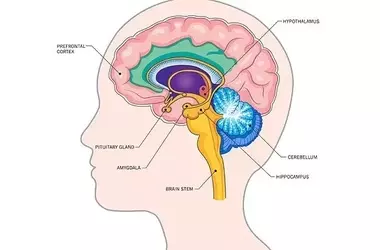
Brain Scan Snapshot More Effective Than Tracking Shrinkage for Predicting Memory Decline
A recent study published in Cortex indicates that a single brain scan capturing brain tissue volume can more accurately predict future cognitive decline compared to observing brain shrinkage over time. This discovery offers a pragmatic method to pinpoint individuals at risk for dementia by evaluating their brain's inherent structural reserve, thereby potentially transforming early diagnostic approaches for memory-related conditions.

Escitalopram's Approval for Pediatric Anxiety: A Critical Examination of Efficacy and Safety Concerns
This report scrutinizes the FDA's approval of escitalopram for generalized anxiety disorder in children and adolescents. It highlights concerns regarding the drug's limited clinical meaningfulness, uncertain statistical significance, and significantly higher rates of adverse events, including suicidality, compared to placebo. The article further discusses the challenges faced in publishing critical findings within the scientific community, emphasizing potential conflicts of interest and the need for greater patient safety considerations.

Income Disparity's Limited Impact on Adolescent Depression: A Comprehensive Study
A significant study featured in Psychological Science reveals that localized shifts in income inequality do not substantially influence depressive symptoms among teenagers. Despite prevailing social theories suggesting that economic divides negatively affect mental health, the research indicates that variations in income distribution within a community have minimal practical effect on adolescent depression. This challenges the notion of a direct causal link, particularly within the context of a robust welfare state like Norway.

Challenging the Genetic Predisposition of Schizophrenia: A Critical Review of Twin Studies
A new article published in the Review of General Psychology deconstructs the long-held belief that schizophrenia is approximately 80% heritable. It challenges the methodologies and underlying assumptions of twin studies, especially the 'equal environments assumption.' The article highlights how historical biases, arbitrary study selections, and flawed diagnostic criteria have led to a misinterpretation of genetic influences, suggesting a much lower heritability rate or even questioning the concept's validity. This critical analysis calls for a re-evaluation of psychiatric genetic research.

Good Sleep Quality Associated with Reduced Depression Risk in Older Adults
A recent study indicates that older adults who experience high-quality sleep are significantly less likely to develop depressive symptoms over time. The research, published in the *Journal of Affective Disorders*, tracked changes in sleep patterns and mental health over several years, revealing that maintaining or improving sleep quality is linked to a decreased risk of future mental health challenges in the aging population. This suggests a crucial connection between restorative sleep and sustained emotional well-being in later life.