 Breaking News & Live Updates
- Breaking News & Live Updates
- Breaking News & Live Updates
- Breaking News & Live Updates
- Breaking News & Live Updates
- Breaking News & Live Updates
- Breaking News & Live Updates
- Breaking News & Live Updates
- Breaking News & Live Updates
- Breaking News & Live Updates
Political Ideology Influences Soccer Player Preference: Messi vs. Ronaldo
A recent study, presented as a preprint on SSRN.com, explores the fascinating intersection of political belief and cultural taste, specifically in the realm of global sports. It posits that a person's political stance can predict their preferred football superstar between Lionel Messi and Cristiano Ronaldo. The findings indicate that individuals with more liberal viewpoints often favor Messi, whereas those with conservative leanings gravitate towards Ronaldo. This correlation between political identity and sporting preference is particularly strong among younger generations, who have grown up in environments characterized by significant political polarization.
This research builds upon the concept of identity sorting, where a single political label encompasses various aspects of an individual's identity, including religious beliefs, cultural values, and consumer choices. While much of the existing evidence for this phenomenon comes from the United States, a country known for its stark two-party political system, this study aimed to investigate whether such sorting occurs on a global scale, transcending different governmental structures and cultural backgrounds. The rivalry between Messi and Ronaldo served as an ideal case study, given their comparable achievements and universal recognition, making fan preference a revealing indicator of personal values beyond mere athletic prowess.
The study surveyed over 10,000 respondents across 26 countries, measuring their favorability towards both players and their political ideologies. The results consistently showed that political ideology was the most reliable predictor of player preference, even more so than education, age, or income. While the political influence on player preference is statistically significant and appears consistently across diverse cultures, the authors caution against overstating its magnitude. They emphasize that numerous other factors, such as personal history, club loyalty, and familiarity with the sport, also significantly shape sports fandom. The study underscores that political identity subtly influences choices in domains seemingly unrelated to politics, suggesting a deeper intertwining of personal values and public personas, particularly amplified by modern media algorithms that may bundle cultural and political identities together for younger audiences.
This study offers a profound insight into the pervasive influence of political identity on seemingly innocuous aspects of our lives. It encourages us to recognize that our preferences, even in entertainment, can reflect deeper societal divisions and personal values. By illuminating these subtle connections, the research prompts a greater awareness of how our identities are shaped and expressed, fostering a more nuanced understanding of human behavior in an increasingly interconnected world.
Other Articles

Algorithmic Recommendations and the Paradox of Entertainment Monotony
A new study reveals that highly precise recommendation algorithms, designed for immediate user engagement, may inadvertently lead to long-term entertainment boredom. By over-optimizing for current preferences, these systems can hinder users from discovering new content that they might grow to love, creating a monotonous consumption experience. The research suggests that introducing a degree of randomness into these algorithms could significantly enhance long-term user satisfaction by fostering exploration and preventing taste fatigue.
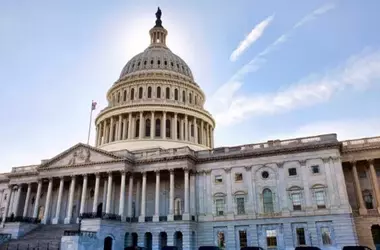
Legislative Effectiveness and Political Ambition: A Study on State Lawmakers' Path to Congress
A new study reveals that state legislators who are highly effective in passing laws are almost twice as likely to reach the U.S. Congress. This upward movement is primarily due to their willingness to seek higher office, rather than voters directly recognizing their legislative prowess. The research, published in the American Political Science Review, highlights the self-selection mechanism at play and the varying motivations in different state legislative environments, from citizen legislatures to highly professional ones.

Gaming Community: Challenging Stereotypes of Exclusion
Contrary to popular belief, a recent study indicates that video game players generally exhibit more inclusive cultural values than the broader public. This research challenges the stereotype that gaming environments foster prejudiced attitudes, suggesting that while hostile online communities exist, they may not reflect the views of the majority of gamers. The findings imply that specific community dynamics, rather than widespread player attitudes, drive exclusionary behaviors in online gaming spaces.
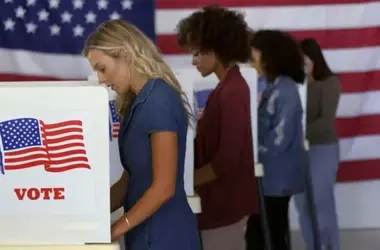
Racial Attitudes and Voter Turnout Among Evangelicals
A study reveals how racial attitudes affect voter turnout differently across evangelical groups. Conservative racial views increase participation in white, Asian American, and Latino evangelicals, but decrease it in Black evangelicals. This highlights the complex interplay of religious, cultural, and racial identities in political behavior, suggesting that internal conflict can lead to abstention. The research underscores the need for nuanced models of political engagement.
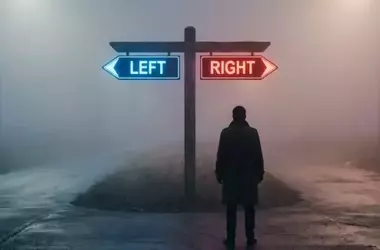
Voters' Use of Political Labels as Mental Shortcuts
A recent study indicates that voters often utilize political labels like "left" and "right" as simplified mental tools to deduce a politician's policy stances, rather than as precise indicators of their own deeply held policy beliefs. This research, published in *Public Opinion Quarterly*, suggests that while these labels assist voters in election navigation, their function is more minimal, not necessarily reflecting a perfect alignment with individual policy preferences. This has significant implications for how political representation truly reflects public policy desires.

Human Communication Patterns Show Mismatches in Emotion and Expression, Unlike AI
A recent study in PLOS One examined over 350,000 relationship narratives, revealing that human emotional expression often doesn't directly align with the complexity of language used. This discrepancy is a deliberate communication strategy, not an error. The research identified four expressive patterns and found that current AI models struggle to replicate these nuanced human communication styles, especially in instances of understatement or emotional collapse. The findings challenge assumptions in affective science and AI, suggesting that AI may misinterpret or miss subtle human emotional cues.