 Breaking News & Live Updates
- Breaking News & Live Updates
- Breaking News & Live Updates
- Breaking News & Live Updates
- Breaking News & Live Updates
- Breaking News & Live Updates
- Breaking News & Live Updates
- Breaking News & Live Updates
- Breaking News & Live Updates
- Breaking News & Live Updates
Racial Attitudes and Voter Turnout Among Evangelicals
A recent study sheds light on the complex relationship between racial attitudes and voter participation among various evangelical groups, revealing distinct patterns shaped by intersecting social identities. While conservative racial views tend to boost voter turnout in white, Asian American, and Latino evangelical communities, these same attitudes lead to reduced participation among Black evangelicals. This nuanced finding, based on a comprehensive survey, suggests that an individual's religious and cultural background can significantly alter how personal biases translate into political actions, either motivating engagement or causing abstention due to internal conflict.
This research underscores the critical importance of considering the multifaceted nature of identity when analyzing political behavior. It highlights that psychological factors, particularly those related to racial attitudes, do not operate in isolation but are deeply intertwined with an individual's broader social and religious affiliations. The study's findings prompt a deeper understanding of voter mobilization and disengagement, offering valuable insights for more precise models of political participation that account for these intricate identity layers.
The Divergent Impact of Racial Attitudes on Evangelical Voting
An in-depth study has uncovered that an individual's racial attitudes can profoundly influence their decision to vote, yet this effect is not universal but is highly dependent on their religious and cultural background. Specifically, the research indicates that holding conservative racial views correlates with increased voter turnout among white, Asian American, and Latino evangelicals. Conversely, identical conservative racial attitudes are associated with a decrease in voter participation among Black evangelicals. This stark contrast suggests that the various social groups an individual identifies with can fundamentally alter how their personal biases translate into political actions at the ballot box. The research, initiated by political scientist Nathan K. Chan, aimed to elucidate the disparate voter participation rates observed across different religious groups in the United States.
The study utilized the concept of racial resentment, which gauges an individual's belief about societal discrimination against Black Americans and their need for structural support. High racial resentment typically indicates a belief that Black Americans face minimal discrimination and should overcome challenges independently, while low resentment acknowledges systemic barriers. Chan hypothesized that overlapping social identities, such as religious affiliation and racial background, could create internal friction, influencing whether these biases prompt individuals to vote or to abstain. This psychological framework, known as conflict decision theory, suggests that when individuals face choices misaligned with their personal values, they may experience cognitive tension, potentially leading to inaction. Thus, for some evangelical groups, racial attitudes serve as a mobilizing force, while for others, they become a barrier to political engagement.
Understanding the Role of Conflict Decision Theory in Voter Behavior
The observed variations in voter turnout among evangelicals, based on their racial attitudes, are largely attributable to the principles of conflict decision theory. This theory posits that when individuals encounter complex decisions where no single option perfectly aligns with all their personal values, they experience internal psychological conflict. This cognitive tension can lead them to disengage from the decision-making process entirely, resulting in inaction. In the context of the study, Chan proposed that the interplay between an individual's religious identity and racial background could generate such friction during elections. White evangelicals, whose political, religious, and racial identities often converge on conservative stances, are less likely to experience this conflict. Consequently, high levels of racial resentment among this group are strongly associated with a greater propensity to vote, as their biases align with their community norms and political encouragement.
In contrast, Black evangelical communities often emphasize racial solidarity, creating distinct social norms. A Black individual holding conservative views against their own racial group might face a significant disconnect between their personal attitudes and the expectations of their peers and community. This internal conflict, as explained by conflict decision theory, can be intense. Navigating these conflicting pressures, where personal bias clashes with group solidarity, may lead to a psychological blockade, causing them to avoid political action altogether. By abstaining from voting, these individuals minimize the internal friction arising from their discordant identities and beliefs. Similarly, the study found that some Asian American and Latino evangelicals, influenced by evangelical theology's emphasis on individual responsibility, might feel empowered to act on conservative racial attitudes when voting. This complex dynamic highlights how deeply intertwined social and psychological factors shape political participation, making it essential to consider these layers for a comprehensive understanding of voter behavior.
Other Articles
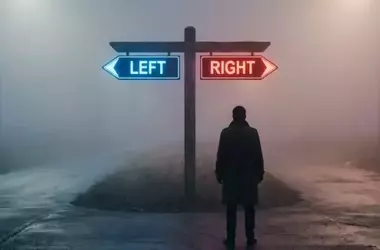
Voters' Use of Political Labels as Mental Shortcuts
A recent study indicates that voters often utilize political labels like "left" and "right" as simplified mental tools to deduce a politician's policy stances, rather than as precise indicators of their own deeply held policy beliefs. This research, published in *Public Opinion Quarterly*, suggests that while these labels assist voters in election navigation, their function is more minimal, not necessarily reflecting a perfect alignment with individual policy preferences. This has significant implications for how political representation truly reflects public policy desires.

Human Communication Patterns Show Mismatches in Emotion and Expression, Unlike AI
A recent study in PLOS One examined over 350,000 relationship narratives, revealing that human emotional expression often doesn't directly align with the complexity of language used. This discrepancy is a deliberate communication strategy, not an error. The research identified four expressive patterns and found that current AI models struggle to replicate these nuanced human communication styles, especially in instances of understatement or emotional collapse. The findings challenge assumptions in affective science and AI, suggesting that AI may misinterpret or miss subtle human emotional cues.

How Requests Impact Children's Willingness to Help: A Cross-Cultural Study
A study involving children aged 6-11 across five countries reveals that being asked to help often diminishes the joy and perceived willingness to do good, with cultural variations observed. The research, rooted in Self-Determination Theory, highlights how external requests can affect children's autonomy and prosocial motivation, particularly in individualistic societies.

Social Media Downvotes: A Catalyst for Engagement and Moderation, Not Disengagement
A new study reveals that negative feedback, such as downvotes on platforms like Reddit, paradoxically encourages users to post more and soften their tone, rather than withdrawing from discussions. This phenomenon, driven by a desire to restore reputation, suggests that downvote features could be a valuable tool for moderating online discourse and preventing echo chambers, challenging previous assumptions about their impact on user behavior and platform engagement.

Manipulative Personality Traits Linked to Lower Intimacy Expectations in Relationships
New research reveals that individuals with highly manipulative personalities tend to have lower expectations for emotional closeness in their romantic relationships. This study, published in Personality and Individual Differences, highlights that while Dark Triad traits play a role, general attachment styles and idealized romantic beliefs are stronger predictors of intimacy expectations. Notably, older women exhibiting high Machiavellianism show the most significant negative association with intimacy expectations.