 Breaking News & Live Updates
- Breaking News & Live Updates
- Breaking News & Live Updates
- Breaking News & Live Updates
- Breaking News & Live Updates
- Breaking News & Live Updates
- Breaking News & Live Updates
- Breaking News & Live Updates
- Breaking News & Live Updates
- Breaking News & Live Updates
New Study Reveals People Overestimate Others' Dishonesty
A new research paper featured in the Journal of Experimental Social Psychology reveals a tendency for individuals to significantly overstate the propensity of others to engage in deceitful actions. This common pessimistic perspective has been shown to erode societal trust and endorse the implementation of stringent monitoring measures in professional environments. Conversely, furnishing accurate data regarding actual integrity levels has the potential to positively shift these perceptions, cultivating enhanced confidence and a more favorable outlook on human character.
This comprehensive investigation commenced with an in-depth internal examination of previously unpublished data, encompassing 31 distinct comparisons across 11 experiments and involving a large pool of participants. In these experimental setups, individuals were presented with opportunities to act dishonestly to secure a small financial reward without fear of repercussions. The findings consistently demonstrated a considerable overestimation of dishonest behavior by the participants. Furthermore, when provided with factual information indicating high levels of integrity, managers demonstrated a reduced inclination to endorse restrictive surveillance protocols. While these findings suggest a strong pessimistic bias, the study acknowledges certain limitations, such as its geographic focus on U.S.-based online participants, leaving open the question of cultural universality. The precise psychological mechanisms underpinning this bias also remain an area for further exploration.
The study highlights a critical disparity between beliefs and reality concerning human honesty. While acknowledging that some individuals do engage in dishonest acts, the core message emphasizes that people tend to believe this number is much higher than it truly is. Recognizing and addressing this pervasive bias can foster more constructive social interactions and encourage a thoughtful reevaluation of our inherent skepticism toward others' morality. Cultivating an awareness of actual honesty levels could pave the way for a more trusting and collaborative society.
Other Articles
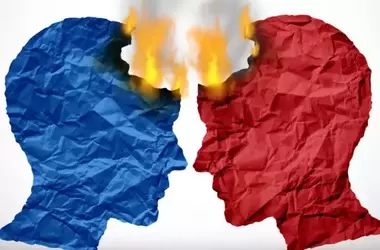
New Research Challenges Established Theories on Political Bias and Emotion Regulation
Recent research published in 'Politics and the Life Sciences' suggests that voters' rejection of opposing political facts may not be primarily driven by a desire to avoid emotional discomfort, challenging a long-standing psychological theory of motivated reasoning. The study, conducted by Filip Kiil, investigated the role of emotion regulation strategies, such as cognitive reappraisal and emotional acceptance, in mitigating partisan bias regarding immigration policy among Danish voters. The findings indicate that while partisan bias is prevalent, individuals' ability to manage their emotions does not significantly reduce their tendency to reject inconvenient truths, suggesting alternative mechanisms may be at play.

Mental Health Emerges as a Key Political Identity, Influencing Policy Debates
A recent study leveraging 2022 Cooperative Election Study data indicates that mental health is increasingly shaping political identity, especially among younger, more liberal Americans. These individuals, who perceive mental illness as a collective experience, advocate for policy changes to combat stigma and support increased public spending on healthcare, education, and welfare. This trend suggests a growing recognition of mental health as a significant factor in political discourse and civic engagement.

Political Ideology Influences Soccer Player Preference: Messi vs. Ronaldo
A study suggests that an individual's political ideology predicts their preference between soccer icons Lionel Messi and Cristiano Ronaldo. Liberals tend to favor Messi, while conservatives lean towards Ronaldo. This connection between politics and sports choice is especially pronounced among younger demographics, highlighting how political identity shapes cultural tastes beyond traditional political spheres across diverse nations.

Algorithmic Recommendations and the Paradox of Entertainment Monotony
A new study reveals that highly precise recommendation algorithms, designed for immediate user engagement, may inadvertently lead to long-term entertainment boredom. By over-optimizing for current preferences, these systems can hinder users from discovering new content that they might grow to love, creating a monotonous consumption experience. The research suggests that introducing a degree of randomness into these algorithms could significantly enhance long-term user satisfaction by fostering exploration and preventing taste fatigue.
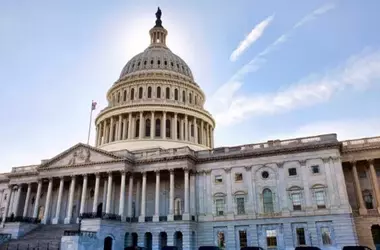
Legislative Effectiveness and Political Ambition: A Study on State Lawmakers' Path to Congress
A new study reveals that state legislators who are highly effective in passing laws are almost twice as likely to reach the U.S. Congress. This upward movement is primarily due to their willingness to seek higher office, rather than voters directly recognizing their legislative prowess. The research, published in the American Political Science Review, highlights the self-selection mechanism at play and the varying motivations in different state legislative environments, from citizen legislatures to highly professional ones.

Gaming Community: Challenging Stereotypes of Exclusion
Contrary to popular belief, a recent study indicates that video game players generally exhibit more inclusive cultural values than the broader public. This research challenges the stereotype that gaming environments foster prejudiced attitudes, suggesting that while hostile online communities exist, they may not reflect the views of the majority of gamers. The findings imply that specific community dynamics, rather than widespread player attitudes, drive exclusionary behaviors in online gaming spaces.