 Breaking News & Live Updates
- Breaking News & Live Updates
- Breaking News & Live Updates
- Breaking News & Live Updates
- Breaking News & Live Updates
- Breaking News & Live Updates
- Breaking News & Live Updates
- Breaking News & Live Updates
- Breaking News & Live Updates
- Breaking News & Live Updates
A Journey of Withdrawal and Resilience: Fiona Frenzen's Story
Fiona Frenzen's compelling narrative illuminates the challenging path of overcoming antidepressant dependency and reclaiming one's life. Her story, shared through an interview, details a personal odyssey from profound struggles with mental health and the debilitating effects of withdrawal to finding purpose and healing in the stark beauty of Iceland. It underscores the critical need for increased understanding and support for individuals navigating the complexities of psychiatric drug cessation, highlighting the often-overlooked physical and emotional toll, and advocating for a more human-centered approach to mental well-being.
The interview, led by Brooke Siem, author of a memoir on antidepressant withdrawal, reveals Fiona's initial encounter with 'Mad in America,' which became a pivotal moment in recognizing her own symptoms as withdrawal. Her journey began in the fall of 2022 when she realized the profound impact of discontinuing sertraline, an antidepressant she had been taking for years. Diagnosed with anxiety and OCD since childhood, Fiona had managed her conditions without medication until age 25, when persistent sleep issues led her to try sertraline. Despite initial improvements, a traumatic event exacerbated her OCD, leading to an increased dosage of 200 mg, a level that brought on severe side effects including gut problems and thyroid dysfunction, which doctors failed to link to the medication.
Driven by an intuition that something was amiss, Fiona expressed a desire to stop the drug to her psychiatrist. A rapid taper from 50 mg to zero led to a harrowing experience of withdrawal, characterized by flashbacks, intense anxiety, brain zaps, and akathisia. Despite her distress, her psychiatrist initially misattributed her symptoms to a resurgence of her underlying condition, urging her back onto medication. Fiona's refusal, born from a growing awareness of the drug's adverse effects on her body, marked a turning point. Her subsequent accidental addiction to a benzodiazepine, prescribed during her desperation, further complicated her situation, leading to a three-month hospitalization. It was during this period that a psychologist recognized her past traumas as central to her struggles, suggesting trauma therapy—a path initially denied due to her benzodiazepine use.
Throughout this challenging period, Fiona harbored a deep-seated desire to move to Iceland, a place where she had previously found solace in nature. Despite being advised by family and medical staff to enter supported housing due to her severe symptoms, she clung to the vision of Iceland, using images of its landscapes as a source of motivation. After completing her anthropology thesis while in withdrawal, she spent three months in Iceland during a harsh winter, an experience that, despite its difficulties, proved to be a profound moment of self-discovery and empowerment. Realizing she could manage her symptoms alone in a remote setting, she decided to fully commit to the move. A serendipitous job offer as a teacher in a rural Icelandic school solidified her relocation, enabling her to step away from the 'sick Fiona' identity and embrace new responsibilities. This shift from patient to active contributor, engaging with students and the community, provided a therapeutic distance from her symptoms, underscoring the importance of purpose and engagement in recovery.
Fiona candidly discusses her ongoing struggle with acceptance, particularly regarding the long-term physical effects of withdrawal, such as lymphocytic microscopic colitis, which she now manages with a strict ketogenic diet. Her distrust of the medical system, stemming from years of misdiagnosis and inadequate guidance, is evident in her apprehension towards further pharmaceutical interventions. Her experience highlights the significant challenges in gut health post-withdrawal, a journey that for many, including Brooke Siem, can take years to stabilize. Fiona's anthropological background fuels her ambition to contribute to research on the intersection of anthropology and psychiatry, aiming to shed light on the patient experience, the phenomenon of medical gaslighting, and the disconnect between medical understanding and patient realities. Her ultimate goal is to transform her personal crisis into a resource for others, advocating for a more empathetic and informed approach to mental health care, one that acknowledges the full spectrum of human emotions and experiences beyond mere pathological labels.
Other Articles

Understanding Mental States: A Personal Journey Through Unusual Experiences
This article explores the author's personal journey navigating her son's unusual mental experiences, her evolution from a psychiatric nurse to someone questioning traditional mental health treatments, and the profound lessons learned about empathy, connection, and the limitations of medical models. It emphasizes the importance of support and understanding for individuals experiencing mental distress.

Re-evaluating Schizophrenia Heritability: Challenging the 80% Genetic Claim
A recent article challenges the widely accepted notion that schizophrenia is 80% heritable, primarily based on a 2003 twin study meta-analysis by Sullivan, Kendler, and Neale (SKN). The author argues that fundamental assumptions of twin studies, such as the equal environments assumption and diagnostic reliability, are flawed. Furthermore, the selection of studies in the SKN meta-analysis is questioned, highlighting the influence of confirmation biases and the historical context of early psychiatric genetic research rooted in eugenics. The article concludes that schizophrenia twin studies provide no valid evidence for genetic influences and calls for a thorough re-evaluation of psychiatric genetic research.

A Journey Through Dissociation and Delusion: Reclaiming Reality After Trauma
This deeply personal narrative explores the author's struggle with complex PTSD, dissociation, and delusions, triggered by a combination of life stressors, withdrawal from cannabis, and a traumatic workplace incident. The author recounts vivid "astral visits" and the challenging path to distinguish fantasy from reality, ultimately finding healing through therapy and self-awareness.
Navigating Delusion: A Personal Journey Through PTSD, Dissociation, and the Search for Reality
This deeply personal narrative recounts a period of intense psychological distress, triggered by a psychic reading and compounded by a break from cannabis and workplace abuse. The author grapples with complex PTSD, severe dissociation, and the emergence of vivid delusions, particularly involving an "astral" connection with a friend. The story highlights the struggle to distinguish reality from delusion amidst a backdrop of personal trauma, family challenges, and the eventual realization of the need for therapeutic intervention.
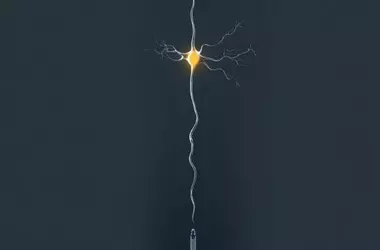
Advanced Neuropixels Opto Probe Revolutionizes Brain Data Acquisition
A groundbreaking neurotechnology, Neuropixels Opto, has overcome a significant engineering hurdle by enabling the simultaneous recording and manipulation of individual neuron activity deep within the living brain. This innovative device integrates large-scale electrophysiology with precise optogenetic light control on a single, hair-thin silicon shank. Tested in mouse models, it has already challenged existing beliefs about cerebral cortex architecture and offers a high-resolution tool for understanding neurological disorders like Alzheimer's and schizophrenia.
AI Discovers Genetic Key to Alzheimer's Resistance and Novel Mouse Model
A new study reveals a genetic blueprint that allows some brains to withstand Alzheimer's pathology without cognitive decline. Using AI to analyze human brain data, researchers identified a 40-gene signature linked to cognitive resilience. They then developed a novel mouse model lacking Chromogranin A, which mimics this resistance, particularly in male mice that develop severe brain damage but retain full memory function. Female mice with the same genetic modification showed even greater protection, preventing tangle formation entirely. This breakthrough offers new avenues for understanding and treating Alzheimer's, focusing on natural protective mechanisms.