 Breaking News & Live Updates
- Breaking News & Live Updates
- Breaking News & Live Updates
- Breaking News & Live Updates
- Breaking News & Live Updates
- Breaking News & Live Updates
- Breaking News & Live Updates
- Breaking News & Live Updates
- Breaking News & Live Updates
- Breaking News & Live Updates
Navigating Delusion: A Personal Journey Through PTSD, Dissociation, and the Search for Reality
This narrative explores a deeply challenging period marked by severe psychological distress, where the boundaries of reality blurred. It details a personal struggle with complex Post-Traumatic Stress Disorder (PTSD), profound dissociation, and the emergence of vivid delusions. The author recounts how a series of events, including a psychic reading, a temporary cessation of cannabis use, and a traumatic workplace incident, collectively contributed to an unraveling of their mental state. The story highlights the immense difficulty of discerning what is real when one's mind is under such duress, ultimately leading to a journey of self-discovery and therapeutic intervention to reclaim a grounded sense of reality.
The story concludes with the author's eventual breakthrough from the grips of these delusions, catalyzed by therapeutic work and a deeper understanding of their own psychological mechanisms. It underscores the powerful impact of past trauma on present perceptions and the crucial role of self-awareness and support in navigating such profound mental health challenges. The author emerges from this harrowing experience with a renewed commitment to mental well-being and a clearer path forward.
The Onset of Delusion and Dissociation
The journey into delusion began unexpectedly after a psychic reading in March 2019, which planted a seed of belief in an "astral" connection with an acquaintance. This coincided with a planned break from cannabis, a substance the author used to manage anxiety and sleep, but which also suppressed dreaming. The absence of cannabis, coupled with the intriguing psychic prediction, created a fertile ground for altered perceptions. Shortly after, a severe workplace incident involving an aggressive superior triggered a profound dissociative episode, where the author lost an entire day with no memory of their actions. This event marked a critical turning point, leading to increasingly vivid and persistent "astral visits" that felt intensely real, blurring the lines between waking life and an imagined, intimate friendship.
During this period, the author's mental state became increasingly fragile. The seemingly innocuous online friendship evolved into a deeply intimate connection within the perceived astral realm, where they shared traumas and aspirations with the "camp guy." This was exacerbated by extreme sleep deprivation, as conventional remedies proved ineffective. The stress from family matters, including their son's high school graduation and the reappearance of his father, combined with ongoing workplace anxieties, further destabilized the author's mental well-being. The initial comfort found in the astral connection gradually gave way to distressing incidents, such as witnessing disturbing visions related to the friend. These experiences led to growing anxiety about the veracity of these interactions, pushing the author towards a critical re-evaluation of their reality.
Reclaiming Reality and Embracing Healing
The intensifying distress, particularly the fear for their astral friend's safety and the subsequent intrusive negative thoughts, ultimately spurred the author to actively challenge their delusions. Despite an underlying logical awareness that these experiences were not real, emotional attachment to the perceived reality made it difficult to break free. The turning point arrived with a significant "astral fight," which briefly disrupted the delusions, paradoxically making the author realize how deeply invested they had become in this imagined world. This period also coincided with a challenging time astrologically and a second cannabis break, leading to heightened flashbacks and a near-constant state of mental turmoil. A public outburst on social media, describing a perceived betrayal, prompted friends to offer a stark dose of reality, invalidating the author's narrative and forcing a confrontation with their delusional state.
This confrontation triggered a profound emotional breakdown, not over the perceived betrayal, but over the shocking realization of months-long self-deception and hallucinations. This painful awakening resurfaced deep-seated childhood trauma, specifically experiences of gaslighting that had instilled a lifelong struggle with discerning reality. The support from friends, though initially painful, was instrumental in breaking the cycle of delusion. Engaging in therapy, particularly EMDR and other grounding techniques, became crucial in redirecting intrusive thoughts and anchoring the author back to tangible reality. The therapist's insight into the choice of the "camp guy" as a "safe avatar" for mental manipulation provided a deeper understanding of the delusion's origins. Ultimately, through a combination of self-awareness, therapeutic work, and a powerful, symbolic astrological alignment, the author emerged from the "Dark Night of the Soul" with a profound, if hard-won, understanding of their mental landscape and a clear path toward sustained healing and self-acceptance.
Other Articles
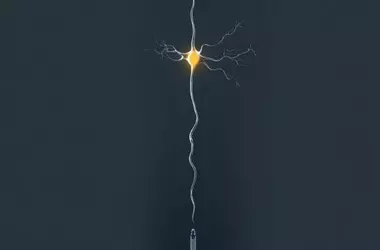
Advanced Neuropixels Opto Probe Revolutionizes Brain Data Acquisition
A groundbreaking neurotechnology, Neuropixels Opto, has overcome a significant engineering hurdle by enabling the simultaneous recording and manipulation of individual neuron activity deep within the living brain. This innovative device integrates large-scale electrophysiology with precise optogenetic light control on a single, hair-thin silicon shank. Tested in mouse models, it has already challenged existing beliefs about cerebral cortex architecture and offers a high-resolution tool for understanding neurological disorders like Alzheimer's and schizophrenia.
AI Discovers Genetic Key to Alzheimer's Resistance and Novel Mouse Model
A new study reveals a genetic blueprint that allows some brains to withstand Alzheimer's pathology without cognitive decline. Using AI to analyze human brain data, researchers identified a 40-gene signature linked to cognitive resilience. They then developed a novel mouse model lacking Chromogranin A, which mimics this resistance, particularly in male mice that develop severe brain damage but retain full memory function. Female mice with the same genetic modification showed even greater protection, preventing tangle formation entirely. This breakthrough offers new avenues for understanding and treating Alzheimer's, focusing on natural protective mechanisms.
The Polyvagal Theory: A Critical Examination of its Scientific Basis and Practical Applications
This article delves into a critical analysis of Polyvagal Theory (PVT), a concept that has significantly influenced contemporary discussions on mental well-being. Originating from the work of Dr. Stephen Porges, PVT posits a hierarchical model of the autonomic nervous system, asserting distinct roles for various vagal pathways in shaping emotional and social behaviors. Despite its widespread adoption in popular psychology and therapeutic modalities, the article scrutinizes the scientific validity of PVT's core anatomical and evolutionary claims, highlighting a growing body of research that challenges its foundational principles.
The Polyvagal Theory: A Critical Examination of Its Scientific Basis and Therapeutic Efficacy
This article critically examines the Polyvagal Theory (PVT) and its associated intervention, the Safe and Sound Protocol. Despite its popularity in pop psychology and trauma therapy, the article argues that PVT lacks scientific basis, with its anatomical and evolutionary claims being false. It also questions the efficacy of the Safe and Sound Protocol, citing a lack of conclusive evidence from reviewed studies. The author highlights the dangers of pseudoscientific claims in therapeutic contexts and advocates for a more nuanced understanding of the mind-body connection.

The Intricate Cost of Psychiatric Intervention: A Personal Account
This personal narrative delves into the complex trade-offs associated with psychiatric diagnoses and medication for schizoaffective disorder. The author uses the metaphor of a Faustian bargain to describe the acceptance of treatment, highlighting both the benefits in managing extreme mood states and the profound, often unforeseen, losses in personal experience, emotional range, and self-perception. It underscores the challenges of navigating mental health treatment, emphasizing the need for comprehensive support beyond medication.

The Intricate Link Between Childhood Trauma, Mental Health, and Celebrity Obsession
A new psychological study uncovers the complex relationship between childhood trauma, mental distress, and the intense admiration of celebrities. While early adverse experiences can indirectly fuel celebrity obsession through heightened depression and anxiety, they can also paradoxically lead to emotional detachment from celebrity culture. This research, published in Psychological Reports, highlights the nuanced psychological pathways influencing how individuals engage with famous figures.