 Breaking News & Live Updates
- Breaking News & Live Updates
- Breaking News & Live Updates
- Breaking News & Live Updates
- Breaking News & Live Updates
- Breaking News & Live Updates
- Breaking News & Live Updates
- Breaking News & Live Updates
- Breaking News & Live Updates
- Breaking News & Live Updates
The Evolving Political Landscape: College Education and Ideological Shifts
A recent study highlights the nuanced relationship between higher education and political identity, revealing that while a discernible gap in political self-identification has emerged between college graduates and non-graduates, the actual extent of ideological transformation during university years is often exaggerated. This research underscores the importance of distinguishing between a person's views on specific policies and their chosen political labels, offering a more precise understanding of how academic experiences shape an individual's place within the political spectrum.
The common perception that higher education inherently fosters liberal viewpoints among students has long fueled public debate and contributed to skepticism surrounding academic institutions. Critics frequently suggest that colleges actively instill left-leaning doctrines, influencing young adults' political leanings. However, the latest findings suggest a more intricate dynamic, where self-identification as liberal has grown significantly among degree holders, particularly since 2012, while their stances on economic issues have remained relatively stable, and their shifts on social issues were already established.
To unravel this complex issue, researchers differentiated between two forms of political ideology: issue-based and identity-based. Issue-based ideology pertains to an individual's stance on concrete policy matters such as taxation or immigration. In contrast, identity-based ideology refers to the political label one chooses for themselves, like 'liberal' or 'conservative.' This distinction is crucial because a person might endorse liberal policies without necessarily adopting a liberal identity.
The study utilized extensive data from over 120,000 U.S. adults, drawing from the American National Election Studies (1972-2020) and the General Social Survey (1974-2022). Participants were categorized by their educational attainment: no college, some college but no degree, and bachelor's degree holders. The analysis revealed that historically, individuals with bachelor's degrees have consistently held more left-leaning views on social matters, but not on economic ones, where they tended to be slightly more conservative. These patterns largely persisted over decades.
A significant change, however, occurred around 2012 regarding identity-based ideology. Before this period, college graduates did not significantly differ from non-graduates in their political self-identification. Post-2012, college graduates increasingly identified as liberal, while the self-identification of those with less or no college education remained largely unchanged. This widening gap in political identity is what researchers term the 'diploma divide,' a phenomenon that has roughly doubled in size over the last decade.
Further investigation into students' political shifts during their undergraduate years involved analyzing survey data from over 360,000 students at 740 institutions, who graduated between 1994 and 2019. The findings indicated that while the majority of students (58%) maintained their political identity, those who did change showed a slight, albeit growing, leftward shift. This leftward movement was more pronounced among students entering college as conservatives. Interestingly, institutional factors like public vs. private status or selectivity had minimal influence on these shifts, with individual characteristics such as academic major, gender, and SAT scores playing a more significant role.
Despite these observed shifts, a supplementary study found that the public tends to considerably overstate the extent of ideological change in college students. Adults across various demographics and political affiliations estimated the leftward shift to be twice as large as it actually was. This overestimation highlights a crucial discrepancy between public perception and empirical evidence regarding higher education's political impact. Therefore, while a 'diploma divide' in political identity is real and expanding, the direct causal link between college attendance and becoming liberal is often exaggerated, potentially overlooking other unmeasured factors or normal developmental processes in young adulthood.
Other Articles
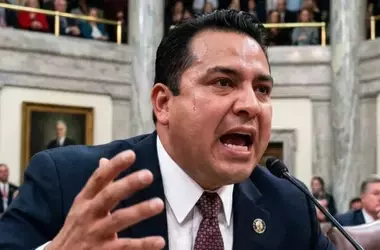
Legislative Cameras Don't Fuel Polarization, Study Finds
A new study challenges the common belief that broadcasting legislative sessions increases political polarization. Researchers found that installing cameras in state legislatures does not significantly alter politicians' voting behavior, legislative productivity, or party alignment. This suggests that greater transparency in government, through continuous video coverage, does not necessarily lead to heightened political dysfunction, contradicting some long-held concerns.

AI-generated content labels don't affect public persuasion on policy issues
A recent study found that labeling political messages as AI-generated or human-authored had no impact on their persuasiveness, despite participants largely believing the labels. The messages, regardless of attribution, swayed public opinion on policy issues by nearly 10 percentage points. This suggests that while transparency is increased, labels alone may not mitigate the persuasive power of AI content, highlighting the need for alternative strategies to manage AI-generated information challenges.

Understanding Adolescent Loneliness: Beyond Solitude
A recent study published in "Development and Psychopathology" reveals that while adolescents experience heightened loneliness when alone, frequent solitude doesn't necessarily lead to chronic loneliness. The research emphasizes the critical roles of social interaction quality and personality traits in shaping how young individuals navigate social isolation. These findings illuminate why some teenagers thrive in solitude while others struggle with social disconnection, highlighting the subjective nature of loneliness and the importance of meaningful connections over mere presence.

The Evolution of Personal Values Across the Lifespan: A Detailed Analysis
A recent comprehensive study published in Personality and Social Psychology Bulletin reveals that personal values undergo predictable shifts with age. Researchers utilized a detailed approach to examine individual values like curiosity, risk-taking, and empathy, rather than broad categories. This fine-grained analysis, involving over 80,000 participants, provided a significantly more accurate understanding of how people's values transform throughout their lives, highlighting nuanced changes often obscured by broader classifications.
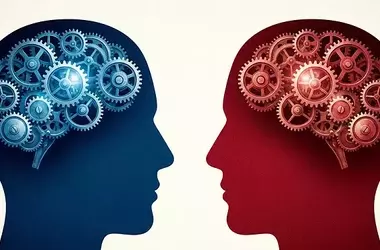
The Ideological Turing Test: Bridging Divides Through Perspective-Taking
A recent study published in Cognitive Science introduces a novel behavioral approach, the 'Ideological Turing Test,' to measure open-mindedness and the ability to accurately understand opposing viewpoints. Researchers at the University of Sheffield found that individuals are generally adept at mimicking the arguments of their political and social adversaries, suggesting a greater capacity for mutual understanding than commonly assumed. This test bypasses the limitations of self-reported data, offering a more objective measure of perspective-taking.
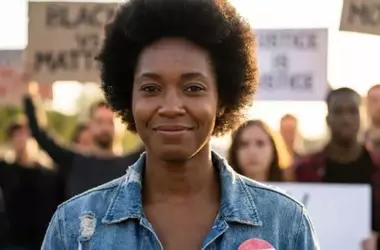
Beyond Stereotypes: Emotions Driving Black Women's Political Engagement
A study by Jamil S. Scott-Cummings and Kenicia Wright reveals how fear, anger, and hope influence Black women's political participation beyond traditional voting. Published in 'The Journal of Race, Ethnicity, and Politics,' the research debunks stereotypes by showing that specific emotions, linked to issues like race relations, personal finances, and election outcomes, drive engagement in both low-cost and high-cost political actions. Hope, in particular, is a strong predictor of high-cost participation, highlighting the complex emotional landscape that mobilizes Black women in American politics.