 Breaking News & Live Updates
- Breaking News & Live Updates
- Breaking News & Live Updates
- Breaking News & Live Updates
- Breaking News & Live Updates
- Breaking News & Live Updates
- Breaking News & Live Updates
- Breaking News & Live Updates
- Breaking News & Live Updates
- Breaking News & Live Updates
Legislative Cameras Don't Fuel Polarization, Study Finds
Shedding Light on Statehouses: Does Transparency Divide or Unite?
The Enduring Debate on Video Transparency in Governance
For decades, political analysts have debated the consequences of introducing video cameras into government institutions. One perspective suggests that increased visibility, such as livestreaming legislative sessions, empowers citizens to monitor their elected officials more effectively. Proponents of this view believe that this transparency encourages politicians to seek common ground and act moderately, fearing public disapproval if they engage in unreasonable behavior.
Skepticism Towards Cameras: The "Political Theater" Concern
Conversely, critics of legislative cameras express concern that constant video coverage might transform the legislative floor into a platform for performance rather than a space for earnest debate. They worry that politicians, aware of being watched, might prioritize appealing to extreme political factions, affluent donors, or special interest groups over serving the broader electorate. This concern posits that cameras could inadvertently incentivize grandstanding and deepen divisions.
Unraveling the Link Between Broadcasting and National Polarization
Many observers of national politics have drawn a connection between the onset of television coverage in the U.S. House of Representatives in 1979 and a subsequent rise in political polarization. This trend has led some to attribute the changing political landscape to the presence of cameras. Even prominent figures like former Representative Don Young voiced apprehension, stating that television coverage was "probably the worst thing that happened to the Congress."
Overcoming Research Challenges: Shifting Focus to State Governments
Studying the national government's experience with cameras presents significant statistical hurdles, as national broadcasting was introduced only once. This makes it difficult to isolate the effects of video coverage from other concurrent historical and cultural shifts. To address this, researchers turned their attention to state governments, where the adoption of continuous video coverage occurred at varied times across different states, providing a more robust dataset for analysis.
Methodology: Tracking Gavel-to-Gavel Coverage Across States
Led by Jeffrey Lyons of Boise State University and Josh Ryan of Utah State University, the research team focused specifically on continuous, unedited, or "gavel-to-gavel" broadcasts of legislative sessions. This approach ensured consistency, avoiding the variability of partial or selective camera coverage. By analyzing the staggered implementation of this continuous coverage in 91 state legislative chambers, the researchers could precisely track changes in political behavior before and after cameras were installed in each state.
Assessing Legislative Outcomes: Dysfunction, Productivity, and Polarization
The study meticulously examined various indicators of legislative functioning, including rates of political dysfunction and productivity. At the chamber level, they monitored instances of late budget approvals, which often signal a breakdown in compromise and can lead to government shutdowns. They also quantified the volume of legislation passed to gauge overall lawmaking efficiency. Furthermore, the researchers analyzed whether the voting patterns of the two major political parties diverged, indicating increased polarization.
Analyzing Individual Lawmaker Behavior and Effectiveness
Beyond chamber-wide metrics, the team delved into the behavior of individual politicians. They assessed each lawmaker's ideological leanings based on their voting history and tracked party loyalty, observing how frequently politicians voted in alignment with party leadership versus crossing party lines. The study also evaluated legislative effectiveness scores, which measure a politician's success in advancing bills. The hypothesis was that if cameras encouraged grandstanding over diligent work, effectiveness scores might decline.
Key Findings: Cameras Do Not Significantly Alter Political Behavior
Contrary to widespread concerns, the research revealed that the introduction of cameras into state legislative bodies did not substantially alter legislative behavior. State chambers did not exhibit increased polarization or dysfunction following the implementation of video coverage. At the individual level, lawmakers largely maintained their established habits after cameras were installed, suggesting that the presence of an audience did not significantly sway their actions.
Consistency Across Timeframes: No Observable Shifts in Policymaking
The study found no significant impact of video coverage on the timely passage of state budgets or the number of bills successfully enacted. Furthermore, there were no statistically significant changes in how often representatives voted with their respective parties, nor did voting records become more extreme. The researchers also investigated whether the timing of camera adoption (e.g., in the 1990s versus the 2010s) or a delayed effect of several years yielded different results, but found no substantial or sustained shifts in policymaking approaches.
Acknowledged Limitations and Future Research Directions
The authors acknowledge certain limitations, noting that while voting behavior and productivity remained stable, the tone or rhetoric used during debates might become more aggressive due to the cameras' presence. It's also possible that lawmakers relocate sensitive negotiations to private settings to avoid public scrutiny. Future studies could explore the influence of other transparency measures, such as the publication of roll call voting records, or investigate whether specific media-savvy politicians leverage video coverage for personal career advancement.
Implications for Contemporary Governance and Transparency
The current evidence suggests that livestreaming state and local government meetings is a largely benign practice. These findings are particularly pertinent today, given the increasing trend of school boards, city councils, and local agencies broadcasting their meetings online. The data from state legislatures challenge the arguments of officials who resist transparency, demonstrating that making government proceedings visible does not necessarily impede the essential work of legislating or lead to political fragmentation.
Other Articles

AI-generated content labels don't affect public persuasion on policy issues
A recent study found that labeling political messages as AI-generated or human-authored had no impact on their persuasiveness, despite participants largely believing the labels. The messages, regardless of attribution, swayed public opinion on policy issues by nearly 10 percentage points. This suggests that while transparency is increased, labels alone may not mitigate the persuasive power of AI content, highlighting the need for alternative strategies to manage AI-generated information challenges.

Understanding Adolescent Loneliness: Beyond Solitude
A recent study published in "Development and Psychopathology" reveals that while adolescents experience heightened loneliness when alone, frequent solitude doesn't necessarily lead to chronic loneliness. The research emphasizes the critical roles of social interaction quality and personality traits in shaping how young individuals navigate social isolation. These findings illuminate why some teenagers thrive in solitude while others struggle with social disconnection, highlighting the subjective nature of loneliness and the importance of meaningful connections over mere presence.

The Evolution of Personal Values Across the Lifespan: A Detailed Analysis
A recent comprehensive study published in Personality and Social Psychology Bulletin reveals that personal values undergo predictable shifts with age. Researchers utilized a detailed approach to examine individual values like curiosity, risk-taking, and empathy, rather than broad categories. This fine-grained analysis, involving over 80,000 participants, provided a significantly more accurate understanding of how people's values transform throughout their lives, highlighting nuanced changes often obscured by broader classifications.
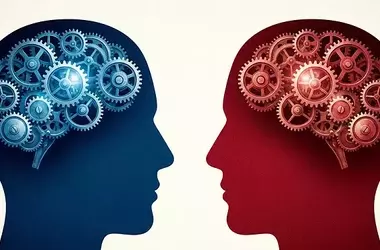
The Ideological Turing Test: Bridging Divides Through Perspective-Taking
A recent study published in Cognitive Science introduces a novel behavioral approach, the 'Ideological Turing Test,' to measure open-mindedness and the ability to accurately understand opposing viewpoints. Researchers at the University of Sheffield found that individuals are generally adept at mimicking the arguments of their political and social adversaries, suggesting a greater capacity for mutual understanding than commonly assumed. This test bypasses the limitations of self-reported data, offering a more objective measure of perspective-taking.
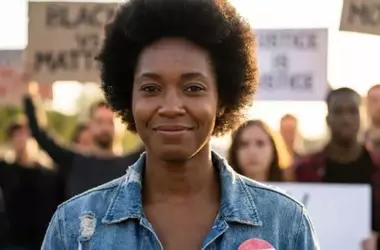
Beyond Stereotypes: Emotions Driving Black Women's Political Engagement
A study by Jamil S. Scott-Cummings and Kenicia Wright reveals how fear, anger, and hope influence Black women's political participation beyond traditional voting. Published in 'The Journal of Race, Ethnicity, and Politics,' the research debunks stereotypes by showing that specific emotions, linked to issues like race relations, personal finances, and election outcomes, drive engagement in both low-cost and high-cost political actions. Hope, in particular, is a strong predictor of high-cost participation, highlighting the complex emotional landscape that mobilizes Black women in American politics.

Exploring the Nuances of Dark Personality Traits and Workplace Well-being
New psychological research investigates the influence of abrasive personality traits on employee mental health. The study indicates that narcissism, when coupled with high emotional intelligence, may enhance psychological well-being, whereas psychopathy tends to yield adverse outcomes. Machiavellianism showed a weak negative correlation, which diminished after considering other factors. This research, conducted in India, highlights the intricate interplay between personality, emotional intelligence, and workplace satisfaction, emphasizing cultural considerations.