 Breaking News & Live Updates
- Breaking News & Live Updates
- Breaking News & Live Updates
- Breaking News & Live Updates
- Breaking News & Live Updates
- Breaking News & Live Updates
- Breaking News & Live Updates
- Breaking News & Live Updates
- Breaking News & Live Updates
- Breaking News & Live Updates
Cognitive Flexibility: Intelligence and Openness Shape Habit Adoption
New research delves into the ways individual differences in intellect and personality guide how people acquire knowledge and behaviors from others. The findings indicate that more intelligent individuals are more inclined to abandon familiar routines for innovative solutions, particularly when these new methods offer clear advantages. Meanwhile, people exhibiting higher levels of openness to experience are also prone to embracing new approaches, even if these are comparable to or less effective than existing ones.
This investigation, published in “Personality and Individual Differences,” highlights the significant impact of cognitive traits on our ability to adapt and learn from our environment, underscoring the mechanisms through which individuals choose between maintaining established practices and adopting novel alternatives.
Intelligence and Openness: Driving Factors in Adopting Novel Solutions
The research explored how intelligence and openness to experience modulate an individual's propensity to embrace new problem-solving strategies. Highly intelligent participants demonstrated a marked inclination to switch to novel solutions, especially when these solutions proved to be more effective than their previously learned methods. This suggests that a higher intellectual capacity is linked to a more discerning and adaptive approach to social learning, where efficiency and improvement are key motivators for behavioral change. The study’s design involved tasks like unlocking virtual padlocks and navigating mazes, where the quality of solutions varied, allowing researchers to observe participants’ decision-making processes under controlled conditions. This systematic variation in solution quality provided clear insights into how cognitive abilities influence the adoption of new habits.
Conversely, the study found that individuals scoring high on openness to experience—a trait characterized by curiosity, imagination, and a willingness to explore new ideas—were also more likely to adopt novel solutions, but with a nuanced difference. Their tendency to switch was observed irrespective of whether the new solutions were superior, inferior, or equal in quality to the existing ones. This indicates that for open individuals, the novelty itself, or the experience of engaging with something new, can be a sufficient driver for change, even in the absence of tangible benefits. These findings underscore the multifaceted nature of social learning, revealing how different cognitive and personality traits lead to distinct patterns of behavior when confronted with new information or methods.
The Influence of Training and Practical Relevance on Learning
A secondary aspect of the study examined the role of training duration on the likelihood of adopting new solutions, revealing that prolonged exposure to an existing method significantly reduces the willingness to switch. As participants received more training in a particular solution, their adherence to that method increased, a phenomenon the researchers termed “maintenance bias.” This suggests that deeply ingrained habits, fostered through extensive practice, create a resistance to change, even when potentially better alternatives become available. The experiment systematically varied the amount of training participants received, from one to six rounds, demonstrating a clear inverse relationship between training intensity and the readiness to embrace novel approaches, highlighting the inertia that can develop with habitual behavior.
While the study effectively illuminated the interplay between intelligence, personality, and social learning, its limitations warrant consideration. The experimental tasks, such as the padlock and maze puzzles, were designed to be relatively short and lacked direct personal relevance or significant real-world consequences for the participants. This raises questions about how these findings might translate to situations where choices have substantial practical implications, such as professional decisions or personal life changes. The authors suggest that future research exploring social learning in contexts with higher stakes and more tangible outcomes could offer a more comprehensive understanding of how individuals adapt their behaviors when faced with impactful choices, thereby providing a richer insight into the complexities of human cognitive adaptability.
Other Articles

Maternal Sleep Expectations Influence Postpartum Insomnia
A recent investigation reveals that a pregnant woman's psychological anticipation of sleep quality after childbirth is a stronger determinant of postpartum insomnia than her prior sleep history or mental health diagnoses. The study, involving 432 women, utilized both self-reported data and objective wrist actigraphy to show that negative prenatal sleep beliefs, combined with postpartum anxiety, create a detrimental cycle that degrades sleep quality. These findings suggest a critical window for intervention during pregnancy to positively influence maternal well-being.

The Brain's Unconscious Filter: How Negative Words Are Automatically Suppressed
A new study reveals that our brains may automatically filter out negative spoken words before they reach conscious awareness, particularly when we are engaged in a demanding visual task. This unexpected finding challenges the common assumption that emotionally charged words readily capture our attention, offering new insights into how the brain selectively processes information and guards against potentially harmful stimuli.

The Economic Value of Sleep: How Income and Age Influence Our Nightly Rest
A recent study delves into the financial worth individuals attribute to their sleep, revealing a complex interplay between demographic factors and psychological profiles. The research, utilizing a novel questionnaire, found that income and age significantly shape a person's willingness to invest in better sleep quality or demand compensation for sacrificing it. This pioneering work establishes an economic framework for understanding sleep compliance and could lead to more personalized health interventions.

The Lingering Impact of Heavy Drinking on Cognitive Functioning in College Students
A study published in 'Alcohol: Clinical and Experimental Research' reveals that college students who engage in high-intensity drinking or blackouts experience significant cognitive impairments the following day. These include noticeable memory lapses and difficulties with mental tasks, suggesting that the effects of heavy alcohol consumption persist long after intoxication. The research highlights the need for interventions that connect immediate mental fog with prior extreme drinking to encourage healthier behaviors.
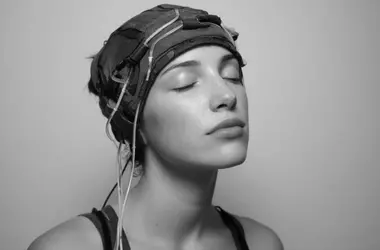
Cooling Cap Offers Relief for Depressive Symptoms
A recent study revealed that applying a cooling cap to the head can rapidly lessen symptoms of depression and promote a state of mental tranquility. The research, which involved a liquid-circulating cap set to 33 degrees Fahrenheit, found that just a 30-minute session significantly boosted alpha brain waves, indicating a relaxed state. This non-invasive method shows promise as a swift, low-risk tool for mental well-being.
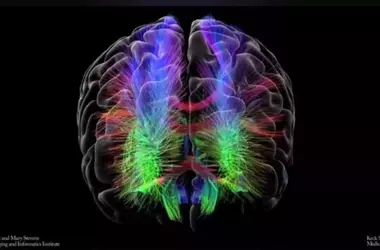
Bipolar Disorder and Brain Connectivity
A recent study conducted by researchers at the Stevens Neuroimaging and Informatics Institute at USC, in collaboration with the ENIGMA Bipolar Disorder Working Group, reveals that individuals with bipolar disorder exhibit less efficient brain communication networks. This large-scale meta-analysis, encompassing data from 449 bipolar patients and 510 healthy controls, utilized diffusion MRI and graph theory to map the brain's white matter pathways, offering critical insights into how illness progression and therapeutic interventions influence neural wiring.