 Breaking News & Live Updates
- Breaking News & Live Updates
- Breaking News & Live Updates
- Breaking News & Live Updates
- Breaking News & Live Updates
- Breaking News & Live Updates
- Breaking News & Live Updates
- Breaking News & Live Updates
- Breaking News & Live Updates
- Breaking News & Live Updates
The Lingering Impact of Heavy Drinking on Cognitive Functioning in College Students
Unveiling the Hidden Costs: How Last Night's Drinks Affect Today's Mind
The Pervasive Issue of Excessive Alcohol Use Among Young Adults
Among various age groups, individuals aged 18 to 25 exhibit the highest rates of problematic alcohol use. In the United States, an estimated five million young adults met the diagnostic criteria for alcohol use disorder in 2023. A significant proportion, approximately half, of young adults who consume alcohol report experiencing at least one blackout episode, characterized by alcohol-induced amnesia.
Defining High-Intensity Drinking and Blackout Episodes
High-intensity drinking is a particularly risky pattern of alcohol consumption, defined as consuming eight or more alcoholic beverages in a single sitting for women, and ten or more for men. Blackout drinking occurs when alcohol interferes with the brain's ability to form new memories, leading to a period where an individual is conscious and active but has no recall of subsequent events. Both patterns are prevalent in college settings and are associated with substantial risks, including physical harm and poor decision-making.
Neurological Ramifications of Acute Alcohol Exposure
Previous laboratory investigations have demonstrated that a single episode of heavy drinking can induce transient alterations in brain architecture. Specifically, regions like the corpus callosum, vital for interhemispheric communication, can be affected. These structural changes suggest that young adults might experience functional deficits in their daily lives following nights of extreme alcohol intake.
Investigating Real-World Cognitive Impairment
The researchers sought to determine if young individuals perceive and experience cognitive difficulties the morning after episodes of intense drinking or blackouts. They identified a gap in existing literature, which often focused on short-term effects or relied solely on self-reports or objective lab assessments. A more comprehensive, real-world approach was necessary to capture the authentic impact of alcohol on cognitive function.
Methodology: A 21-Day Diary Study
To address this, 304 college students, aged 18-25, participated in a 21-day diary study. The cohort was predominantly female (79%). Eligibility criteria included reporting heavy drinking at least twice monthly and experiencing at least one blackout in the preceding year. Participants received mobile surveys four times daily (11 a.m., 1 p.m., 3 p.m., and 5 p.m.), completing them within an hour. These surveys gathered information on alcohol consumption, including drink count and blackout occurrences, from the previous day.
Assessing Self-Reported Cognitive Lapses
Participants also documented their cognitive lapses over the preceding two hours. This included prospective memory lapses (forgetting future intentions, e.g., medication timing) and retrospective memory lapses (forgetting past information, e.g., names or item locations). Additionally, they reported on general cognitive issues like attention difficulties or problems with basic decision-making. Following the surveys, participants engaged in brief "brain games" designed to objectively measure cognitive performance.
Objective Cognitive Performance Measures
The objective tasks included a working memory task with updating, requiring recognition of visual prompts shown earlier. Another task assessed executive function and inhibitory control by measuring reaction times to targets while ignoring distractions. A third task evaluated working memory with manipulation, asking participants to recall number sequences in reverse order.
Quantifying the Next-Day Cognitive Toll
Analysis of daily responses revealed that any alcohol consumption the previous day increased the likelihood of general cognitive lapses by 14% compared to alcohol-free days. Each additional drink raised this likelihood by 5%. High-intensity drinking significantly amplified these effects, with a 66% increased likelihood of prospective memory lapses and a 75% increased likelihood of retrospective memory lapses the following day. General cognitive lapses doubled after high-intensity drinking. Blackout episodes were associated with a 61% higher likelihood of retrospective memory lapses and a 40% higher likelihood of general cognitive lapses.
Discrepancies Between Self-Reported and Objective Measures
While self-reported data indicated broad cognitive impacts, objective performance tasks presented a different picture. Most objective brain games showed no daily association with drinking indicators, except for blackout drinking, which correlated with poorer performance on the backward number recall task. Researchers noted that self-reports capture global cognitive functioning and daily mental demands, whereas objective tasks evaluate specific underlying mechanisms that may not show overt deficits in young, resilient brains.
Neural Underpinnings of Alcohol's Cognitive Impact
High-intensity drinking primarily affects the prefrontal cortex, a brain region crucial for planning and attention. Blackout drinking, conversely, disrupts the hippocampus, which is essential for converting short-term experiences into long-term memories. Given that these behaviors impact distinct brain areas, their effects on daily cognitive functioning likely manifest in varied ways.
Cognitive Resilience and Study Limitations
A crucial takeaway is that heavy drinking in young adults does not necessarily imply permanent or universally detectable cognitive decline. The minimal impact on most performance-based tasks suggests a degree of cognitive resilience in young brains, allowing them to perform well on focused, short tasks despite broader mental fog. The study's limitations include a sample primarily composed of white, female college students, potentially limiting generalizability. Reliance on self-reported drinking data also introduced recall bias, especially for blackout episodes. The chosen cognitive tasks might have overlooked other alcohol-disrupted mental processes, and survey timing missed evening cognitive struggles. Future research should explore cumulative effects of multi-day drinking.
Future Research and Intervention Strategies
Future research could incorporate wearable alcohol sensors for objective intoxication data, reducing reliance on memory. Scientists also aim to investigate sleep's protective role after heavy drinking and the combined effects of alcohol and cannabis. Long-term studies tracking cognitive outcomes as young adults age into midlife are also planned. Recognizing next-day memory lapses could serve as an effective intervention. By delivering personalized messages to mobile phones during moments of mental fog, health professionals could help young adults connect these struggles to prior extreme drinking, thereby encouraging healthier behaviors.
Other Articles
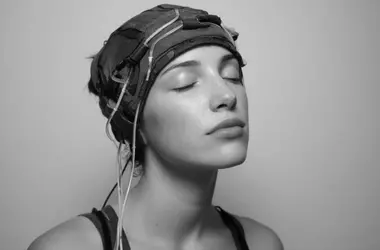
Cooling Cap Offers Relief for Depressive Symptoms
A recent study revealed that applying a cooling cap to the head can rapidly lessen symptoms of depression and promote a state of mental tranquility. The research, which involved a liquid-circulating cap set to 33 degrees Fahrenheit, found that just a 30-minute session significantly boosted alpha brain waves, indicating a relaxed state. This non-invasive method shows promise as a swift, low-risk tool for mental well-being.
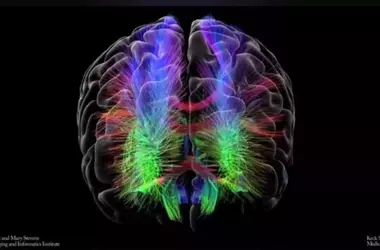
Bipolar Disorder and Brain Connectivity
A recent study conducted by researchers at the Stevens Neuroimaging and Informatics Institute at USC, in collaboration with the ENIGMA Bipolar Disorder Working Group, reveals that individuals with bipolar disorder exhibit less efficient brain communication networks. This large-scale meta-analysis, encompassing data from 449 bipolar patients and 510 healthy controls, utilized diffusion MRI and graph theory to map the brain's white matter pathways, offering critical insights into how illness progression and therapeutic interventions influence neural wiring.

74 Genetic Locations Linked to Anxiety Identified
The largest-ever genome-wide association study (GWAS) on anxiety has uncovered 74 genetic locations, including 39 novel ones, that are associated with the condition. These findings, published in Nature Human Behaviour, stem from analyzing genomic data of nearly 700,000 individuals, shifting the focus from binary clinical diagnoses to the continuous spectrum of anxiety symptom severity. The research highlights the role of genes like PCLO and SORCS3 in neural communication and suggests that while genetics contribute about 6% to anxiety differences, environmental factors are key to rising anxiety rates. The study also reveals genetic overlaps with other mental and physical health conditions.

The Emergence of AI Para-therapy: Redefining Mental Health Support
A 2026 survey reveals that 'therapy and companionship' is the primary application of generative AI, with nearly 20% of young individuals utilizing AI chatbots for mental health purposes, often without informing others. This phenomenon, termed 'para-therapy,' signifies an emotional engagement with AI that mimics therapeutic interactions but operates outside conventional mental health regulations and oversight, raising critical questions about its efficacy, safety, and the future of professional psychotherapy.

Understanding Narcissism in Social Media Interactions
A recent study explores how narcissistic traits manifest in daily social media behavior. Researchers found that narcissistic admiration is linked to positive self-presentation and optimistic expectations for social media engagement, while narcissistic rivalry is associated with negative posting behavior and pessimistic views on social interactions. The findings highlight the internal psychological processes driving narcissists' online conduct.
Unlocking the Mood-Boosting Power of Everyday Movement
A groundbreaking international study involving over 8,000 participants reveals a powerful, bidirectional link between light physical activity and positive mood. The research, which utilized wearable sensors and real-time tracking, demonstrates that even simple movements like chores or short walks can immediately elevate happiness and energy, subsequently inspiring further physical engagement. This continuous virtuous cycle challenges traditional notions of exercise, highlighting the profound psychological benefits of integrating more movement into daily life.