 Breaking News & Live Updates
- Breaking News & Live Updates
- Breaking News & Live Updates
- Breaking News & Live Updates
- Breaking News & Live Updates
- Breaking News & Live Updates
- Breaking News & Live Updates
- Breaking News & Live Updates
- Breaking News & Live Updates
- Breaking News & Live Updates
Unveiling the American Political Psyche: Nine Recent Studies on Political Behavior
Contemporary politics has become deeply ingrained in nearly every facet of human existence. Recent investigations into psychological and population trends indicate that an individual's political identity significantly shapes behaviors extending far beyond electoral decisions. Our partisan leanings now correlate with a wide array of phenomena, influencing everything from how we interpret a simple smile to our family planning choices.
Concurrently, the mechanisms and platforms through which public discourse is shaped are undergoing rapid transformations. Political figures increasingly leverage digital networks to express indignation, while ordinary citizens grapple with distinguishing genuine political rhetoric from content generated by artificial intelligence. Traditional assumptions concerning race, educational attainment, and political independence are also being re-evaluated as vast new datasets become available.
The Evolving Divisions in American Politics: Education's Growing Role
An examination of survey data spanning five presidential election cycles reveals a significant transformation in the primary cleavages of American politics. Discrepancies in ideology among different racial groups have sharply diminished since 2008. Conversely, ideological differences tied to educational attainment have expanded considerably. This shift is partly attributable to a general conservative trend among Black and Hispanic respondents. Furthermore, individuals with a high school education or less across all racial backgrounds leaned more conservative, while those with college and graduate degrees became increasingly liberal during the same period.
This comprehensive analysis involved responses from over 250,000 individuals, utilizing data from the Cooperative Election Study. Participants provided insights on diverse subjects such as taxation, healthcare, and immigration, enabling researchers to plot their positions on the liberal-conservative spectrum. The findings unequivocally demonstrate that education has emerged as a profoundly influential ideological differentiator within the United States, surpassing race in its predictive power for political alignment. The study underscores a complex interplay between socioeconomic factors and political identity, suggesting that as educational attainment varies, so too do core political beliefs and values within the American populace.
Psychological Underpinnings of Political Behavior: From Moral Circles to Online Outrage
A widely circulated social media graphic inaccurately asserted that political liberals prioritize strangers and animals over their immediate families. However, a new psychological investigation refutes this claim, finding no evidence of such an inverted moral hierarchy on the political left. Instead, the research indicates that liberals merely expand their moral concern more broadly, without diminishing the priority given to their closest relationships. To assess this, researchers employed the concept of a moral circle, a psychological construct defining the scope of ethical care, by asking participants to allocate a fixed number of moral concern points across various groups, from family to all living beings. This methodology compelled participants to make difficult choices, mirroring real-world constraints on time and resources.
Across numerous large-scale samples, individuals from all political persuasions consistently placed their closest relationships at the pinnacle of their moral considerations, with both conservatives and liberals overwhelmingly prioritizing family and friends. While liberals demonstrated a more expansive moral circle by extending greater concern to distant entities such as marginalized communities and the environment, this did not come at the expense of caring for their loved ones. Furthermore, other studies highlight how political identities shape perceptions of social cues, such as smiles, and influence online communication patterns. For instance, Republicans were found to be more inclined to interpret a smile as an assertion of power, potentially stemming from upbringing in close-knit, homogenous communities that foster a hierarchical view of social interactions. Meanwhile, Democratic lawmakers appear to be disproportionately driving the surge in angry rhetoric on social media, utilizing outrage to garner attention and engagement, reflecting the strong incentive politicians have to employ high-arousal emotions for public visibility.
Other Articles

Social Media and Dating Apps' Impact on Body Image
A global survey of young adults reveals that increased time spent on social media and dating applications correlates with slightly diminished body satisfaction and appreciation. Social media usage also showed a weak link to a higher drive for leanness, while dating app use was weakly associated with a greater desire for muscularity, particularly in men.

New Study Explores the Nuances of Personality in Friendship Satisfaction
A recent psychological study challenges the long-held belief that personality similarity is the primary driver of friendship satisfaction. Published in *Social Psychological and Personality Science*, the research indicates that while friends do share some personality traits, it is the perception of positive traits in friends, rather than strict personality matching, that significantly contributes to relationship well-being. This suggests that how individuals view their friends' personalities is more crucial than an objective alignment of traits.

East Asian Nations Lead in Dialectical Thinking, Study Reveals
A new meta-analysis involving 28 countries found that East Asian nations exhibit the strongest embrace of contradiction and change, a cognitive style known as dialectical thinking. This research highlights the deep cultural roots of this mindset, linking it to Buddhist traditions and historical rice-farming cultures, and distinguishes it from collectivism.
Attractive Politicians: Electoral Advantage, Consistent Governance
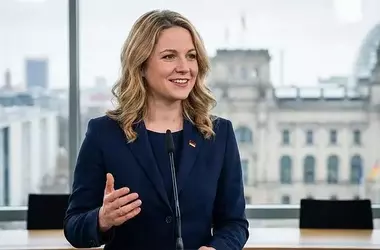
New research published in the European Journal of Political Economy indicates that while physical attractiveness may grant political candidates an electoral edge, it does not influence their governance once elected. The study, focusing on Swiss politics, found no evidence that attractive politicians engage in more rent-seeking behavior or diverge from voter preferences. This suggests that in transparent political systems, good looks do not offer politicians a license to act against public interest.

Cultural Hierarchy's Impact on Women's Economic Equality Despite Education
New research highlights that deep-seated cultural beliefs, particularly high power distance and masculinity, can significantly hinder educated women's economic participation and career advancement. In societies with strong hierarchies, the benefits of higher education for women in achieving economic parity are diminished, as traditional gender roles and power structures often override individual qualifications. This study, spanning 144 countries, underscores the need for tailored strategies to promote gender equality in the workplace, considering diverse cultural contexts.

Democrats Show Increased Use of Aggressive Language on Social Media, Study Reveals
A new study indicates a rising trend in the use of angry rhetoric by U.S. congressional members on social media, with Democrats exhibiting a disproportionately higher rate. This research, published in 'American Politics Research,' delves into how politicians leverage emotionally charged language to cultivate their public image and influence political discourse. The findings suggest that digital platforms reward extreme viewpoints, providing an incentive for lawmakers to engage in such communication tactics. The analysis utilized computational methods on millions of tweets, offering insights into partisan communication strategies.