 Breaking News & Live Updates
- Breaking News & Live Updates
- Breaking News & Live Updates
- Breaking News & Live Updates
- Breaking News & Live Updates
- Breaking News & Live Updates
- Breaking News & Live Updates
- Breaking News & Live Updates
- Breaking News & Live Updates
- Breaking News & Live Updates
Understanding Mental Health: A Holistic Approach to Well-being
This article delves into the insightful perspectives of Dinesh Bhugra, a prominent voice in social and cultural psychiatry. It outlines his comprehensive view that mental health is intricately woven with social, political, geographical, and commercial influences. The discussion challenges the conventional focus on symptoms and diagnoses, advocating instead for a deeper understanding of cultural contexts, community roles, and the lived experiences of individuals. Bhugra's work encourages a shift towards public mental health strategies that acknowledge the broader determinants of distress and healing, moving beyond a purely medicalized framework.
Dinesh Bhugra, Emeritus Professor of Mental Health and Cultural Diversity at King's College London, has a distinguished career marked by leadership roles in prestigious medical organizations, including the Royal College of Psychiatrists and the World Psychiatric Association. His commitment to mental health extends beyond academia into clinical practice, where he consistently champions the importance of listening to patients' narratives. He argues that understanding an individual's suffering requires looking beyond diagnostic labels to the complex interplay of their environment, relationships, and societal pressures. This approach highlights how factors like poverty, unemployment, and housing significantly impact mental well-being.
A key aspect of Bhugra's argument is the concept of 'geopsychiatry,' which explores the profound effects of global events such as wars, conflicts, climate change, and natural disasters on mental health. He also addresses 'political determinants,' where governmental decisions on healthcare funding and policies directly influence mental health services and individual liberties. Furthermore, he sheds light on 'commercial determinants,' illustrating how corporate practices, from food production to lobbying efforts, can subtly yet significantly affect public health and mental states. These interconnected forces, he contends, shape the landscape of mental health, often resulting in distress that is misinterpreted as solely individual pathology.
Bhugra emphasizes that clinicians must cultivate empathy and a willingness to understand patients' unique explanatory models of their experiences. He recounts an example of a patient with schizophrenia whose family believed he was possessed, a perspective respected and addressed through collaboration with a hospital chaplain. This holistic approach, integrating traditional and spiritual beliefs, ultimately contributed to the patient's successful reintegration into society. This anecdote powerfully illustrates that relief from suffering often comes not just from symptom reduction but from addressing a person's overall life context, including meaningful relationships, secure employment, and a sense of belonging.
The conversation also critically examines the 'psychiatrization of society,' a phenomenon where normal human emotions and reactions are increasingly medicalized. Bhugra warns against the reduction of common human experiences like sadness or anxiety into psychiatric diagnoses, arguing that this can dilute the seriousness of severe mental illnesses and foster an over-reliance on medication. He highlights how this trend contributes to individuals adopting diagnoses as core aspects of their identity, potentially exacerbating their distress and isolating them further, especially in an era of heightened social media connectivity and rising loneliness. The interview concludes by advocating for community-based interventions, such as 'Friendship Benches' and 'social prescribing,' which offer alternatives to traditional clinical settings by fostering social connections and empowering local communities to support mental well-being.
Other Articles

The Neurodiversity Mystification: Deconstructing Diagnostic Labels and Identity
This article critically examines the escalating trend of neurodiversity diagnoses, particularly ADHD and autism. It highlights the inconsistencies and lack of scientific basis for these labels, arguing that they are social constructs rather than biological realities. Through fictionalized case studies, the piece illustrates the diverse experiences grouped under these broad categories, questioning their utility in understanding individual needs. The author contends that the focus should shift from medicalized identities to acknowledging universal human diversity, urging for a re-evaluation of the current diagnostic culture.
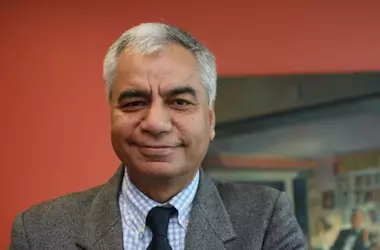
Understanding Mental Health Beyond Western Paradigms
Dinesh Bhugra, a distinguished figure in social and cultural psychiatry, discusses the intricate factors influencing mental well-being. He emphasizes moving beyond conventional symptoms and diagnoses to consider cultural, communal, and socioeconomic contexts. Bhugra highlights the critical role of listening to patients' lived experiences and challenges the medicalization of normal human emotions, advocating for a holistic approach to mental health.

Existential Therapy's Dilemma: Bridging Theory and Practice for Profound Change
This article delves into the author's personal journey with existential therapy, questioning its efficacy in fostering deep, lasting change. Despite gaining clarity and reducing fear, the author highlights a significant disconnect between the field's theoretical understanding of sustained psychological transformation—which emphasizes community and immersion—and its current practice model of infrequent, individual sessions. The piece advocates for incorporating more communal and ritualistic support structures to bridge this gap, drawing parallels with historical and anthropological approaches to existential concerns.

The Eagle's Embrace: A Journey Through Psychiatric Intervention and Personal Reclamation
This deeply personal narrative unfolds the author's challenging path through a system that misdiagnosed and confined them. It explores the profound impact of psychiatric intervention, detailing years of struggle to reclaim identity, mental well-being, and a semblance of normal life after experiencing involuntary hospitalization, misdiagnosis, and the profound effects of prescribed treatments. The story highlights a resilient spirit battling against systemic failures and societal misunderstandings.

Supporting Individuals in Extreme States: An Alternative Approach
Mad in America is hosting an online panel discussion titled "Supporting Extreme States, Psychosis & Dissociation" on Saturday, March 9th. This event aims to challenge conventional psychiatric approaches by advocating for a compassionate framework that prioritizes engagement and validation. The discussion will feature experts with both professional and personal experience in these areas, offering diverse perspectives and resources.
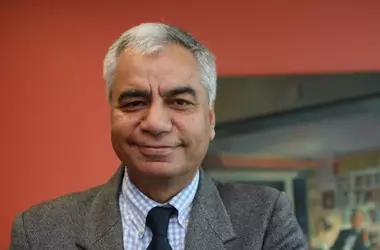
Dinesh Bhugra on Public Mental Health and Cultural Psychiatry
Dinesh Bhugra, a prominent figure in social and cultural psychiatry, discusses the multifaceted determinants of mental health, emphasizing the impact of social, political, geographical, and commercial forces. He advocates for clinicians to consider patients' cultural contexts and lived experiences, challenging the Western-centric approach to mental illness. The interview also delves into the concept of "psychiatrization of society" and the importance of community-based support systems in fostering mental well-being.