 Breaking News & Live Updates
- Breaking News & Live Updates
- Breaking News & Live Updates
- Breaking News & Live Updates
- Breaking News & Live Updates
- Breaking News & Live Updates
- Breaking News & Live Updates
- Breaking News & Live Updates
- Breaking News & Live Updates
- Breaking News & Live Updates
The Perilous Promise of Neuro-Identitarianism: A Critical Examination of Diagnosis in Late Capitalism
In an era marked by rapid societal shifts and increasing individualization, the concept of neurodiversity has gained considerable traction. However, a closer look reveals a complex interplay between personal distress, societal pressures, and the ever-expanding reach of psychiatric categorization. This article delves into how the modern interpretation of neurodiversity, particularly in the context of diagnoses like autism and ADHD, reflects deeper systemic issues within contemporary society, often obscuring the collective human experience of alienation.
The Expansion of Neurodiversity: A Symptom of Alienation in Modern Society
In recent years, a notable surge in neurodevelopmental diagnoses, particularly autism and ADHD, has been observed. From 2019 to 2024, autism assessment referrals in England skyrocketed fivefold, accompanied by a 51% increase in ADHD medication prescriptions. This trend is not confined to clinical settings; social media platforms are rife with content reinterpreting everyday human experiences through a 'neuro' lens, labeling social anxieties as 'rejection sensitivity dysphoria' or mid-life crises as 'autistic burnout'.
Leading autism researcher Professor Uta Frith has voiced concerns that the autism diagnosis has become so broad it risks losing its original meaning, which was rooted in clear social-communication difficulties and restricted behaviors. She highlights that in the absence of definitive biomarkers, diagnosis often relies on subjective reports, potentially overlooking individuals who experience social anxiety without the pervasive communication challenges indicative of a neurodevelopmental condition. Similarly, critical psychiatrist Dr. Sami Timimi, in his book Searching for Normal, illustrates the dramatic expansion of ADHD. What was once a rare diagnosis in adolescent boys now affects up to 10% of children in the U.S. Timimi argues that as diagnostic categories widen, the definition of 'normal' continues to shrink, with diagnoses often based on subjective questionnaires rather than objective biological markers or age-appropriate developmental benchmarks.
Beyond the medical implications, this surge in self-identification as neurodivergent points to a deeper societal yearning for recognition and understanding. Many individuals describe a pre-diagnosis state characterized by a profound sense of not knowing oneself, feelings of inadequacy, overwhelming experiences, loneliness, and persistent misunderstanding. For these individuals, a diagnosis functions as an ontological event, transforming past confusion into a coherent identity. This 'neuro-actualization' often frames the world and its institutions as inherently unaccommodating to the neurodivergent self, leading to a rights-based framework for asserting individual needs.
This phenomenon bears a striking resemblance to Karl Marx's concept of alienation, specifically 'alienation from species-being' (Gattungswesen). Marx theorized that humans, inherently social and relational, understand themselves through shared experiences. When individuals are reduced to cogs in systems that serve purposes other than their own, they become alienated from this fundamental human essence. In the context of late capitalism, processes of alienation have intensified, contributing to what sociologist Zygmunt Bauman termed 'liquid modernity' – a state characterized by social atomization and enforced individualization. This societal backdrop fosters feelings of inadequacy, overwhelm, loneliness, and misunderstanding, mirroring the very experiences individuals attribute to their pre-diagnosed selves.
The diagnostic framework, while offering a seemingly individual 'solution,' inadvertently reinforces this alienation by focusing on 'brain-wiring' rather than addressing broader collective human experiences or the systemic issues within society. This individualization of distress, where the self becomes the sole site of explanation, reflects a broader 'hyper-liberal' cultural shift. As philosopher John Gray notes, this elevation of self-defined identity can reduce politics to the affirmation of the self, fragmenting public life into moralized contests rather than fostering collective pursuit of structural change or the common good. This fragmentation has tangible consequences, such as the spiraling costs of special educational needs provision in the UK and the doubling of disability benefit claims among young adults, with neurodevelopmental diagnoses accounting for nearly half of these. These trends suggest that diagnoses are becoming a 'sticking plaster' for systemic failures, failing to address dysfunctional labor markets or the erosion of basic needs.
Ultimately, neuro-identitarianism, while an understandable response to the alienation prevalent in late capitalism, carries a tragic irony. By creating special interest groups defined by difference and competing for recognition, it inadvertently hinders broader solidarity. It risks denying common experiences of an often inhospitable world, further estranging individuals from their shared humanity, and thereby reproducing the very alienation it seeks to alleviate.
The proliferation of neurodiversity diagnoses is a complex issue, deeply intertwined with the fabric of modern society. While it aims to validate individual experiences, its current trajectory may be inadvertently reinforcing societal alienation and obscuring the need for broader systemic change. This situation calls for a nuanced understanding that acknowledges both individual needs and the collective societal forces shaping human experience.
Other Articles
Sleep Quality Interacts with Genetics to Impact Alzheimer's Risk
New research suggests that an individual's genetic predisposition to Alzheimer's disease is significantly influenced by their sleep patterns. The study, published in "Alzheimer's & Dementia," indicates that variations in a gene responsible for brain fluid movement interact with sleep quality to affect memory and brain structure in older adults. This highlights the crucial role of sleep in mitigating genetic risks for Alzheimer's and points towards personalized interventions to preserve brain health.

National and Global Identities Correlate with Enhanced Life Satisfaction
A new study analyzing World Values Survey data from 69 nations reveals that both national and world citizenship, along with national pride, are positively associated with higher life satisfaction. The research, published in Scientific Reports, indicates that while national pride's effect lessens for strong world citizens, individuals embracing both identities report the highest well-being. This suggests a harmonious rather than contradictory relationship between these seemingly disparate forms of identification, highlighting their combined additive benefits for psychological well-being.
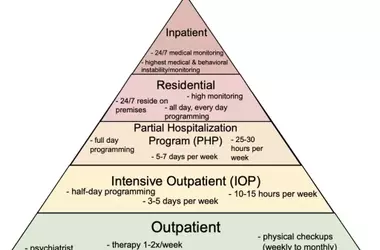
Navigating the Medical Maze: Personal Journey Through Eating Disorder Care
This article explores the challenges of seeking effective healthcare for eating disorders (EDs), highlighting the author's eight-year undiagnosed struggle and subsequent frustrating experiences with medical professionals. It critically examines the prevailing "levels of care" model, its financial and accessibility barriers, and the problematic overemphasis on the psychological aspects of EDs while neglecting the crucial physical dimension. The piece also delves into the detrimental impact of weight bias and systemic fatphobia within the medical community and offers insights gained from a self-directed recovery approach.

The Neuro-Identitarianism Trap: Alienation in Modern Society
This article explores the rising trend of neuro-identitarianism, where psychiatric diagnoses are increasingly used to define personal identity and explain human experiences. It critiques how this approach, while seemingly offering validation, ultimately reinforces individualism and detachment, diverting attention from collective societal issues and perpetuating a sense of alienation in late capitalist societies.

Psychiatrists' Diverse Views on Psychosis: A UK Study Reveals Varied Perspectives
A recent study conducted in the UK explored how psychiatrists understand psychosis, identifying three main perspectives: a biomedical view, a critical approach emphasizing social factors, and an ambivalent stance. The research, based on interviews with UK psychiatrists, also highlighted key themes like the influence of orthodox medical training, professional hierarchies, and the expectation for psychiatrists to project an image of invulnerability. This investigation sheds light on the complex and often conflicting interpretations within the psychiatric community regarding the nature and treatment of psychosis.
The Allure of Neuro-Identitarianism: A Critical Examination of Diagnostic Expansion and Societal Alienation
This article explores the growing trend of neuro-identitarianism, where psychiatric diagnoses like autism and ADHD are increasingly used to explain a wide range of human experiences. The author, a systemic psychotherapist, argues that this expansion of diagnostic categories, particularly in the absence of clear biomarkers, pathologizes normal responses to societal pressures and fosters an individualistic approach to distress. Drawing on Marxist theories of alienation, the piece suggests that the appeal of neuro-identitarianism stems from a deeper societal malaise, where declining community and increasing atomization lead individuals to seek identity and validation through diagnostic labels, ultimately hindering collective action for systemic change.