 Breaking News & Live Updates
- Breaking News & Live Updates
- Breaking News & Live Updates
- Breaking News & Live Updates
- Breaking News & Live Updates
- Breaking News & Live Updates
- Breaking News & Live Updates
- Breaking News & Live Updates
- Breaking News & Live Updates
- Breaking News & Live Updates
The Enduring Neural Resonance: How Positive Mother-Child Dialogues Shape Brain Networks
A recent study highlights that engaging in positive face-to-face conversations between a mother and her child can lead to a temporary synchronization of their brain activity, even after the conversation has ceased. This persistent connection implies that daily social experiences could physically fine-tune the development of the brain's social networks.
For many years, scientists have explored how physical experiences modify human neurobiology, a process known as neuroplasticity. This involves the creation of new neural circuits and the adaptation of existing ones through repeated events. Just as musical practice restructures the brain to enhance skill, social interaction is believed to mold the brain for social competence. Recently, research has focused on the impact of social relationships on these neurological changes, with caregiving relationships offering the earliest and most consistent framework. During parent-child interactions, their behaviors, heart rates, and breathing often fall into a shared rhythm. To investigate this biological alignment, researchers employ hyperscanning, a method that simultaneously records the brain activity of multiple individuals. Previous hyperscanning studies have demonstrated that brain waves synchronize when people converse, collaborate on tasks, or play games. This phenomenon, known as inter-brain synchrony, commonly occurs in brain regions involved in understanding others. However, it was unknown whether this neural alignment dissipated immediately after the interaction. Linoy Schwartz and her team at Reichman University in Israel hypothesized that positive social exchanges might transiently alter functional connections between the brains of a mother and her child, proposing that this short-term persistence could be a mechanism through which repeated daily interactions build long-term brain structures.
To test this theory, the research team invited mother-child pairs to their laboratory, with 55 pairs, averaging 12-year-old children, included in the final analysis. Participants acclimated to the environment without physical contact to establish a neutral baseline. Saliva samples were collected from both mother and child to measure baseline oxytocin levels, a hormone critical for stress regulation, bonding, and social cue processing. Subsequently, electroencephalography (EEG) caps, equipped with sensors to measure electrical brain activity, were placed on both participants. The researchers focused on the fronto-temporal network, which encompasses brain areas involved in interpreting emotional cues and guiding social behavior. The frontal regions manage goal-directed actions, while the temporal regions handle perspective-taking and facial expression processing, together forming a system vital for human relationships. The equipment was specifically calibrated to detect beta waves, which are electrical brain oscillations associated with active thinking, shared attention, and empathetic communication, and are considered a primary frequency for social connection. The experiment began with a two-minute baseline resting period where the mother and child sat near each other, facing a wall in silence, to establish their baseline overlapping brain activity without interaction. Following this, they engaged in a three-minute face-to-face conversation about a positive topic, such as planning a day trip, which was video-recorded to capture their social behaviors. Immediately after the conversation, they completed another two-minute resting period under identical conditions. A second saliva sample was then collected to assess changes in oxytocin levels. Independent evaluators later analyzed the video recordings, assessing behavioral synchrony by observing emotional cue sharing, eye contact, and matching expressions to quantify the flow of conversation.
Schwartz's team discovered that neural alignment increased after the conversation. During the post-interaction resting period, the fronto-temporal brain networks of the mother and child exhibited higher synchronized activity compared to the initial baseline. The data revealed that social interaction induced a temporary, ongoing state of neural coupling, meaning mothers and children remained biologically attuned even when not directly interacting. The extent of this lingering brain synchronization was strongly linked to the quality of the verbal exchange; pairs with higher behavioral synchrony during the conversation showed greater subsequent neural synchrony, indicating that reciprocal, attentive conversations foster stronger, lasting connections. Hormonal shifts also predicted the strength of this neural aftermath. An increase in the child's oxytocin levels from the start to the end of the experiment correlated with enhanced brain synchronization, while the mother's oxytocin changes did not show the same effect. This hormonal disparity likely reflects developmental differences in how human bodies react to social interactions, as children's and adolescents' oxytocin systems are generally more adaptable than adults'. The child's oxytocin surge appears to facilitate sustained neural alignment. However, the study's laboratory setting and the use of sensory caps might not fully replicate natural interactions. Furthermore, the analysis focused on a specific brain activity frequency within a particular network, while human brains operate with multiple rhythms simultaneously. The short duration of the experiment prevents definitive conclusions about whether these brief bursts of synchrony lead to permanent brain changes. Proving that these neural 'echoes' build lasting mental architecture would require long-term tracking of brain development. Future research could explore these lingering connections among friends, romantic partners, or strangers, and investigate how negative interactions might alter resting brain activity. This study offers a biological insight into the profound impact of daily family conversations, showing that a simple discussion about a vacation spot can leave a physical imprint on the brain that outlasts the spoken words, underscoring the deep and lasting impact of human connection on our neural architecture.
Other Articles
Brain Scans Uncover Two Distinct Biological Subtypes of Autism
A groundbreaking study, published in Nature Neuroscience, reveals that autism spectrum disorder (ASD) can be characterized by two unique brain connectivity patterns: hypoconnectivity (reduced communication between brain regions) and hyperconnectivity (increased communication). Researchers utilized fMRI data from both mouse models and human participants, identifying these patterns are linked to different underlying biological mechanisms, specifically synaptic function and immune-related processes. This discovery advances the understanding of autism's heterogeneity and could pave the way for more personalized diagnostic and therapeutic approaches.

Loneliness and Empathy: A New Perspective on Connection
A recent study investigated the impact of Loving Kindness Meditation on loneliness and empathy. While the meditation technique effectively reduced loneliness, it did not significantly alter empathy levels. Interestingly, lonely individuals reported lower self-perceived empathy, yet their neural responses during an empathy task remained intact, suggesting a disconnect between self-perception and biological empathetic capacity. This research highlights the importance of addressing cognitive aspects of loneliness interventions.
Brain Chemistry's Role in Error Sensitivity and Mental Health
A new study reveals that elevated glutamate levels in the brain's anterior insular cortex are linked to heightened sensitivity to errors, contributing to anxiety and depression. This research, published in Frontiers in Neuroscience, highlights how our brain's chemical makeup can influence our reaction to mistakes and impact overall mental well-being, suggesting a biological predisposition to internalizing disorders.

Head Trauma in Contact Sports Linked to Blood-Brain Barrier Dysfunction and Cognitive Decline
A new study reveals a correlation between extensive blood-brain barrier disruption and accelerated cognitive decline in retired athletes from combat and collision sports. The research, published in Science Translational Medicine, suggests that repetitive head trauma may lead to persistent inflammation and compromised brain barrier integrity, contributing to long-term neurological issues. These findings underscore the importance of understanding and mitigating the risks associated with head impacts in sports.
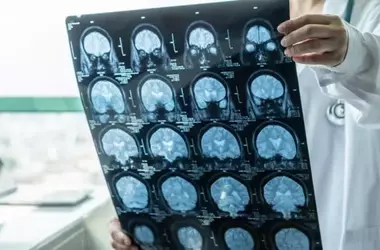
Brain Scan Study Uncovers Physical Foundations of PTSD's Intrusive Symptoms
New research published in "Biological Psychiatry: Cognitive Neuroscience and Neuroimaging" suggests that the structural integrity of specific white matter pathways in the brain influences the intensity and nature of intrusive traumatic memories in individuals with PTSD. The study, involving 114 trauma-exposed adults, found that weaker connections in certain brain regions correlated with more frequent intrusive memories and a heightened sense of reliving traumatic events, shedding light on the neurological underpinnings of these distressing symptoms.
Genetic Predisposition for ADHD Linked to Irregular Brain Rhythms Essential for Cognitive Control
A recent study published in "Translational Psychiatry" reveals a direct correlation between genetic scores for Attention-Deficit/Hyperactivity Disorder (ADHD) and inconsistent timing in midfrontal theta brain waves. These brain waves are critical for cognitive control, enabling individuals to maintain focus and achieve goals. The research highlights how genetic predispositions manifest as tangible disruptions in neural activity, providing new avenues for understanding and potentially treating ADHD.