 Breaking News & Live Updates
- Breaking News & Live Updates
- Breaking News & Live Updates
- Breaking News & Live Updates
- Breaking News & Live Updates
- Breaking News & Live Updates
- Breaking News & Live Updates
- Breaking News & Live Updates
- Breaking News & Live Updates
- Breaking News & Live Updates
Embodied Compassion for Challenging Emotions
Mindfulness practice often presents the challenge of accepting emotions rather than resisting them, especially when facing pain, confusion, or fear. Cultivating compassion towards ourselves in such moments can feel counterintuitive, yet it's a pivotal step towards inner peace.
Emily Jane, a respected author and recovery coach, introduces a guided meditation designed to assist individuals in navigating challenging emotional landscapes. This practice emphasizes bringing curiosity, courage, and an empathetic approach to uncomfortable experiences, aiming to transform resistance into acceptance.
When confronted with difficult emotions, our natural inclination is to suppress or avoid them. However, this very resistance frequently amplifies stress and suffering. The meditation offers a gentle method to reframe our relationship with these feelings by creating a supportive internal environment. It encourages us to welcome these emotions, sitting with them as one would an old acquaintance, offering compassion and understanding.
The guided session commences with focused mindful awareness, gradually transitioning to acknowledge emotions, physical sensations, and parts of ourselves we typically prefer to ignore. Participants are encouraged to find a comfortable posture—seated or reclined—and gently close their eyes. The practice begins by relaxing the body, from shoulders to jaw, and softening facial muscles. Awareness is then drawn to physical support, like the chair or floor, and the connection between feet and the ground. Noticing body temperature, the surrounding air, and the gentle pull of gravity follows, grounding the participant in the present moment.
The meditation then shifts to observing the natural rhythm of breath, tracing its path through the body without judgment. Deeper inhales through the nose, flowing into the belly, are accompanied by slow exhales, often with a sigh, to further release tension. Participants are invited to sense their body as a whole, approaching any sensations, emotions, or areas of discomfort with curiosity and compassion. The practice then encourages a recognition of the 'aware' part of oneself—the observing presence that notices breath, body, and emotions. Resting in this compassionate awareness, placing a hand over the heart, can offer a sense of care and support.
The practice culminates in gently bringing a challenging emotion, memory, or situation to mind. This is done without selecting anything overly intense, rather something that has caused recent worry or annoyance. As this feeling surfaces, participants observe bodily reactions such as tightness or heaviness, and name the emotion. The core of this phase is to observe sensations without immediately pushing them away, allowing the experience to exist without pretense or judgment. Acknowledging resistance, if it arises, is also part of the non-judgmental observation. The understanding that this emotion is merely a part of one's experience, not the totality, is crucial. Moving closer to the emotion, participants are guided to place a hand over the area where the feeling is most pronounced, offering words of acceptance and compassion: "I see you. I'm here with you. I offer you space, compassion, and love." The response to these words, whether softening or continued discomfort, is accepted without expectation.
The session concludes by returning awareness to the breath, imagining compassion flowing into the body with each inhale and expanding into the surrounding space with each exhale. This allows the emotion to integrate into one's being. Finally, participants re-engage with their full body, sensing the support beneath them and reiterating the affirmation, "I can be with difficult emotions when I create a compassionate space for them." Gentle movement and a final deep breath precede opening the eyes, returning to the present moment with a renewed sense of calm.
Other Articles

John Gottman's Wisdom on Fatherhood: Nurturing Your Well-being and Connections
This article, inspired by John Gottman's insights, highlights the often-overlooked importance of fathers prioritizing their own well-being. It emphasizes that a father's emotional health and the quality of his relationships directly influence his children's development. By being present, showing vulnerability, and engaging in self-care, fathers model essential life skills for their children, fostering resilience and emotional intelligence.

Reconnecting with Your Authentic Self: Navigating Identity Loss
Many people encounter phases in life where they feel detached from their core identity. This article delves into the experience of identity loss, its potential causes, and actionable strategies to help individuals rediscover and rebuild a strong sense of self. It emphasizes that identity evolution is natural and offers guidance on how to embrace this journey constructively.
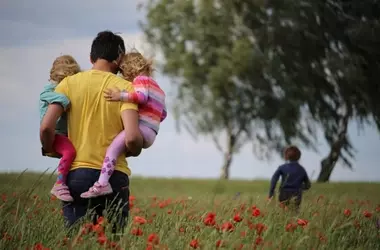
Gardening: A Path to Mindful Fatherhood
This article explores how gardening can serve as a powerful metaphor and practical tool for fathers to engage in mindful caregiving. It highlights the parallels between nurturing plants and raising children, emphasizing the patience, resilience, and joy found in both. The piece also delves into the neurological benefits fathers gain from active caregiving and proposes gardening as a healthy practice for fathers to connect with nature, manage stress, and reinforce their essential role in family life.

Mindful Movement: A Journey to Inner Calm and Stability
Discover how mindful movement, even in its simplest forms, can foster inner peace and stability. This guided meditation emphasizes connecting breath and body to harmonize your nervous system, enhance awareness, and appreciate the present moment. Through gentle exercises and focused breathing, you can cultivate a sense of calm, clarity, and renewed energy, ultimately enriching your daily life.

Understanding Identity and Navigating Role Confusion
Many individuals ponder their sense of self at various life stages, particularly during adolescence when values and aspirations are first explored. This article delves into the concept of identity versus role confusion, examining the underlying causes of such confusion and providing guidance on cultivating a more stable personal identity. It highlights that identity is not a static discovery but an evolving construction shaped by experiences and choices.

The Emotionally Intelligent Father: Nurturing Strong Bonds with Sons
This article explores the transformative journey of a single father who embraced emotion coaching to raise his son, highlighting the profound impact of emotional connection in father-son relationships. It discusses the challenges of traditional fatherhood norms, the power of emotional literacy, and the long-term rewards of being an emotionally present dad.