 Breaking News & Live Updates
- Breaking News & Live Updates
- Breaking News & Live Updates
- Breaking News & Live Updates
- Breaking News & Live Updates
- Breaking News & Live Updates
- Breaking News & Live Updates
- Breaking News & Live Updates
- Breaking News & Live Updates
- Breaking News & Live Updates
Debunking Polyvagal Theory: A Critical Examination of its Scientific Basis and Therapeutic Efficacy
Polyvagal Theory (PVT) has gained significant traction in popular psychology, influencing discussions around emotional regulation and trauma. However, a closer look reveals that many of its core tenets, particularly concerning the anatomical and evolutionary functions of the vagus nerve, are not supported by robust scientific evidence. This pervasive influence stems more from compelling metaphorical narratives crafted by prominent figures than from verifiable facts, creating a landscape where pseudoscientific claims are often accepted as established truth. The article dissects the origins and propagation of PVT, questioning its foundational assumptions and the efficacy of therapeutic modalities derived from it, such as the Safe and Sound Protocol.
The widespread acceptance of PVT underscores a crucial challenge in modern mental health: the potential for theories, however appealing, to outpace scientific validation. While the mind-body connection is undeniably significant, attributing complex emotional states solely to the hierarchical organization of the vagus nerve, as PVT does, oversimplifies human experience. This narrative, often presented with specialized jargon, can be difficult for both clinicians and laypeople to critically assess, leading to a reliance on non-specific interventions that may offer perceived benefits without addressing underlying mechanisms. Ultimately, the piece advocates for a more rigorous, evidence-based approach to understanding and treating mental distress, emphasizing that genuine therapeutic progress must rest on sound scientific understanding, not just persuasive storytelling.
The Dubious Foundations of Polyvagal Theory
The Polyvagal Theory (PVT), proposed by Dr. Stephen Porges, posits a hierarchical organization of the autonomic nervous system, with the vagus nerve playing a central role in mediating social and emotional behaviors. This theory suggests distinct "ventral" and "dorsal" vagal pathways, each linked to different emotional states and evolutionary stages. The ventral pathway is associated with calm, prosocial interactions, while the dorsal pathway is connected to states of immobilization or shutdown. This conceptual framework has significantly influenced pop-psychology, leading to widespread discussions about nervous system regulation and dysregulation, even transforming everyday emotional experiences into pseudo-physiological declarations. Despite its popularity, particularly among influential psychologists, the core anatomical and evolutionary claims underpinning PVT have been widely debunked by scientific research, raising serious questions about its validity as a scientific theory. The notion that the vagus nerve acts as the singular "mind-body connection" oversimplifies the intricate interplay of biological and psychological factors.
Porges's theory, first outlined in 1994, suggests that the vagus nerve, a known regulator of involuntary bodily functions, is the primary mediator of complex social and emotional responses. The "polyvagal" aspect refers to the idea that different parts of the vagus nerve, evolving at different times, govern distinct autonomic states. For instance, the theory claims a newer ventral vagal complex supports social engagement, while an older dorsal vagal complex underlies more primitive defensive responses. However, comprehensive critiques, citing extensive research, have systematically dismantled these claims, demonstrating that the anatomical distinctions and evolutionary timeline proposed by PVT are not supported by empirical evidence. There is no scientific consensus that the vagus nerve possesses the distinct, hierarchically organized components that PVT asserts. This fundamental lack of factual basis casts a long shadow over any therapeutic applications derived directly from the theory, as their rationale rests on an inaccurate understanding of human neurophysiology. Consequently, while PVT offers an appealing narrative, its scientific foundation is demonstrably unsound.
The Questionable Efficacy of Polyvagal-Inspired Interventions
Beyond its theoretical shortcomings, the practical effectiveness of interventions specifically rooted in Polyvagal Theory, such as the Safe and Sound Protocol (SSP), remains largely unproven. The SSP, marketed as an "evidence-based listening therapy" designed to shift the nervous system from defense to regulation by stimulating the ventral vagus through filtered sound frequencies, lacks conclusive evidence of its efficacy. While proponents argue that the theory's practical benefits might outweigh its scientific inaccuracies, the available research provides only meager and inconclusive support. Studies evaluating SSP, primarily conducted on pediatric patients with autism, have failed to establish a clear correlation between the intervention and symptom improvement. Furthermore, these studies do not offer insights into the purported neurophysiological mechanisms of action, such as direct vagus nerve stimulation by filtered music. The claim of being "evidence-based" appears to be largely unsubstantiated by rigorous scientific investigation.
A thorough review of the literature reveals a significant gap between the bold claims made by promoters of PVT and the empirical evidence. The suggestion that activities like breathwork and mindfulness derive their benefits from stimulating the ventral vagus, rather than through more generalized stress reduction pathways, illustrates this disconnect. While these practices are indeed beneficial for mental health, their efficacy is not contingent on PVT's specific, and often incorrect, neurological explanations. The SSP, as the primary intervention explicitly designed around PVT's unique view of nervous system organization, therefore faces substantial scrutiny. The absence of robust, FDA-approved evidence for its effectiveness, combined with the debunking of PVT's core scientific assumptions, highlights a critical issue. The appeal of PVT often lies in its ability to weave compelling, metaphorical narratives about trauma and healing, rather than in its demonstrable therapeutic outcomes. This reliance on persuasive storytelling over scientific validation can mislead both clinicians and individuals seeking effective mental health solutions, emphasizing the importance of distinguishing between metaphor and empirical reality in therapeutic practice.
Other Articles

Rebellion as a Human Trait: Challenging Psychiatric Pathologization
This article explores how psychiatry often misinterprets human rebellion as mental illness, drawing parallels with Albert Camus's character Meursault from "The Stranger." It argues against the increasing pathologization of traits like those seen in autism spectrum disorder, suggesting that many behaviors labeled as disorders are, in fact, natural human responses to oppressive societal structures. The author advocates for a more nuanced understanding of human behavior, emphasizing the importance of authenticity and critical thought over rigid diagnostic labels.

A Critique of Psychiatry: Challenging the Dominant Narrative
This article responds to psychiatrist Awais Aftab's recent critique, clarifying Mad in America's stance on psychiatric care. It highlights how psychiatric institutions, despite presenting a nuanced public image, often defend conventional drug-based approaches, even when contradicted by scientific research and lived experiences. The author argues for a paradigm shift, emphasizing journalistic efforts to expose discrepancies between psychiatric narratives and scientific evidence.

Navigating Diagnostic Ambiguity: Distinguishing Autism Spectrum Disorder from Cluster A Personality Disorders
This article explores the increasing tendency in mental health to diagnose a broad range of social and interpersonal challenges as Autism Spectrum Disorder (ASD), often overlooking the nuanced distinctions between ASD and Cluster A personality disorders, particularly schizoid and schizotypal personality disorders. It emphasizes that while these conditions may present with similar behavioral patterns, their underlying motivations and experiences differ significantly. The author argues that a premature narrowing of diagnostic focus can lead to inadequate understanding and inappropriate interventions, advocating for a more comprehensive and open-minded approach to diagnostic ambiguity.
Depression's Impact on Amino Acid Metabolism Revealed
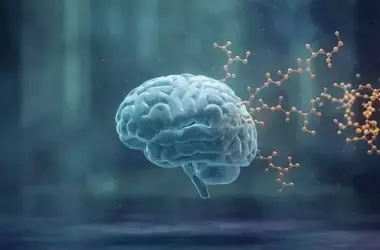
A new study indicates that major depressive disorder directly influences the body's valine amino acid metabolism, rather than being a consequence of it. This research, published in 'Psychopharmacology,' sheds light on the metabolic disturbances often observed in individuals grappling with mental health issues. Utilizing Mendelian randomization, the study establishes a causal link, highlighting the systemic physical effects of depression on biochemical processes.

A Journey Towards Healing: Recovering from Antipsychotics
This article shares a personal account of discontinuing antipsychotic medication after 22 years and the subsequent journey of recovery. The author discusses overcoming severe side effects, reclaiming emotional and cognitive functions, and developing a holistic approach to mental well-being through spirituality, self-awareness, and a critical perspective on traditional mental healthcare. The narrative emphasizes the importance of personal insight and alternative healing modalities.

Understanding Trauma: Beyond Clinical Labels
This article explores the historical evolution of understanding trauma, contrasting millennia of human narratives with the relatively recent psychiatric diagnosis of PTSD. It questions the framing of trauma as a disorder, arguing that such a categorization may obscure the profound human experience of suffering and its socio-historical context. The piece calls for a more holistic approach that integrates scientific understanding with humanistic perspectives, emphasizing the importance of individual narratives.