 Breaking News & Live Updates
- Breaking News & Live Updates
- Breaking News & Live Updates
- Breaking News & Live Updates
- Breaking News & Live Updates
- Breaking News & Live Updates
- Breaking News & Live Updates
- Breaking News & Live Updates
- Breaking News & Live Updates
- Breaking News & Live Updates
Consciousness Continuum: Blurring the Lines Between Waking and Dreaming
Our understanding of consciousness has long been shaped by a clear dichotomy: we are either fully awake and aware, or deeply asleep and unconscious. Yet, recent scientific investigations are beginning to unravel this seemingly distinct boundary, suggesting a more fluid and interconnected spectrum of mental states. This paradigm shift challenges established definitions, hinting that the intricate tapestry of our thoughts and perceptions extends far beyond the confines of traditional wakefulness and sleep.
New Research Reveals Dream-like Experiences During Wakefulness
In a pioneering study conducted by Decat, Le Coz, Senechal, et al., published in Cell Reports in 2026, researchers delved into the subtle transitions between being awake and falling into deep sleep (Stage N3). The team employed electroencephalography (EEG) to monitor brain activity, alongside a unique experimental setup. Participants were asked to hold a bottle while resting in a chair. As they drifted into lighter sleep stages (N1 and N2), their muscles would relax, causing the bottle to drop and gently rouse them. In a complementary condition, participants were intermittently awakened by an auditory alarm. Immediately after each interruption, individuals were prompted to describe their thoughts from the preceding ten seconds and rate these experiences across several dimensions: spontaneity, bizarreness, fluidity, and perceived wakefulness. Utilizing Principal Component Analysis, the researchers identified four distinct categories of mental content occurring during this transitional period: fragmented thoughts, heightened awareness of surroundings, bizarre dream-like imagery, and deliberate contemplation. Significantly, the study revealed that these diverse mental experiences were not confined to sleep but were equally likely to manifest during wakefulness, as well as in the initial and light stages of sleep. For instance, participants reported odd, dream-like sensations, such as "ants crawling on me with crossword puzzles in the background," while both awake and in N1 sleep. Conversely, mundane, everyday thoughts were observed even during N2 sleep. These findings, supported by distinct neural signatures identified through EEG recordings, profoundly challenge the long-held notion of a clear demarcation between our conscious waking state and our dreaming sleep state.
This innovative research not only reshapes our understanding of consciousness but also echoes the historical insights of figures like Thomas Edison, who famously utilized similar techniques to harness the creative potential of the sleep-wake transition. The study encourages a re-evaluation of how we categorize and perceive our mental experiences, suggesting that the wellspring of imagination and thought may flow more continuously across all states of being, blurring the rigid lines we once drew between wakefulness and the dream world.
Other Articles

Unlocking Chess Skill: How Pattern Recognition Shapes Novice Play
A new study reveals that early chess skill development in novices is heavily influenced by their ability to recognize familiar board patterns, rather than deep calculation. Published in the Journal of Sports Sciences, this research indicates that integrating visual pattern training from the beginning could significantly enhance a player's competence. The findings challenge traditional views on chess mastery, suggesting that beginners utilize 'chunking' similar to experts, processing groups of pieces as unified information blocks.
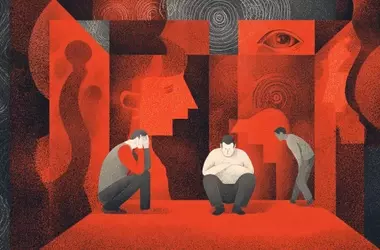
Close Quarters, Mounting Tensions: The Paradox of Proximity in Extreme Environments
A recent study conducted in Antarctica's Concordia Station, a simulated Mars environment, reveals a "proximity paradox": constant physical closeness in confined spaces amplifies conflict, erodes trust, and diminishes team performance. This phenomenon, observed through biometric tracking, suggests that extreme confinement transforms frequent contact from social support into a source of stress, leading to social fragmentation within multicultural teams.

Academic Success: The Joint Power of Intelligence and Diligence
A 1960s study analyzing Project TALENT data reveals that a combination of general mental ability and conscientiousness are the most significant predictors of college GPA. Surprisingly, specific mathematical knowledge offered no additional predictive value beyond these two factors. This research, published in "Intelligence & Cognitive Abilities," highlights the enduring importance of broad cognitive skills and a strong work ethic in academic achievement.

Does the Aroma of Pine Enhance Cognitive Abilities?
A study investigating the effects of Douglas fir and Hinoki cypress essential oils on mood, stress, and cognitive performance found no significant benefits. Most participants struggled to identify the scents, suggesting that conscious recognition might be crucial for any potential psychological effects. This research challenges popular notions about the cognitive-enhancing properties of tree scents in controlled indoor environments.

The Medusa Effect: How Nested Images Influence Human Perception
A recent study published in Cognition explores the "Medusa effect," a psychological phenomenon where individuals in nested photographs are perceived as having less capacity for thought and feeling. Researchers at Kyushu University investigated this bias across various manipulations, including flipped faces, masked subjects, AI-generated images, and spatially scrambled features, consistently finding that the Medusa effect persists despite attempts to disrupt visual processing. The findings suggest a robust bias rooted in psychological distance or categorical sorting, where abstract representations diminish the perceived 'realness' of individuals.

Brisk Walking Boosts Verbal Creativity, Study Finds
A new study reveals that engaging in a brisk walk for 10 to 25 minutes can significantly enhance verbal creativity about an hour later. Published in 'Sport, Exercise, and Performance Psychology,' the research tracked young adults' physical activity and creative performance using real-time data collection. This specific timing and intensity of moderate exercise were found to optimize the brain's capacity for generating novel ideas, offering valuable insights into the interplay between physical activity and cognitive function.