 Breaking News & Live Updates
- Breaking News & Live Updates
- Breaking News & Live Updates
- Breaking News & Live Updates
- Breaking News & Live Updates
- Breaking News & Live Updates
- Breaking News & Live Updates
- Breaking News & Live Updates
- Breaking News & Live Updates
- Breaking News & Live Updates
Addressing Bias in Global Psychological Research
The field of psychological science is grappling with a significant issue: a persistent bias in how research from different global regions is evaluated. Studies conducted in areas beyond the Global North frequently encounter heightened examination, leading to a skewed representation of participants predominantly from 'Western, Educated, Industrialized, Rich, and Democratic' (WEIRD) societies. This imbalance hinders the development of a comprehensive understanding of human experiences across diverse cultural landscapes. Experts are now pushing for fundamental transformations in publishing standards, greater inclusion of international scholars in influential roles, and the cultivation of more balanced cross-cultural research partnerships to dismantle these biases and promote a more equitable scientific discourse.
Global Disparities in Psychological Research: A Call for Change
In the realm of psychological science, a notable discrepancy exists in how research is reviewed and disseminated, particularly concerning studies originating from outside the Global North. Dr. Claire Smith, an organizational psychologist from the University of South Florida, has observed firsthand the pronounced scrutiny faced by research from underrepresented regions. She highlights that studies from countries geographically and culturally distant from the United States often encounter more obstacles during the publication process, demanding additional contextualization that similar research from the Global North typically does not. This suggests an ingrained bias within the scientific community, despite widespread recognition of the importance of international research.
This systemic issue is further illuminated by the concept of 'WEIRD' samples, a term coined by Joseph Henrich, Steven Heine, and Ara Norenzayan in 2010 to describe the overreliance on participants from Western, educated, industrialized, rich, and democratic societies. While awareness of this problem has grown, with numerous papers highlighting the sampling bias, a recent study by Roman Stengelin and his colleagues, published in Perspectives in Psychological Science, indicates that these biases remain entrenched, especially in developmental psychology. Their analysis of over 2,600 studies published between 2016 and 2020 revealed a continued overrepresentation of Global North countries and a demand for more cultural contextualization from underrepresented communities.
Dr. Silvia H. Koller, an APS Fellow and professor emerita at the Federal University of Rio Grande do Sul, echoes these concerns, sharing personal experiences of prejudice and dismissal throughout her career. She has advocated for "internationalization" in psychology, emphasizing the need for fundamental changes in journal review processes, increased participation of scholars from historically excluded countries in conferences, and the establishment of reciprocal, equitable collaborations. Both Smith and Koller suggest that diversifying editorial boards and encouraging reviewers to apply consistent standards across all submissions could be crucial steps.
Building on these insights, researchers like Joshua Goh, now at National Taiwan University, have championed cross-cultural collaborations. His early work with Denise Park and Angela Gutchess, comparing cognitive processes in Singapore and the United States, challenged the notion of universal psychological principles. Their ongoing efforts highlight the methodological and logistical complexities of international research, including variations in assessment tools, funding disparities, and administrative hurdles. Goh stresses the importance of strong, supportive research teams to navigate these challenges and emphasizes that cross-cultural data is vital for a mechanistic understanding of the mind, urging more researchers to embrace such collaborations.
Reflections on Global Inclusivity in Psychological Science
The discourse surrounding biases in psychological science and the call for greater inclusivity resonate deeply with the evolving landscape of global knowledge production. The insights from researchers like Claire Smith, Silvia Koller, and Joshua Goh underscore a critical need for self-reflection within the scientific community. It's not merely about acknowledging disparities, but actively dismantling them through concrete actions. This involves scrutinizing journal practices, diversifying leadership, and fostering genuinely equitable partnerships. As researchers, we are challenged to move beyond tokenistic gestures and embed inclusivity into the very fabric of our scientific endeavors. The pursuit of universal truths in psychology must be grounded in a recognition of diverse human experiences, requiring us to consciously break free from the 'WEIRD' paradigm and embrace a truly global perspective. Only then can our understanding of the human mind become as rich and varied as humanity itself.
Other Articles

AI in Therapy: Supplement or Substitute for Human Connection?
While AI conversational agents can assist with practical therapeutic tasks like tracking moods and practicing skills, they cannot replicate the nuanced, empathetic human connection essential for addressing complex issues such as trauma and identity reconstruction in psychotherapy. Human therapists remain crucial for profound dialogical engagement and fostering meaningful healing.

Innovating Youth Behavioral Health Workforce Development
The United States is addressing a critical shortage in youth mental health providers through an innovative approach: establishing a bachelor's-level training pathway. The Ballmer Institute at the University of Oregon is pioneering this model, preparing undergraduates to deliver early interventions and preventative care. This initiative aims to expand access to mental health services for young people nationwide, building on successful international models and advocating for policy changes to support these new professionals.

The Profound Impact of Small Significance on Human Drive
New research highlights how even minor elements of personal significance significantly influence motivation across all age groups. This study challenges the notion that the need for meaning is a luxury, proposing instead that it's a fundamental human requirement, akin to air. By examining responses to tasks where creations were either preserved or destroyed, the findings demonstrate that acknowledging the value of one's output, no matter how small, fosters greater engagement and effort, revealing a deeper connection between personal investment and sustained interest.
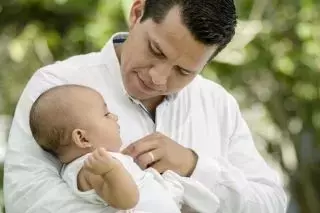
Daughters' Influence on Fathers' Romantic Relationships
New research suggests that fathers with daughters tend to exhibit greater commitment and intimacy in their relationships with their children's mothers. This indicates that having a daughter might positively impact how some fathers engage with their partners, challenging traditional views on parent-child influence. The study highlights a potential two-way dynamic in family relationships, where children's presence can shape parental behavior and relationship quality.

Rethinking Human Oversight in AI-Driven Healthcare
The integration of AI in medicine presents a paradox: while human oversight is traditionally seen as crucial for safety, emerging perspectives suggest that in certain cognitive tasks, AI alone may outperform augmented human-AI collaboration. This raises profound questions about the evolving role of clinicians, the potential for deskilling, and the inherent differences in error patterns between human and artificial intelligence, compelling a re-evaluation of the 'human in the loop' paradigm.

The Adapting Brain: A New Perspective on Aging Cognition
Recent research challenges the conventional belief that the aging brain merely declines, proposing instead an "adaptive aging hypothesis." This new perspective suggests that the brains of older adults prioritize wisdom and the integration of accumulated knowledge over the precise recall of new details. This shift in cognitive function optimizes older individuals for roles involving teaching, mentoring, and sharing expertise, highlighting a natural developmental phase rather than a decline.